
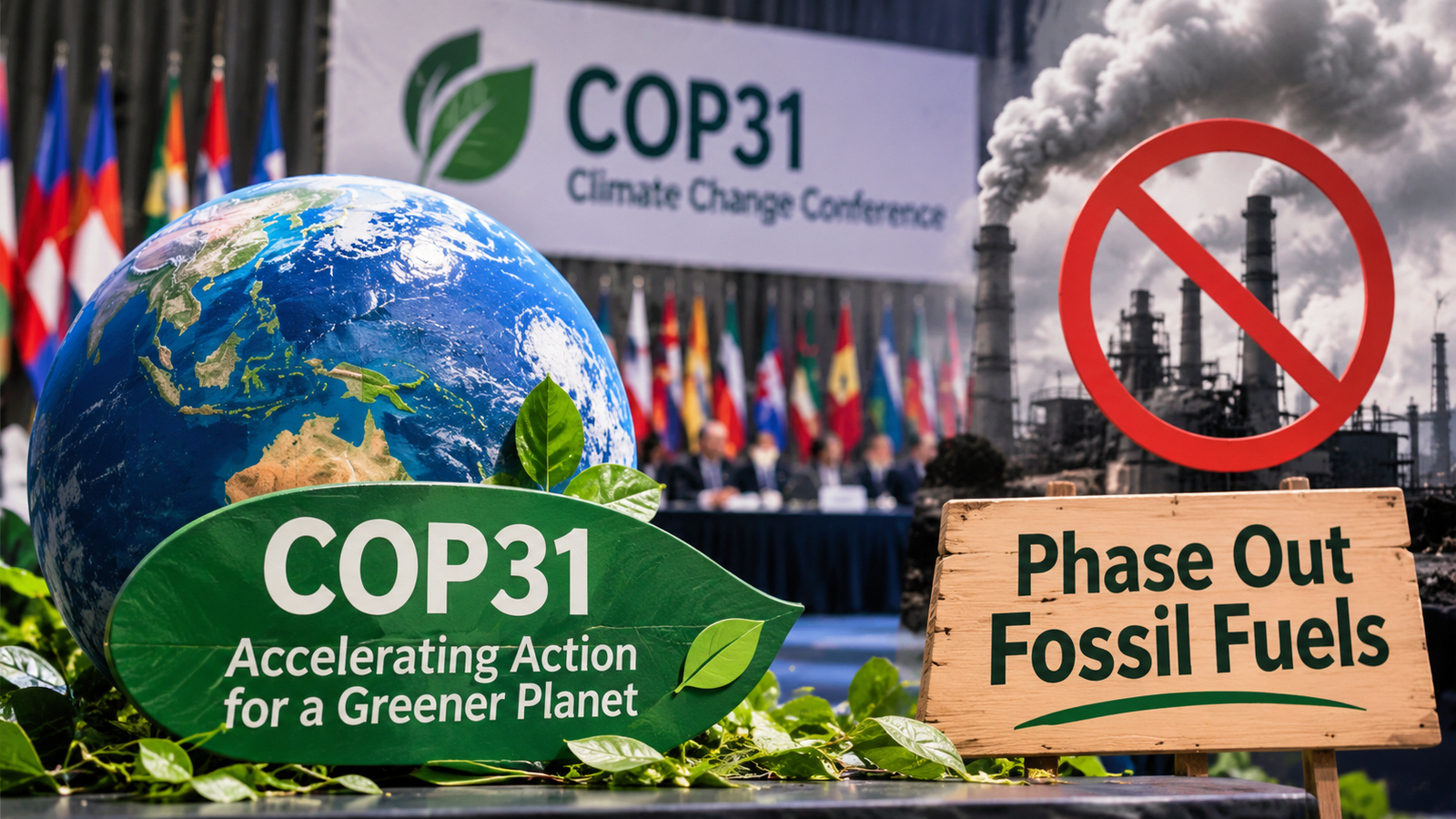

A new proposal at the COP31 climate summit has put the future of fossil fuels back in the spotlight. Australia, one of the summit’s co-hosts, has released the first draft of a political agreement urging countries to accelerate their transition away from coal, oil and gas.
The proposed deal also addresses climate adaptation funding and growing concerns over global warming. However, governments remain divided over the final wording, with nearly 200 nations expected to approve the agreement.
COP31 Draft Calls for Faster Transition Away From Fossil Fuels
The first draft, released on Monday, November 16, calls for stronger action to reduce dependence on planet-heating fossil fuels.
It states that the agreement “calls for accelerated action to phase out fossil fuels, including through the immediate transition away from fossil fuels in energy systems”.
The proposal reflects one of the most contentious issues at the Antalya summit. Countries continue to disagree over how quickly the world should move away from conventional energy sources.
The draft also highlights the growing urgency of meeting international climate commitments. In particular, it expresses “deep concern” over the approaching breach of the Paris Agreement’s 1.5 degrees Celsius temperature target.
Furthermore, the proposed text recognises the “central role of the best-available science” provided by the Intergovernmental Panel on Climate Change (IPCC).
Developing Countries Demand More Climate Adaptation Funding
Climate finance remains another major issue in the ongoing negotiations.
The draft agreement calls for a “tripling” of funding for climate adaptation measures in developing countries. It proposes raising this support to at least $120 billion.
Developing nations have repeatedly called for greater financial assistance to prepare for climate-related challenges. Therefore, the proposed funding increase represents an important demand within the negotiations.
Meanwhile, several countries, particularly European nations and climate-vulnerable developing states, have pushed for stronger fossil fuel commitments.
They also want the final agreement to recognise the importance of scientific evidence and faster action against climate change.
Australia Leads Efforts to Secure Political Agreement
Australia is steering the negotiations alongside its co-hosting role at COP31. The country aims to secure an overarching political statement summarising the agreements reached during the Antalya summit.
The proposed statement would also establish priorities for future international climate action.
However, reaching consensus remains challenging because governments continue to hold different positions on fossil fuels and climate commitments.
The draft therefore reflects competing priorities rather than a final agreement. Nearly 200 participating nations must ultimately approve the proposed decision.
COP31 Negotiations Face Energy Crisis and Geopolitical Tensions
The climate summit is taking place amid difficult international circumstances. A conflict-driven energy crisis and wider geopolitical tensions have complicated expectations for the negotiations.
These developments have added pressure to discussions about energy security and the transition away from fossil fuels.
COP31 is scheduled to conclude on November 20. Until then, governments must work towards resolving their differences and reaching a consensus.
The proposed agreement places fossil fuel reduction, climate adaptation funding and scientific evidence at the centre of discussions. However, whether countries can turn these priorities into a unified commitment remains uncertain.
For the latest updates, visit and follow The Truth International website (www.thetruthinternational.com) and subscribe to the YouTube Channel.

