
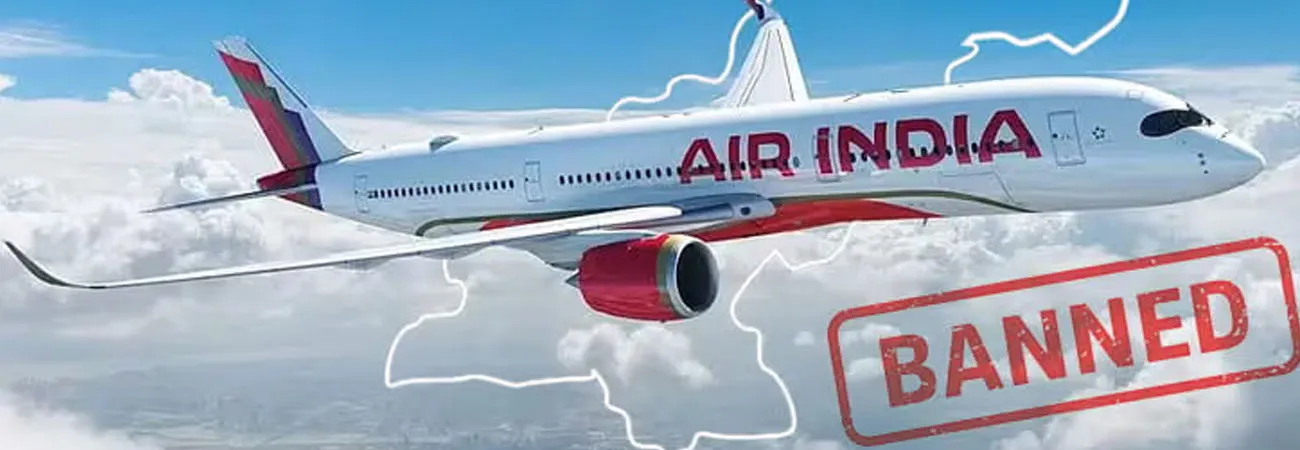

Fresh Aviation Notice Extends Restrictions for Another Month
Pakistan has extended its airspace ban on Indian aircraft until August 24, 2026, continuing restrictions introduced during a period of heightened tensions between the two neighbouring countries.
The Pakistan Airports Authority announced the decision on Saturday after issuing a fresh Notice to Airmen on the federal government’s instructions.
The restriction applies to all aircraft registered in India. It also covers aircraft owned, operated or leased by Indian airlines and aviation companies.
The existing restriction was scheduled to expire at 4:59am on July 24. The latest notice extends the ban for another month without changing its basic scope.
Earlier notices also covered Indian civilian and military aircraft operating through Pakistan’s Karachi and Lahore Flight Information Regions. These regions manage air traffic across the country’s airspace.
The extended ban means Indian carriers must continue avoiding Pakistani airspace while operating flights towards Europe, North America, Central Asia and parts of the Middle East.
Flights that would normally cross Pakistan must use longer routes over alternative countries or maritime areas. This increases flight duration, fuel consumption and operational expenses.
Restrictions Followed Sharp Decline in Pakistan-India Relations
Pakistan initially closed its airspace to Indian-owned and Indian-operated airlines in April 2025.
The move followed a serious diplomatic crisis after an attack in Pahalgam, located in Indian-administered Kashmir, killed 26 people.
India accused Pakistan of involvement in the attack. Islamabad rejected the allegation and called for an independent and transparent investigation.
India also suspended the Indus Waters Treaty as part of measures taken against Pakistan. Islamabad later announced several retaliatory steps, including restrictions on Indian aircraft.
India responded on April 30, 2025, by closing its airspace to aircraft registered, operated or leased by Pakistani carriers. The two countries have repeatedly extended their respective aviation restrictions since then.
Tensions escalated further in May 2025 when India launched military strikes inside Pakistan and Pakistan-administered Kashmir. New Delhi said its operation targeted sites connected to militant organisations.
Pakistan described the strikes as an attack on its sovereignty and launched retaliatory military action under Operation Bunyanum Marsoos.
The confrontation included missile strikes, drone operations, artillery fire and aerial engagements. Pakistan said it shot down several Indian fighter aircraft, while India disputed some Pakistani claims and later acknowledged that aircraft losses had occurred without confirming a complete number. Independent assessments have not established all competing claims made during the conflict.
The fighting ended after both countries agreed to a ceasefire on May 10, 2025, following international diplomatic efforts. However, several punitive measures introduced during the crisis remained in place, including the reciprocal airspace bans.
Indian Airlines Face Longer Flights and Rising Costs
The prolonged closure of Pakistani airspace has created significant operational challenges for Indian airlines.
Pakistan provides one of the shortest westbound routes for flights departing from northern Indian cities. Without access to that corridor, aircraft must travel farther south or use longer alternative routes.
The diversions increase fuel costs and working hours for pilots and cabin crews. They can also create scheduling complications and require airlines to adjust passenger and cargo loads.
Longer routes may reduce the amount of cargo an aircraft can carry because additional fuel increases its total weight. Some services may also require technical stops or revised departure timings.
Air India previously estimated that Pakistan’s airspace restriction could cost the company around $600 million over 12 months. The airline also cited the closure as one factor affecting the commercial viability of some long-distance services.
In August 2025, Air India announced the suspension of its direct New Delhi-Washington service. The airline said aircraft shortages were the main reason but added that Pakistan’s continued airspace closure was affecting its long-haul operations.
Other Indian airlines operating towards western and Central Asian destinations have also faced longer journeys and higher operating costs.
Pakistan’s aviation sector has experienced comparatively limited disruption because fewer Pakistani international routes depend on Indian airspace. However, Pakistani carriers also remain unable to use Indian routes under New Delhi’s reciprocal restrictions.
The latest extension shows that the aviation dispute remains unresolved more than a year after the restrictions were first imposed.
Neither country has announced a timetable for reopening its airspace to the other’s airlines. Any reversal is likely to depend on political and diplomatic improvements between Islamabad and New Delhi.
Until then, airlines must continue planning longer routes, absorbing additional expenses and adjusting schedules around the restrictions.

