
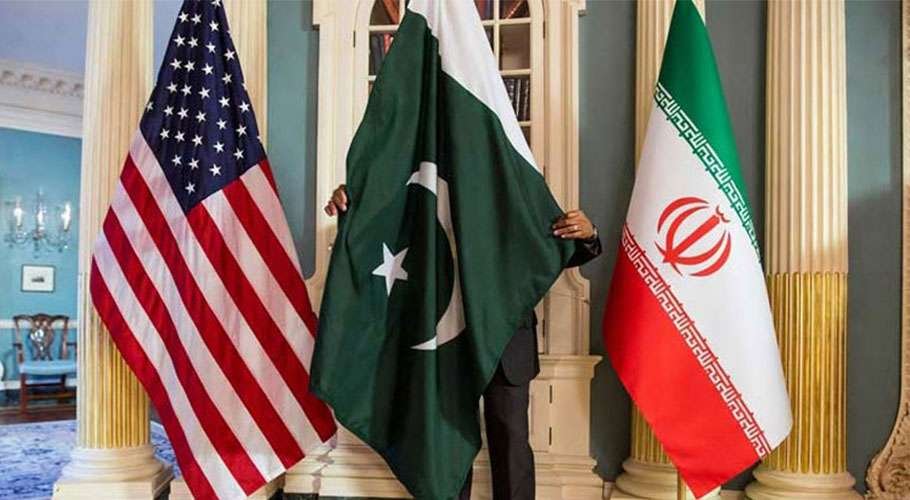

Peace Deal May Unlock Major Economic Gains
A possible settlement between the United States and Iran could create a major economic opportunity for Pakistan. According to a research report by KTrade Securities, Pakistan may gain up to $20 billion if tensions ease and the Strait of Hormuz fully reopens to commercial traffic.
The report says Pakistan could become one of the biggest relative beneficiaries among emerging markets. This is because of its location, mediation role, energy needs, and growing strategic value in the region.
The potential gains may come through several channels. These include lower country risk, stronger foreign exchange reserves, recovery in Gulf exports, lower inflation, improved current account position, and higher labour demand from Saudi Arabia under Vision 2030.
The report estimates that Pakistan’s foreign exchange reserves could rebuild beyond $20 billion. It also projects a current account improvement of around $3.75 billion to $5 billion annually. Lower oil prices may also help reduce inflation by 125 to 150 basis points.
Hormuz Crisis Raised Gwadar’s Strategic Value
The closure of the Strait of Hormuz has already caused major economic damage to Pakistan. The report estimates the cost at $10 billion to $14 billion, equal to around 2% to 3% of GDP.
The disruption pushed inflation to 11.7% in May 2026. It also weakened the current account and forced the State Bank of Pakistan to raise the policy rate by 100 basis points in April 2026.
The report warns that even after a settlement, Hormuz will remain a major structural risk. Around 20 million barrels of oil pass through the strait daily. Existing bypass pipelines can carry only about 8.5 million barrels per day.
This gap has increased the importance of Gwadar Port. The port is located outside the Hormuz chokepoint. It can remain accessible during naval blockades or maritime disruptions.
Gwadar’s container handling also increased sharply. Throughput reached 11,000 TEUs in April 2026 alone, more than the full-year total of 2025. If these volumes continue, the port could generate $50 million to $80 million annually in handling fees.
Trade, Energy and Saudi Investment Could Drive Recovery
A peace deal could also revive Pakistan-Iran trade. Bilateral trade peaked at $1.32 billion in 2008-09 before sanctions on Iran caused a decline. A sanctions-free corridor could lift near-term trade potential to around $2 billion.
Pakistan may export rice, meat, textiles, cement, fruits, sesame seeds, chickpeas, and medical goods to Iran. Iran could supply organic chemicals, plastics, petroleum products, iron, steel, and cheaper energy.
The Iran-Pakistan gas pipeline could become another major gain. The project is designed to supply up to 750 million cubic feet of gas per day from Iran. The report estimates that Iranian pipeline gas could cost $6 to $8 per MMBtu, compared with about $13 per MMBtu for LNG imports.
This could save Pakistan around $1.5 billion to $2 billion annually. The Iranian section of the pipeline was completed in 2013, but Pakistan’s section remains largely unfinished because of sanctions.
The report also highlights the Pakistan-Saudi Arabia Strategic Mutual Defense Agreement signed in September 2025. It links Pakistani military deployment to Saudi Arabia with a $10 billion Saudi investment package in infrastructure, energy, mining, and defence production.
CPEC could further expand the opportunity. If Iran formally joins the corridor, Pakistan could become a stronger trade bridge between China, Iran, Central Asia, Russia, and Europe.
The report says Pakistan must now turn its geographic advantage into long-term gains. For that, it needs competitive port charges, faster customs clearance, reliable security, and consistent economic policy.

