
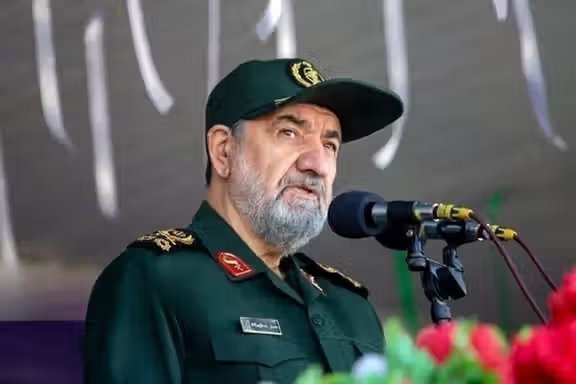

Former IRGC commander returns to central security role as Tehran navigates heightened regional tensions
TEHRAN: Iran has appointed former Islamic Revolutionary Guard Corps (IRGC) commander Mohsen Rezaei as secretary of the Supreme National Security Council (SNSC), replacing Ali Akbar Ahmadian, also known as Ali Akbar Zolqadr, in a significant change within the country’s security establishment.
The appointment further strengthens the presence of figures with extensive military backgrounds within one of Iran’s most influential national security and strategic decision-making institutions.
Rezaei served as commander-in-chief of the IRGC until 1997, overseeing the force during a formative period that included much of the Iran-Iraq War. Although he subsequently left active military command, he remained deeply involved in Iran’s political, economic and strategic affairs.
Over the following decades, Rezaei held several senior positions and continued advising the leadership on national security and economic policy. Consequently, his return to a central security position represents more than a routine administrative reshuffle.
Military experience returns to forefront
Rezaei assumes the position as Iran faces heightened regional tensions following its recent military confrontation with the United States and continuing uncertainty surrounding Tehran’s relations with Washington.
His appointment could therefore indicate that Iranian leaders intend to place greater emphasis on military experience while formulating national security policy.
Moreover, the SNSC plays a crucial role in coordinating Iran’s defence, foreign policy and internal security priorities, making its secretary an important figure within Tehran’s decision-making structure.
Appointment raises questions over Tehran’s strategy
The leadership change will likely attract close attention as observers assess whether Rezaei’s appointment signals a broader shift toward security-focused policymaking.
His extensive IRGC background gives him longstanding relationships across Iran’s military and political institutions, potentially strengthening coordination between different centers of power.
Meanwhile, Iran continues navigating regional military pressures alongside negotiations and wider security challenges.
Therefore, Rezaei’s return to the heart of Iran’s security architecture could influence Tehran’s approach to deterrence, diplomacy and regional strategy as the Islamic Republic determines its priorities following months of confrontation and political uncertainty.
A significant development in Iran's security institution.
The appointment of Mohsen Rezaei as Secretary of Iran's Supreme National Security Council, replacing Ali Akbar Ahmadian (Zolqadr), further strengthens the presence of the military establishment within one of the country's… pic.twitter.com/iDxlOcFM8j
— Marwa Osman || مروة عثمان (@Marwa__Osman) August 7, 2026

