
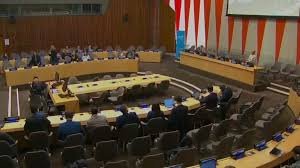

Pakistan strongly criticized India during the United Nations Security Council debate on the protection of civilians, accusing New Delhi of supporting terrorism, violating international law, and suppressing minority communities.
Pakistan’s Mission Counsellor Saima Saleem delivered a detailed response after remarks made by the Indian representative during the annual UN Security Council session. She said India presents itself as a victim on international platforms while ignoring allegations related to regional aggression, occupied territories, and support for militant networks.
The statement intensified diplomatic tensions between the two neighboring countries and highlighted long-standing disputes over Kashmir, terrorism, and regional security.
Pakistan Accuses India of Supporting Militant Networks
During her address, Saima Saleem alleged that India has supported militant groups responsible for attacks inside Pakistan. She claimed organizations such as Tehreek-e-Taliban Pakistan, BLA, and Majeed Brigade were involved in violence that caused thousands of civilian deaths across the country.
According to Pakistan’s representative, these attacks targeted public places including schools, mosques, markets, and streets. She stated that Pakistan possesses intelligence regarding militant networks operating from Afghan territory with alleged foreign backing.
Saleem also defended Pakistan’s recent counterterrorism operations near the Afghan border. She described the actions as “precise and professional” operations aimed at destroying militant hideouts, training centers, and weapons storage locations.
She stressed that Pakistan’s military operations targeted armed groups only and were not directed against Afghan civilians or public infrastructure. Pakistan also rejected allegations made by Afghan authorities regarding civilian harm during these operations.
The statement further accused India of spreading misinformation to distract attention from regional security concerns and militant violence affecting Pakistan.
Kashmir and Minority Rights Raised at United Nations
Pakistan also highlighted the Kashmir dispute during the Security Council debate. Saima Saleem described Jammu and Kashmir as an internationally recognized disputed territory that remains on the agenda of the United Nations Security Council.
She accused India of restricting civil liberties in the region through detentions, demolitions, and limitations on political freedoms. According to Pakistan’s statement, the people of Kashmir continue to face human rights challenges and are denied their right to self-determination.
The Pakistani envoy also raised concerns about the treatment of minorities in India. She alleged that religious intolerance and discrimination against Muslims and other minority communities have increased in recent years.
The speech mentioned concerns regarding:
- Islamophobia
- Hate speech
- Mob violence
- Religious discrimination
- Minority insecurity
Pakistan argued that the international community should pay greater attention to minority rights and human rights protections across the region.
Pakistan Calls for Peaceful Dialogue and International Law
Pakistan concluded its statement by emphasizing support for diplomacy, peaceful conflict resolution, and adherence to international law.
Saima Saleem said Pakistan seeks stable and respectful relations with neighboring countries based on sovereign equality and mutual respect. She added that disputes should be resolved peacefully under the framework of the United Nations Charter and Security Council resolutions.
The Pakistani envoy also criticized India over the Indus Waters Treaty issue. She stated that threatening water resources and regional stability contradicts international legal obligations and humanitarian principles.
The exchange between Pakistan and India at the United Nations reflects continuing diplomatic tensions between the two countries over terrorism, border security, Kashmir, and regional influence.
The Security Council debate on civilian protection provided another platform for both nations to present competing narratives before the international community. Analysts believe such exchanges are likely to continue as political and security tensions remain unresolved in South Asia.

