
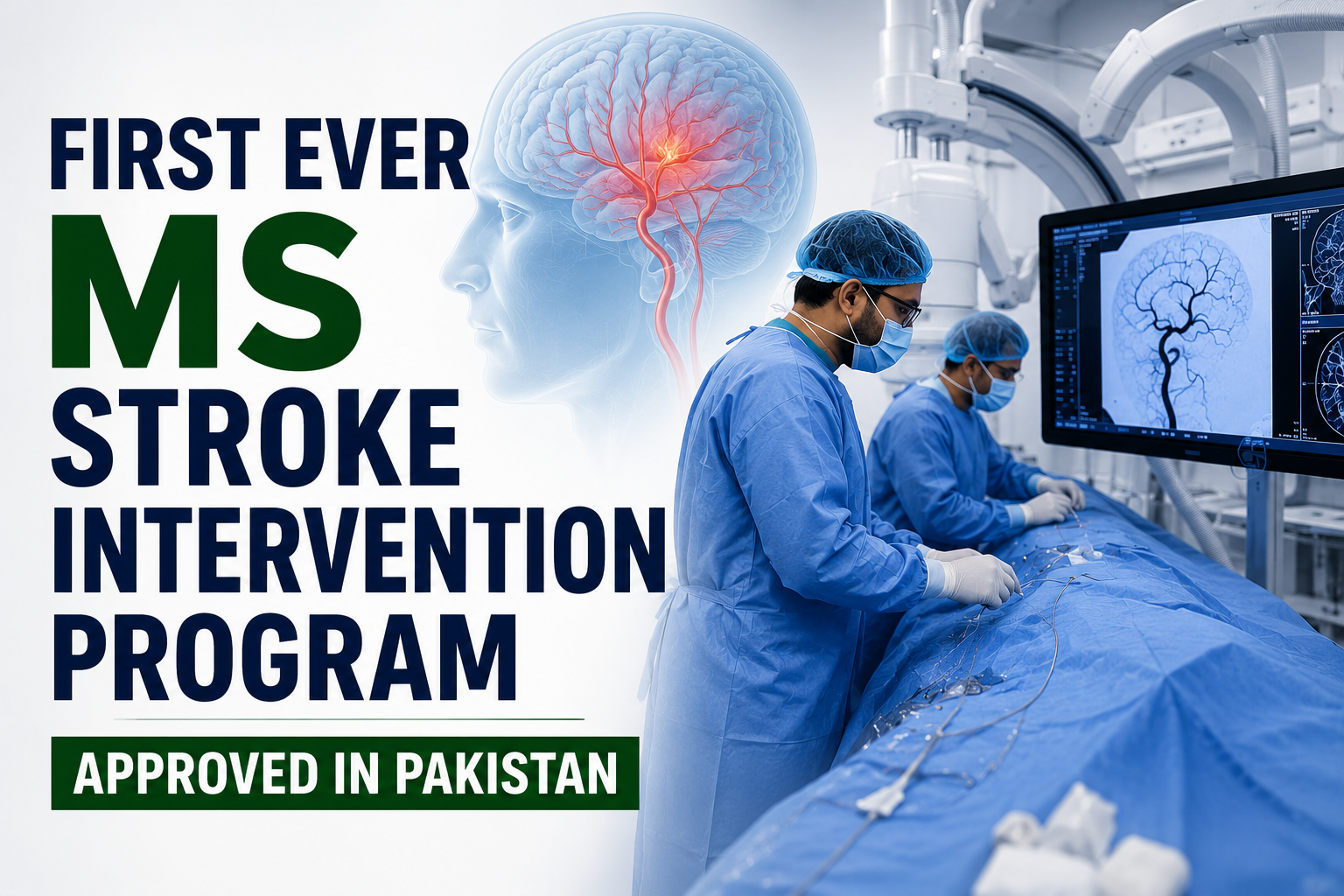

Pakistan has approved its first Master of Surgery (MS) Stroke Intervention (Level IV) degree program, marking a significant step toward strengthening advanced stroke treatment and specialist training in the country.
The Academic Council of the University of Health Sciences (UHS) approved the new program during its 43rd meeting. The session was chaired by UHS Vice Chancellor Prof Ahsan Waheed Rathore.
The initiative aims to prepare highly trained specialists in interventional neuroradiology and endovascular stroke management. As a result, it is expected to support Punjab’s expanding network of comprehensive stroke centres and improve access to advanced medical care.
First Specialized Stroke Intervention Program Approved
The newly approved MS Stroke Intervention program has been designed to produce specialists capable of managing complex stroke cases through advanced medical procedures.
Graduates will receive training in catheter-based interventions used to treat acute ischemic stroke and other cerebrovascular disorders.
These specialized procedures can help doctors respond quickly during medical emergencies. Consequently, patients may benefit from faster treatment and improved recovery outcomes.
Program to Strengthen Stroke Care Services
Speaking during the Academic Council meeting, Prof Ahsan Waheed Rathore highlighted the importance of the new program.
He said the initiative would help address the growing demand for trained specialists as Punjab continues expanding its stroke care services.
The program also supports ongoing efforts to strengthen advanced healthcare facilities by developing professionals with specialized clinical expertise.
Academic Council Approves Additional PhD Programs
Besides approving the MS Stroke Intervention program, the Academic Council also endorsed curricula for several new PhD programs.
The approved disciplines include nursing, public health, oral biology, and medical education.
In addition, the council revised multiple postgraduate and certificate programs to further strengthen research, clinical training, and healthcare education.
These curriculum updates aim to improve academic standards while supporting the country’s evolving healthcare needs.
New Requirement Introduced for PhD Scholars
The council also approved a new academic requirement for doctoral students.
Under the revised policy, every PhD scholar must participate in at least three national conferences or seminars before completing the degree.
Furthermore, each scholar must also attend at least one international conference or seminar before receiving a doctoral qualification.
The latest decisions reflect continued efforts to enhance medical education, promote academic research, and develop a highly skilled healthcare workforce capable of meeting Pakistan’s future medical challenges.

