
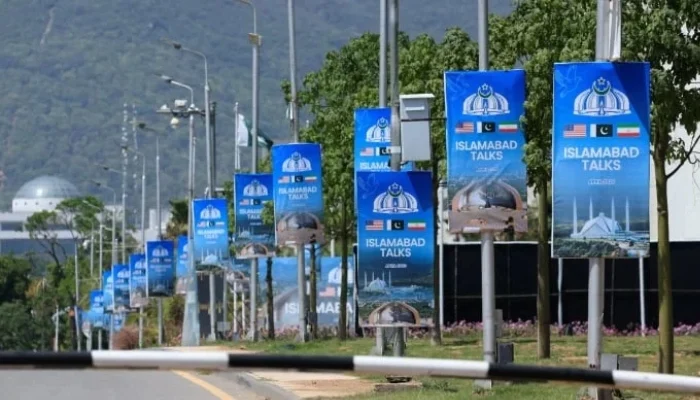

ISLAMABAD: Pakistan on Saturday announced that technical-level talks between the United States and Iran will take place on Sunday in Bürgenstock, Switzerland, as diplomatic efforts continue to keep the peace process on track. The discussions will focus on implementing understandings reached under the Islamabad memorandum of understanding.
In a statement, the Foreign Office said representatives from the United States and Iran would participate in the talks alongside mediators from Pakistan and Qatar. Furthermore, it reaffirmed Pakistan’s commitment to facilitating dialogue and supporting the implementation of the agreement.
The announcement follows the electronic signing of a memorandum of understanding between Washington and Tehran aimed at ending the recent conflict in the Middle East. Earlier this week, US President Donald Trump said the agreement included provisions for reopening the Strait of Hormuz and lifting the US blockade on Iranian ports.
According to official accounts, Trump and Iranian President Masoud Pezeshkian signed the agreement on behalf of their respective countries. Meanwhile, Prime Minister Shehbaz Sharif signed the Islamabad memorandum as mediator, formally endorsing the peace initiative.
Iranian state media also confirmed that Tehran’s negotiating team had departed for Switzerland to discuss implementation of the agreement. However, Foreign Ministry spokesman Esmaeil Baqaei warned that delays in fulfilling commitments could place the entire understanding at risk.
On the US side, Vice President JD Vance said he expected to travel to Switzerland for the negotiations. At the same time, he expressed confidence that the ceasefire would hold despite reports of renewed tensions.
Meanwhile, Iran’s Khatam al-Anbiya Central Headquarters warned that it could close the Strait of Hormuz, citing alleged ceasefire violations by the United States and Israel. However, Vance said he had seen no evidence that the vital shipping route had been closed.
The upcoming talks are expected to play a key role in maintaining diplomatic momentum and preventing further escalation in the region.

