
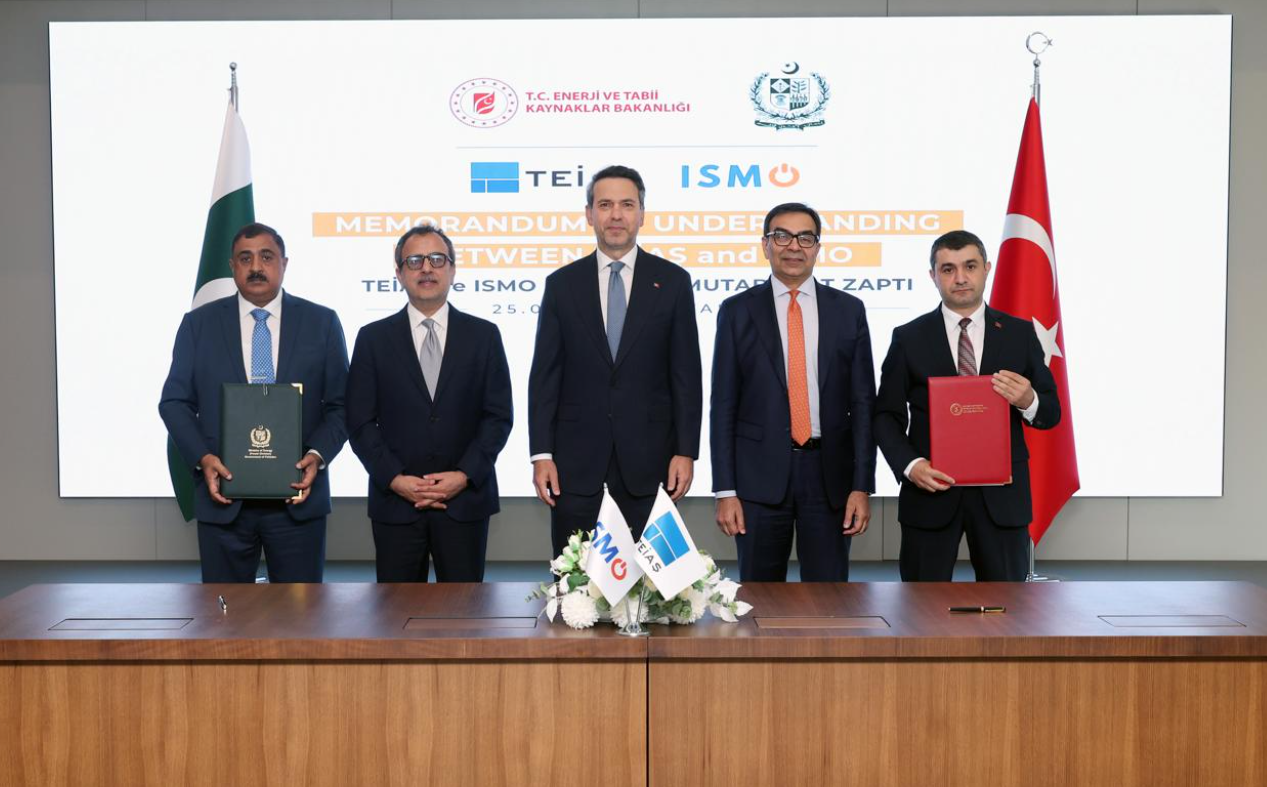

Pakistan and Turkiye have signed three Memoranda of Understanding (MoUs) aimed at expanding cooperation in the power sector and strengthening institutional partnerships.
The agreements were signed during high-level consultations held in Istanbul.
The new frameworks focus on technical cooperation, institutional development, and knowledge sharing between energy sector organisations of both countries.
Officials described the move as another step toward strengthening long-term collaboration and improving energy sector performance.
Pakistan and Turkiye Expand Energy Partnership
The newly signed agreements reflect a shared commitment to deepen cooperation across several strategic areas of the power sector.
The MoUs were signed between leading Pakistani and Turkish energy institutions.
These included agreements between Independent System and Market Operator (ISMO) and Energy Exchange Istanbul (EPIAS), ISMO and the Turkish Electricity Transmission Corporation (TEIAS), and the Power Planning and Monitoring Company (PPMC) with the Turkish Electricity Distribution Corporation (TEDAS).
Through these partnerships, both countries aim to strengthen technical capacity and improve operational efficiency.
In addition, the agreements are expected to create opportunities for long-term institutional engagement.
Focus Areas Include Reform, Digitalisation and System Development
The agreements establish formal cooperation frameworks across multiple areas of the energy sector.
These areas include post-privatisation governance structures, electricity market development, and regulatory support.
The MoUs also cover ancillary services regulations, power system operations, transmission planning, and distribution sector management.
Furthermore, both countries plan to cooperate in digitalisation initiatives and institutional capacity building.
Technical expertise and operational experience will also be exchanged under the agreements.
As a result, sector institutions are expected to benefit from practical learning and modern management approaches.
Pakistan Looks to Learn From Turkiye’s Energy Experience
Federal Minister for Energy Sardar Awais Ahmad Khan Leghari welcomed the signing of the agreements and described them as an important step for Pakistan’s energy institutions.
He noted that collaboration with experienced Turkish organisations can support Pakistan’s ongoing reform efforts.
According to the minister, Pakistan seeks to learn from Turkiye’s experience in electricity market reforms and transmission system development.
He also highlighted lessons from distribution sector modernisation and the integration of advanced technologies.
In addition, he pointed to the importance of understanding post-privatisation governance and operating energy institutions in a privatised environment.
Technical Cooperation to Support Long-Term Sector Goals
Officials stated that cooperation between institutions will encourage the transfer of practical knowledge and best practices.
Consequently, Pakistan expects progress in improving service delivery and operational performance.
The exchange of expertise may also support stronger governance and help create a more sustainable power sector.
At the same time, institutional collaboration is expected to improve long-term planning and strengthen technical capabilities.
Agreements Expected to Open New Opportunities
The Turkish side expressed support for continued institutional engagement and welcomed deeper collaboration.
The agreements are expected to lead to joint technical initiatives and expert exchanges.
Training programmes and study visits may also become part of future cooperation.
Additionally, both sides intend to pursue collaborative projects focused on energy sector development.
Officials view the MoUs as an important outcome of the Pakistan–Turkiye energy dialogue.
The agreements also reflect the growing strategic relationship between both countries and their commitment to advancing cooperation in the energy sector.
With these new frameworks in place, both countries aim to build stronger institutions and support modern energy systems through continued partnership.

