
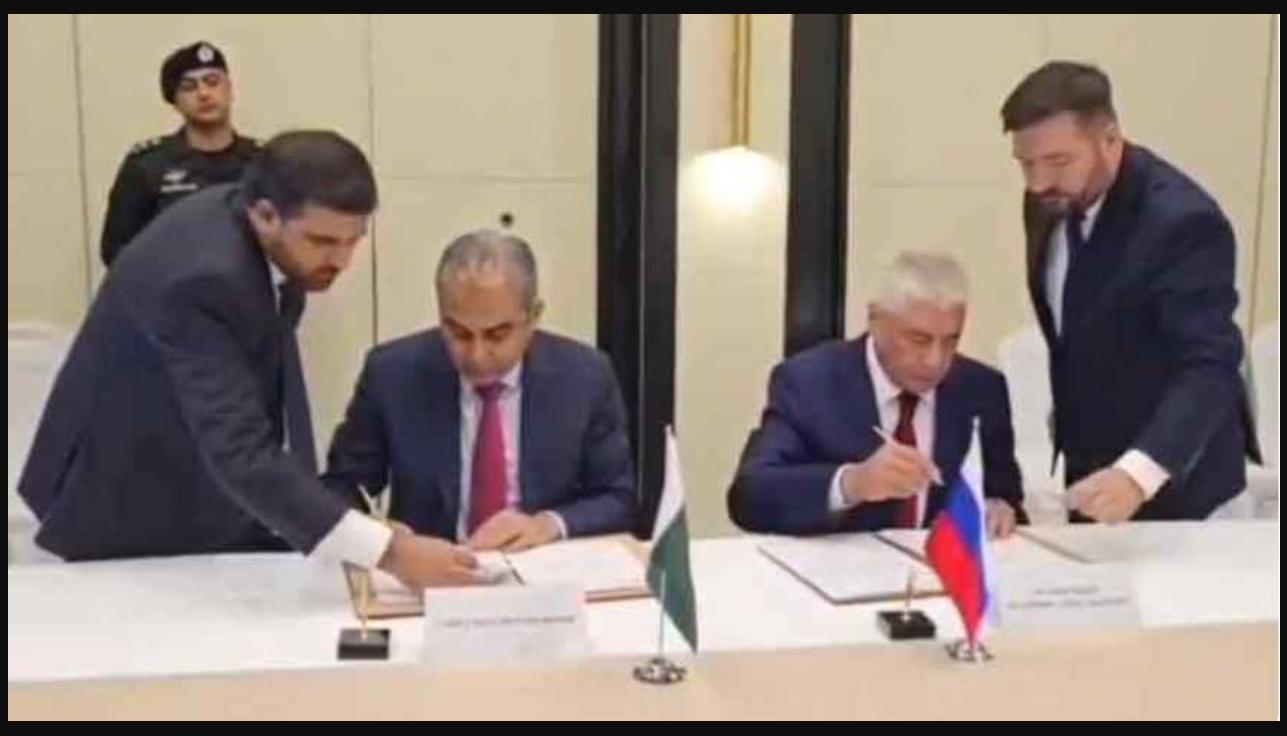

Pakistan and Russia have signed a series of agreements aimed at strengthening cooperation in key security-related areas. The focus includes counterterrorism, illegal immigration, narcotics control, and broader law enforcement collaboration.
The developments took place during a meeting held on the sidelines of a regional security gathering in Kyrgyzstan. The engagement reflects growing diplomatic coordination between the two countries.
Focus on Security, Counterterrorism, and Border Control
During discussions, both sides agreed to enhance cooperation in tackling illegal immigration. They also committed to improving coordination on the repatriation of citizens residing unlawfully in each other’s countries.
In addition, Pakistan and Russia agreed to expand joint efforts against drug trafficking. Both sides emphasized the importance of stronger mechanisms to counter narcotics networks operating across borders.
The agreements signal a shared intent to address transnational crime more effectively. Moreover, both countries highlighted the need for structured cooperation between law enforcement agencies.
Bilateral Talks Between Interior Ministers
Pakistan’s Interior Minister held a detailed meeting with his Russian counterpart. The discussions focused on strengthening institutional cooperation and improving security coordination.
Both sides agreed on multiple initiatives to enhance collaboration. These included frameworks for addressing illegal migration and expanding counter-narcotics operations.
The meeting concluded with a mutual commitment to deepen engagement in security-related fields. Furthermore, both ministers emphasized continued dialogue to address emerging regional threats.
Engagement with Central Asian Countries
In addition to talks with Russia, Pakistan held meetings with several Central Asian states. These included Tajikistan, Uzbekistan, Kyrgyzstan, and Kazakhstan.
Each meeting focused on strengthening cooperation in law enforcement and regional security. The discussions also covered training opportunities and institutional partnerships.
Pakistan–Tajikistan Discussions on Regional Threats
During talks with Tajikistan, both sides addressed security concerns linked to Afghanistan. They discussed the presence of militant groups operating in the region.
Both ministers agreed that terrorist networks and drug production in Afghanistan pose serious regional risks. They also noted that multiple extremist organizations remain active across certain areas.
The discussion emphasized the need for coordinated regional responses. Additionally, both sides expressed concern over cross-border security challenges.
Pakistan–Uzbekistan Cooperation on Law Enforcement
In meetings with Uzbekistan, both sides focused on law enforcement cooperation. They discussed opportunities for joint training programs between security institutions.
Both countries also agreed to establish a working group. This group will focus on strengthening coordination between interior ministries.
The initiative aims to improve operational efficiency and enhance cross-border security collaboration.
Pakistan–Kyrgyzstan and Kazakhstan Engagements
During discussions with Kyrgyzstan, both sides agreed to expand cooperation in areas of mutual interest. Pakistan also acknowledged Kyrgyzstan’s role in hosting the regional security meeting.
Additionally, Pakistan’s interior minister congratulated Kyrgyzstan on its election as a non-permanent member of the United Nations Security Council. He also expressed appreciation for hosting the gathering.
In talks with Kazakhstan, both countries agreed to strengthen cooperation on preventing illegal immigration. They also decided to form a joint working group to enhance bilateral engagement.
Regional Cooperation and Shared Security Goals
The series of meetings highlighted a broader commitment to regional security cooperation. Countries involved emphasized joint efforts to combat illegal migration and drug trafficking.
Moreover, there was strong agreement on improving coordination among law enforcement agencies. The discussions also reflected shared concerns over transnational crime and regional stability.
Conclusion
Pakistan’s engagements with Russia and Central Asian states underline a growing focus on regional security cooperation. The agreements cover key areas including counterterrorism, migration control, and narcotics enforcement.
Overall, the meetings demonstrate an increasing emphasis on structured collaboration. They also reflect shared priorities in addressing cross-border security challenges and strengthening institutional partnerships.

