
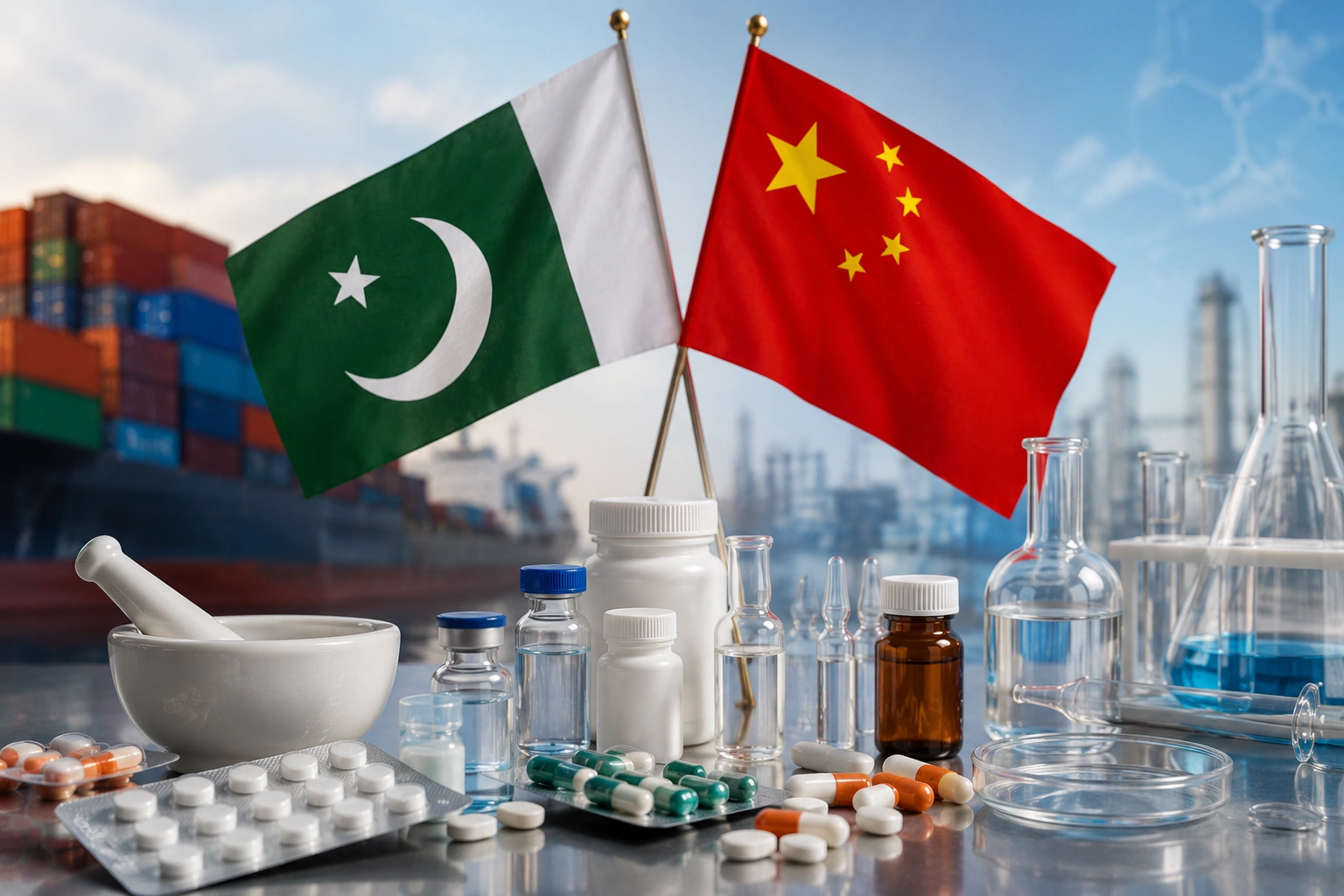

Pakistan and China concluded their two-day pharmaceutical investment conference with agreements worth $850 million. The deals aim to boost local manufacturing, technology transfer, and investment in Pakistan’s healthcare sector.
Conference Secures Major Investment Deals
Federal Health Minister Mustafa Kamal announced the agreements during a media briefing on Saturday. He said the conference resulted in 16 contracts and 80 memoranda of understanding.
According to the minister, contracts worth $600 million and MoUs worth $250 million were finalised. Additionally, 18 agreements focused on the production of herbal medicines.
Kamal described the outcome as a significant milestone for Pakistan-China pharmaceutical cooperation. He added that the agreements would encourage investment and expand local production of healthcare equipment.
The minister also highlighted growing business partnerships between Pakistani and Chinese companies. Consequently, he welcomed further Chinese investment to strengthen Pakistan’s pharmaceutical industry.
Focus Shifts To Local Manufacturing
Officials also discussed plans to establish local vaccine production facilities. Pakistan currently imports 13 different vaccines, increasing healthcare costs.
Kamal warned that vaccine import expenses could reach $1.2 billion by 2030. Therefore, local production would reduce imports and save valuable foreign exchange.
The minister said Pakistan imports 90 percent of its pharmaceutical raw materials. However, new agreements with Chinese companies will support domestic production and help lower medicine prices.
Additionally, both sides agreed to promote medical device manufacturing, clinical trials, and vocational training. Kamal also announced that more than 80 percent of Drug Regulatory Authority of Pakistan services have been digitised.
Medicine licences will now be issued online within 20 days of registration. Meanwhile, the World Health Organization has prequalified Pakistani laboratories for drug testing.
The conference brought together 146 Chinese companies and more than 200 Pakistani firms, making it one of the largest bilateral healthcare investment events.

