
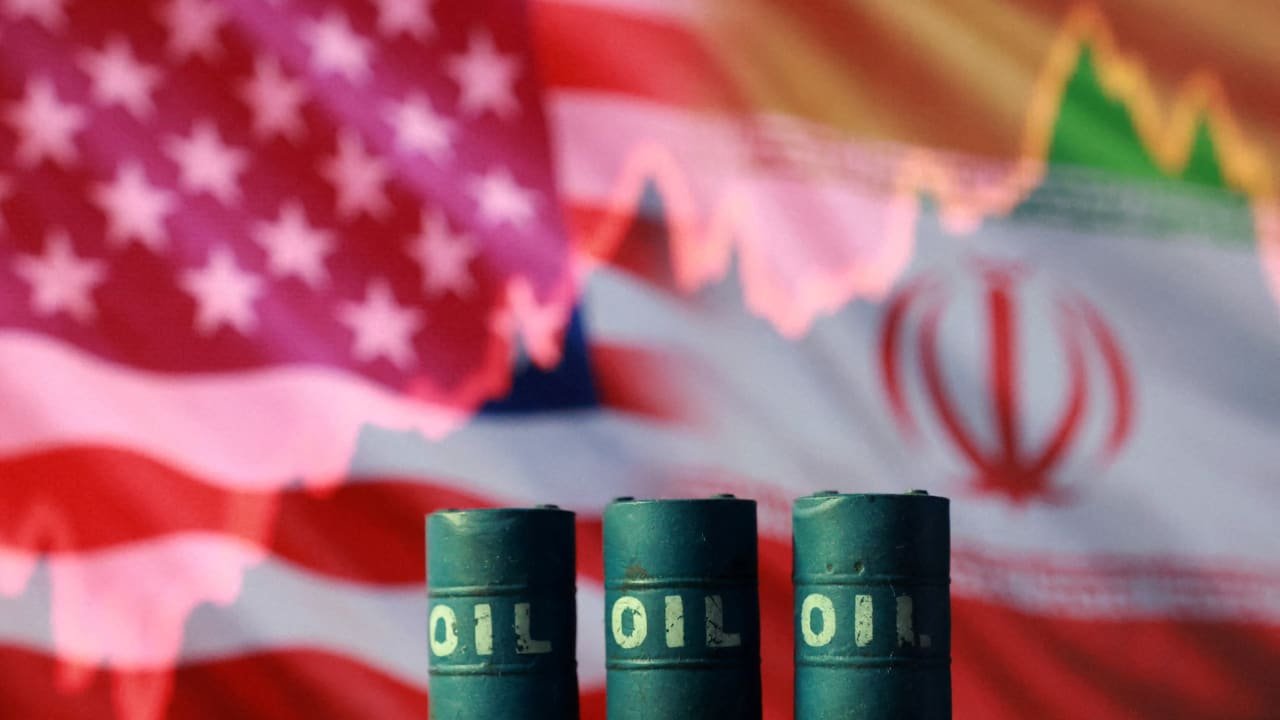

Energy markets add risk premium amid uncertainty over tanker movements
LONDON: Oil prices climbed more than 3 percent on Monday as renewed military exchanges between the United States and Iran raised fresh concerns about the movement of crude oil and natural gas through the Strait of Hormuz.
Brent crude futures gained $2.39, or 3.14 percent, to reach $78.40 per barrel by 1321 GMT. Meanwhile, US West Texas Intermediate crude rose $2.17, or 3.04 percent, to $73.58 per barrel. Both benchmarks had advanced by more than 4 percent earlier in the session before trimming some gains.
The Strait of Hormuz remains one of the world’s most important energy corridors, carrying roughly one-fifth of global oil and gas supplies during normal conditions. Consequently, any disruption to shipping through the narrow waterway can quickly affect international prices and energy security.
UBS analyst Giovanni Staunovo said markets would continue monitoring the number of tankers entering the Gulf. He warned that fewer inbound vessels could eventually affect production, while current uncertainty was already adding a risk premium to prices.
CENTCOM says strikes targeted Iranian capabilities
US Central Command said American forces had completed a wave of precision strikes against dozens of Iranian targets. According to CENTCOM, the operation aimed to reduce Tehran’s ability to attack commercial shipping in the Strait of Hormuz.
The targets reportedly included air-defence systems, coastal radar installations, missile and drone sites, and small naval vessels.
Iran and US dispute control of waterway
CENTCOM insisted that Iran does not control the strait and described it as an international maritime route essential to global commerce.
However, Tehran maintains that it exercises authority over the waterway. Iranian officials argue that foreign military and commercial vessels must secure permission from the Islamic Revolutionary Guard Corps before transiting the strategic passage.
The competing claims have deepened uncertainty across energy markets, with traders closely watching shipping activity and further military developments.

