
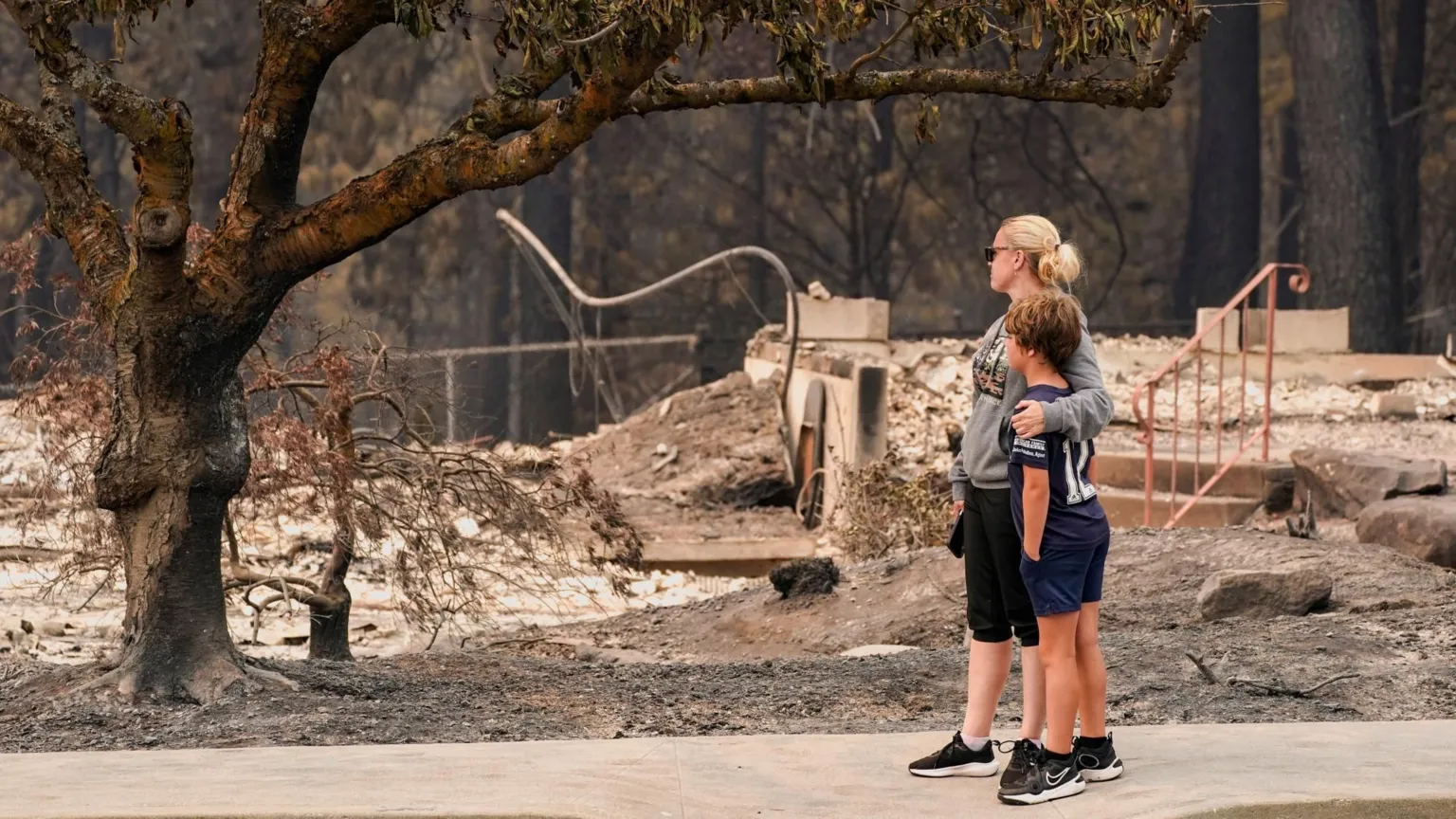

Hundreds of buildings destroyed while firefighters battle multiple uncontrolled blazes
SPOKANE: Massive wildfires have forced approximately 60,000 people to evacuate parts of Washington state after fast-moving flames destroyed hundreds of buildings and left thousands of residents without electricity.
Authorities said three major fires continued burning around Spokane on Monday, while more than a dozen wildfires remained active across the state, including 10 classified as large incidents. Emergency officials warned that none of the major blazes had been fully contained.
Spokane Mayor Lisa Brown described the crisis as the worst natural disaster the region has experienced, adding that officials were still assessing the full extent of the destruction. Although no deaths or injuries have been confirmed, authorities continue evaluating affected communities.
The National Weather Service had earlier issued an “extremely critical” fire weather warning as strong winds, low humidity and unusually dry conditions fueled the rapid spread of flames.
Emergency response expands across affected areas
Washington Governor Bob Ferguson declared a statewide emergency and requested federal assistance following discussions with President Donald Trump. Firefighters, emergency crews and helicopters continue working around the clock to contain the fires and protect threatened communities.
Officials said nearly 600 buildings, including homes and businesses, have been destroyed. Meanwhile, more than 10,000 electricity customers remain without power as utility crews work to restore damaged infrastructure.
Residents urged to remain alert
Authorities have urged residents to follow evacuation orders immediately and remain prepared for changing conditions. Mayor Brown emphasized that emergency shelters, housing assistance and essential supplies remain priorities as thousands of displaced families seek temporary accommodation.
Although weather forecasts indicate lighter winds in the short term, meteorologists warned that temperatures are expected to rise again later this week, potentially increasing wildfire risks.
Scientists have also noted that climate change is contributing to hotter, drier conditions that increase the frequency and intensity of wildfires, prolonged heatwaves and seasonal droughts across many regions of the United States.

