
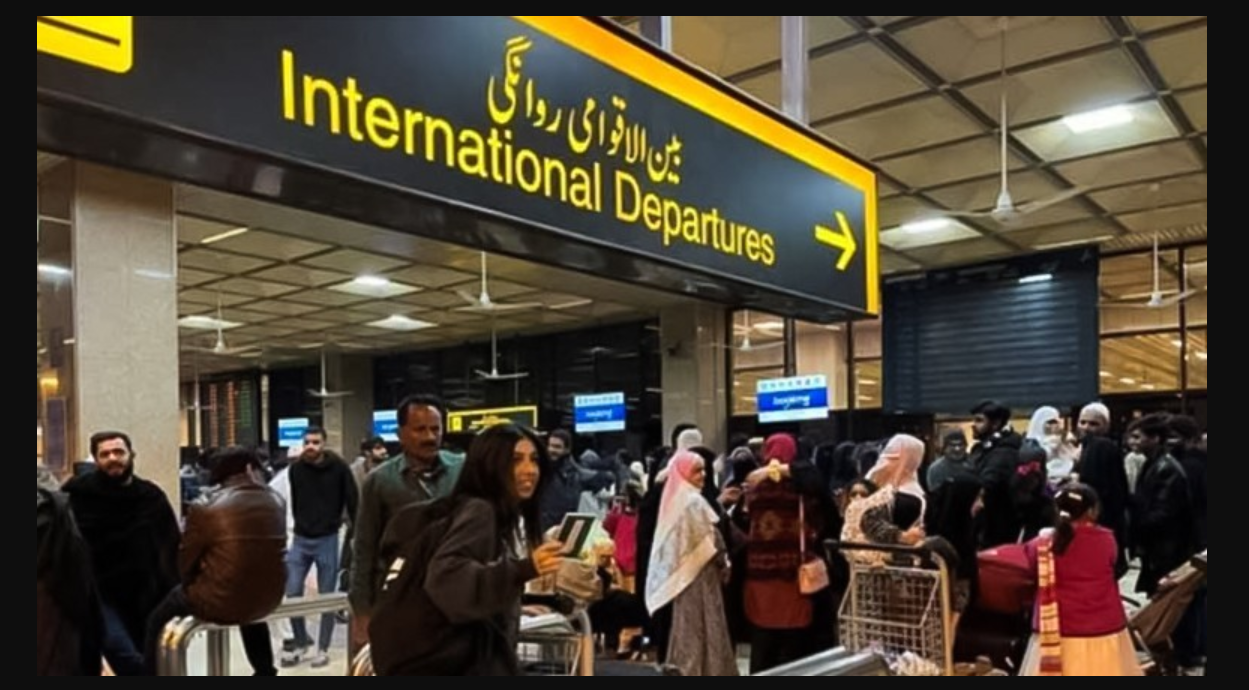

The Lahore High Court has issued detailed guidelines for the Federal Investigation Agency regarding the offloading of passengers at airports.
The ruling states that citizens with valid travel documents cannot be stopped from flying based on vague suspicion. The court emphasized that clear written reasons must be recorded in every such case.
Case that triggered the ruling
The judgment was issued in response to a petition filed by a citizen, Muhammad Abbas.
He was stopped from traveling to Nigeria despite holding a valid visa, confirmed ticket, and complete travel documents.
According to the court, he was allowed to complete immigration clearance and received a boarding pass before being stopped.
He was then offloaded based only on suspicion that he might not return from Dubai.
No legal grounds found for offloading
The court noted that the petitioner was not involved in any criminal case or investigation. He was also not placed on any blacklist or Exit Control List.
Therefore, the court ruled that there was no lawful justification for stopping him from traveling abroad.
The judgment also highlighted that the action resulted in financial loss, mental stress, and reputational damage for the passenger.
Right to travel declared fundamental
The court strongly reaffirmed that the right to travel abroad is a fundamental constitutional right.
It stated that while FIA has enforcement powers, those powers are not unlimited and must follow legal procedures.
Administrative authority must always operate within transparency, fairness, and lawful boundaries.
Mandatory documentation for offloading decisions
The court ruled that recording reasons for offloading is not optional. It is a legal requirement that must be strictly followed. Officials must provide detailed written explanations before preventing any passenger from boarding a flight.
The judgment further stated that vague suspicion is not sufficient grounds for offloading a passenger. All questioning during the process must be properly documented, including passenger responses.
Where possible, interviews or interactions should also be electronically recorded for accountability.
Passenger rights and official responsibility
The court directed that passengers must be given a copy of the offloading order or related documentation.
This ensures that affected individuals understand the reasons and can exercise their legal rights.
The ruling also aims to improve transparency in airport immigration procedures.
Conclusion
The Lahore High Court’s decision introduces stricter accountability for passenger offloading by FIA. It reinforces that travel restrictions must be legally justified, properly documented, and based on clear evidence rather than suspicion.

