
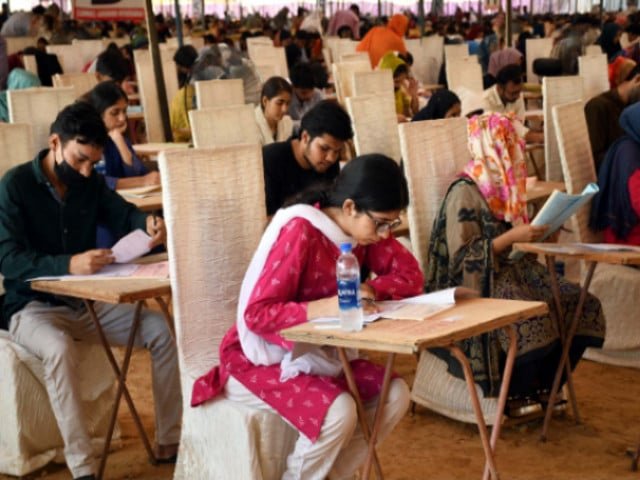

The Lahore High Court (LHC) has directed the University of Health Sciences (UHS) to upload all question paper codes from the MDCAT 2026 examination. The court ordered the university to keep the papers publicly available until the admission process concludes.
Justice Syed Ahsan Raza Kazmi issued the 11-page written judgment while allowing a petition filed by Rayan Shahid Malik. The case, numbered 3516/2026, concerned candidates’ access to examination papers and their ability to raise objections.
The ruling applies specifically to Punjab’s MDCAT 2026 examination. It does not establish a general policy for future medical and dental admission tests.
LHC Directs UHS to Keep MDCAT Papers Available
The court instructed UHS to publish every question paper code on its official website without delay. Moreover, the papers must remain accessible throughout the admission process, allowing candidates to review the questions they attempted.
After the admission process concludes, authorities must invite objections from candidates according to the prescribed policy. This direction addresses concerns about students’ ability to challenge examination questions when the papers are unavailable.
In its judgment, the court said authorities had not provided a reasonable justification for withdrawing the question papers. It also referred to a September 10 letter from the Pakistan Medical and Dental Council (PMDC).
Why the Court Questioned the Removal of Question Papers
The written judgment highlighted difficulties candidates faced after losing access to the papers. Students could not consult hard copies or retrieve the question papers from the UHS website.
As a result, the court observed that candidates faced practical obstacles when attempting to raise objections. Remembering all 180 questions made it difficult for them to identify and challenge specific issues accurately.
The court also questioned the effectiveness of the existing objection and rechecking procedures. Although these mechanisms existed on paper, the judgment found that they did not work effectively in practice under the circumstances.
UHS Examination Guidelines Also Considered
During the proceedings, UHS counsel acknowledged that the examination guidelines allowed candidates to take their question papers home. The court also noted that authorities had not subsequently amended the policy to withdraw that permission.
This point formed part of the court’s consideration of candidates’ access to examination material. The judgment rejected the argument that examination-related matters fell outside the scope of judicial review.
Consequently, the court ordered the university to restore public access to all MDCAT 2026 question paper codes. The direction also provides a clear timeline for keeping the papers available during the ongoing admission process.
Court Expresses Displeasure Over Registrar’s Absence
The court also expressed displeasure because the UHS registrar failed to appear despite receiving a summons. However, the judge did not impose any penalty over the absence.
The ruling focuses on transparency and candidates’ ability to access examination papers during Punjab’s MDCAT 2026 admission process. It also directs authorities to invite objections after admissions conclude, following the applicable policy.
For candidates seeking admission to medical and dental colleges in Punjab, the order establishes that the relevant question papers must remain publicly accessible until the admission process ends. However, the judgment’s scope remains limited to this examination and does not automatically determine arrangements for future MDCAT tests.
For the latest updates, visit and follow The Truth International website (www.thetruthinternational.com) and subscribe to the YouTube Channel.

