
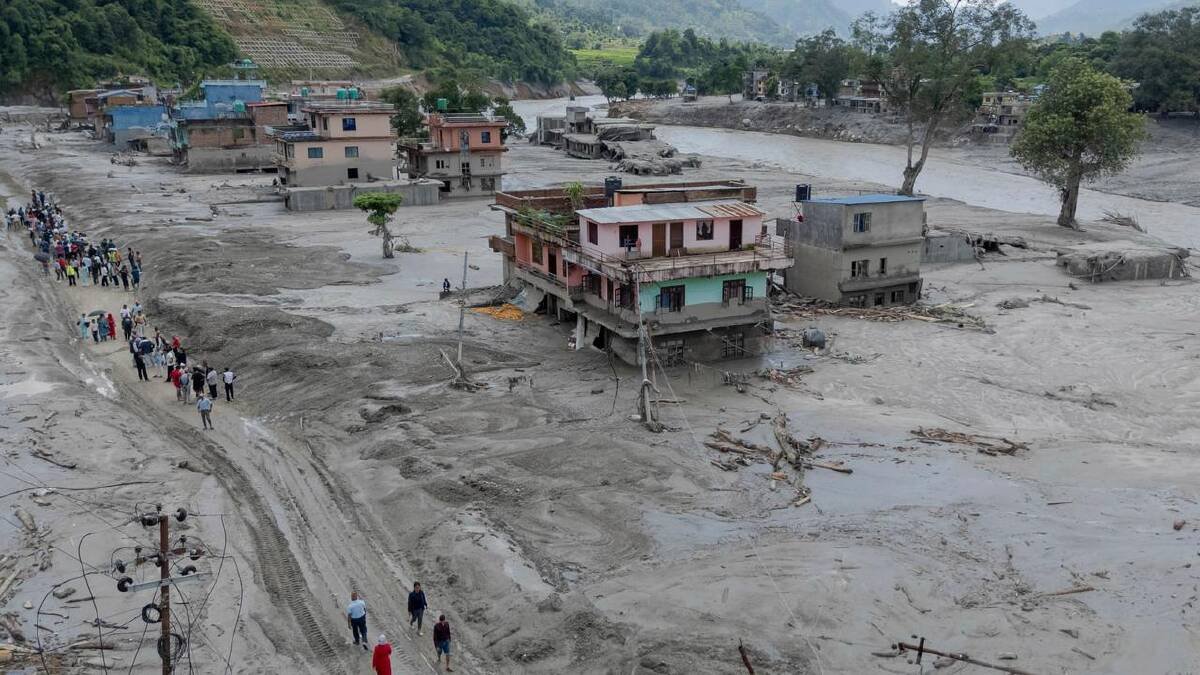

A landslide-created lake on the Nepal-China border overflowed on Friday, triggering panic in flood-hit communities. The development also forced authorities to temporarily halt rescue operations in affected areas.
A catastrophic flood struck the region on Wednesday after a glacier collapse. The disaster killed 489 people in Nepal and five in China’s Tibet, while nearly 1,000 people remain missing.
The collapse sent huge volumes of rock, ice, mud, and debris through Himalayan river systems. It also created a lake where water continued accumulating rapidly. By Friday, authorities estimated the lake contained more than 2.5 million cubic metres of water.
Rising Waters Trigger Fresh Fears
The lake held an estimated 1.5 to 2 million cubic metres of water a day earlier. However, rising levels eventually caused water to overflow into the Bhotekoshi River. Consequently, residents feared another surge could hit communities already devastated by flooding.
People in Nepal’s Rasuwa district quickly moved towards higher ground after receiving warnings. Residents carried belongings as authorities urged them to stay away from the river. Police personnel also remained prepared with ropes and stretchers for emergencies.
Shanti Tamang, 40, described the atmosphere as extremely frightening. She said residents began running after hearing warnings and a siren in nearby Bidur town. Meanwhile, officials continued monitoring the river as water levels increased.
Rescue Operations Temporarily Suspended
The latest development disrupted rescue efforts across the affected region. Authorities instructed rescue workers to move towards safer locations with their equipment. This precaution followed concerns about another sudden rise in river levels.
Officials have not yet determined the lake’s exact size or water level. Therefore, authorities remain cautious while assessing the potential danger. Furthermore, emergency teams continue preparing for possible flooding downstream.
The disaster has already caused widespread devastation across the Himalayan region. Moreover, the large number of missing people has complicated ongoing rescue and recovery operations. Authorities continue monitoring the unstable landscape for further hazards.

