

Citizens Call for Government to Move Closer to Communities
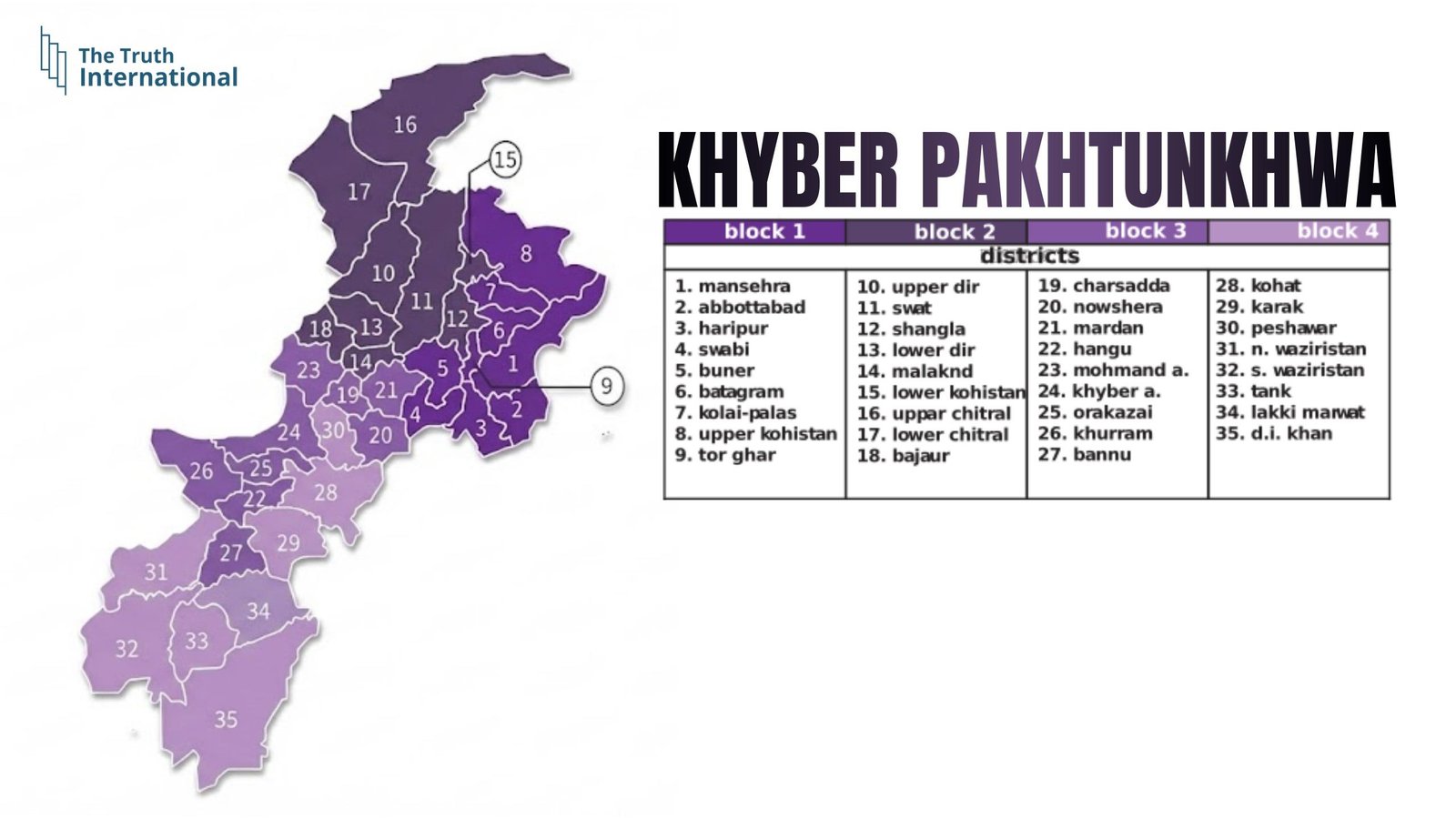
Residents of Khyber Pakhtunkhwa have expressed support for creating new provinces or smaller administrative units to improve governance and public services.
Citizens interviewed in the province said Pakistan’s existing administrative structure had become too broad and difficult to manage effectively.
They argued that smaller units could bring decision-making closer to communities. This could help residents receive government services without facing long delays or travelling to distant administrative centres.
According to the participants, reforms are urgently needed to improve the state’s response to everyday public problems.
They said people in remote districts often face difficulties accessing healthcare, education, policing, justice and other essential services.
Smaller administrative units could allow authorities to understand regional problems more clearly. Officials could also respond faster because they would be responsible for smaller populations and geographical areas.
However, the report did not disclose a formal survey method, sample size or district-by-district breakdown. The views therefore reflect citizens interviewed for the report rather than a scientifically representative province-wide poll.
Smaller Units Seen as Route to Better Representation
Residents said creating additional provinces could improve political representation and allow neglected areas to receive greater attention.
They argued that Pakistan’s four existing provinces cover large populations and extensive territories. This makes it difficult for provincial governments to respond equally to the needs of every district.
The challenge is particularly serious in mountainous and remote parts of Khyber Pakhtunkhwa.
Residents in distant areas may have different security, infrastructure and development requirements from people living near major cities.
Supporters of restructuring believe smaller units could help authorities focus more closely on local roads, hospitals, schools, employment programmes and development projects.
They also said regional representatives would be better positioned to understand the priorities of their communities.
Greater administrative proximity could improve accountability. Citizens would find it easier to identify the officials responsible for delayed projects or poor services.
Residents also argued that decentralisation could improve transparency in public spending.
Smaller administrations could allow budgets and development schemes to be monitored more closely. This could reduce delays and make it harder for resources to remain concentrated around provincial capitals.
Supporters of the proposal maintain that the objective should be administrative efficiency rather than ethnic or political division.
The broader national debate was recently revived after Interior Minister Mohsin Naqvi called for new administrative units and argued that smaller structures could improve accountability, leadership and service delivery.
Constitutional Consensus Required Before Restructuring
The proposal remains politically sensitive despite the support expressed by some KP residents.
New provinces would affect political representation, resource distribution, administrative boundaries and relations between the federation and provincial governments.
Supporters say restructuring could strengthen governance. Opponents warn that poorly designed changes could deepen ethnic, regional and political divisions.
Any plan to alter provincial boundaries would require extensive political and constitutional agreement.
Article 239 of Pakistan’s Constitution states that a constitutional amendment must receive at least a two-thirds majority in both houses of Parliament.
A proposal altering the boundaries of a province must also receive support from at least two-thirds of the total membership of the affected provincial assembly.
This means new provinces cannot be established through an executive announcement alone.
The government would need to develop a clear proposal covering boundaries, finances, institutions, representation and the distribution of natural resources.
Political parties would also need to determine whether creating new provinces is the best solution or whether stronger local governments could deliver similar benefits.
Residents supporting reform said the central objective should remain faster public services and better governance.
They maintained that smaller administrative structures could help governments focus on local development, improve representation and address public complaints more efficiently.
The emerging response from Khyber Pakhtunkhwa has added another dimension to Pakistan’s renewed debate over administrative reform.
The issue is now likely to generate wider discussion about whether the existing four-province structure remains capable of serving a growing population with increasingly complex regional needs.

