
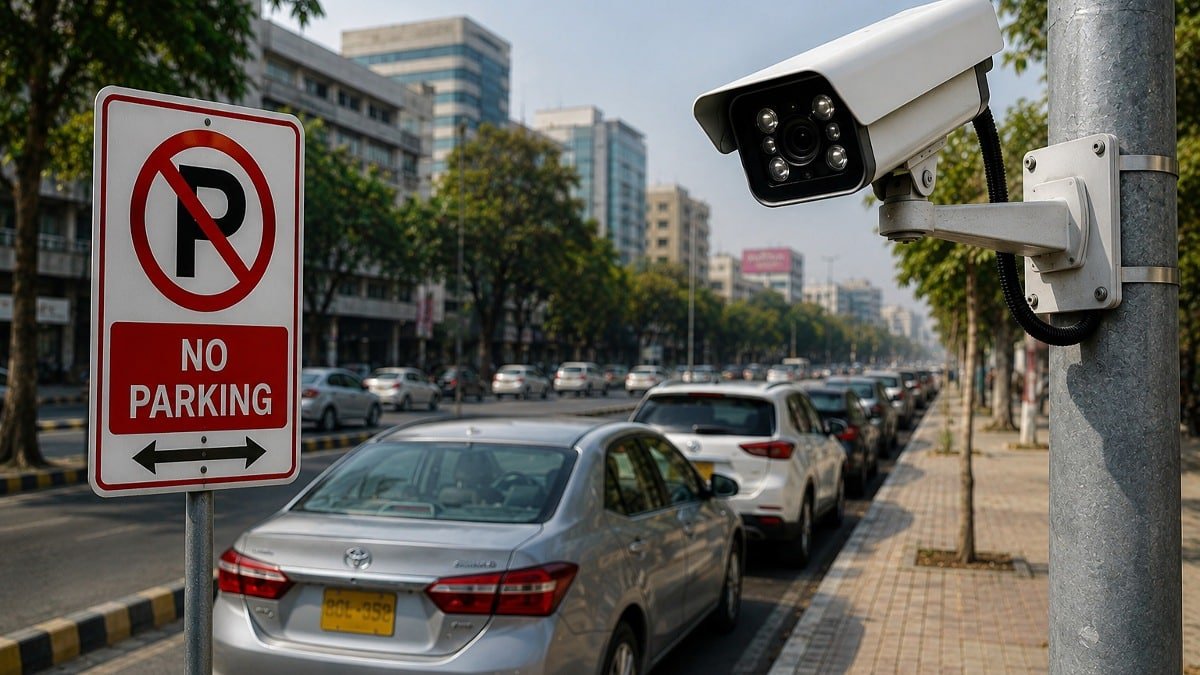

Smart Cameras to Monitor No-Parking Zones
The Sindh Safe Cities Authority plans to install smart cameras across Karachi to detect vehicles parked illegally in restricted areas.
The cameras will be positioned at selected no-parking zones. They will monitor vehicles without requiring traffic officers to remain physically present at every location.
Artificial intelligence and number plate recognition technology will identify vehicles violating parking restrictions. Details of the suspected violation will then be sent to the Karachi Traffic Police for further action.
The initiative is designed to reduce traffic obstruction on busy roads. Illegal parking often narrows traffic lanes, blocks commercial areas and creates long queues on major routes.
The system may also help authorities take action against vehicles parked near intersections, hospitals, markets, bus stops and other sensitive locations.
Officials have not yet announced the complete list of roads where the cameras will be installed. The implementation schedule and total number of dedicated no-parking cameras also remain unclear.
Violations to Be Sent Directly to TRACS
Information collected by the cameras will be transmitted to the Traffic Regulation and Citation System, known as TRACS.
The platform allows traffic authorities to process violations electronically. Once a vehicle is identified, the registered owner can receive an electronic challan without a physical exchange with a traffic officer.
Sindh Safe Cities Authority Director General Sarfaraz Nawaz said the system would support real-time and faceless traffic enforcement.
The automated process is expected to reduce roadside disputes between motorists and police. It may also improve transparency by creating photographic and digital evidence of each alleged violation.
Karachi has already introduced camera-based electronic challans for several traffic offences as part of the Safe City Project. The system uses surveillance footage and vehicle registration information to identify suspected violators.
Authorities will need to ensure that camera footage clearly shows the vehicle, number plate, location and relevant parking restriction before issuing a fine.
Motorists should also have access to a transparent review or appeal system in cases involving incorrect number plates, unclear signs or vehicles registered to previous owners.
Safe City Surveillance Network Continues to Expand
The no-parking cameras will become part of Karachi’s wider Safe City surveillance system.
The first phase of the project included around 1,300 cameras installed across approximately 300 locations, along with emergency response and monitoring infrastructure.
The Sindh government approved the project’s second phase in April 2026 at an estimated cost of Rs9.98 billion. More than 2,300 additional smart cameras are planned across different parts of Karachi.
The second phase includes cameras for general surveillance, automatic number plate recognition, facial recognition and traffic enforcement. It will significantly expand monitoring beyond the areas covered during the initial rollout.
The long-term Safe City plan aims to establish a larger citywide network capable of supporting crime prevention, traffic management and emergency response. The Sindh Safe Cities Authority describes video surveillance and integrated communication as central components of the project.
Authorities Hope to Reduce Congestion and Human Intervention
Illegal parking remains a major contributor to traffic congestion in Karachi. Vehicles parked along narrow roads and commercial streets often reduce available road space and disrupt the normal flow of traffic.
Automatic detection could allow traffic police to enforce restrictions more consistently. It could also help authorities identify repeat violations and locations where illegal parking occurs most frequently.
The system may reduce opportunities for selective enforcement because violations will be recorded digitally. It could also allow officers to focus on traffic control, emergencies and dangerous driving.
However, effective enforcement will require visible no-parking signs, updated vehicle ownership records and reliable camera systems.
Authorities will also need to protect personal data collected through the expanding surveillance network. Clear rules will be required regarding access to footage, storage periods and the handling of incorrect challans.
The Sindh Safe Cities Authority said the new cameras would strengthen Karachi’s digital traffic enforcement system and support immediate action against vehicles parked in prohibited areas.

