
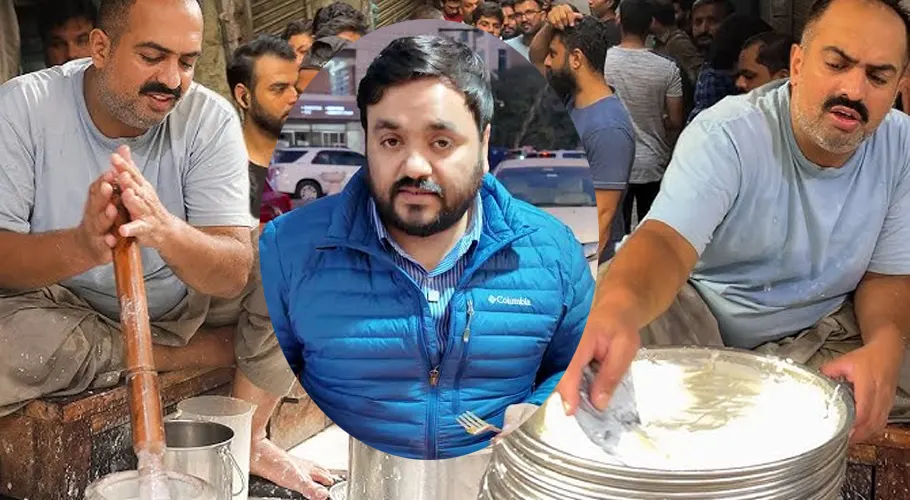

Viral Podcast Allegation Triggers Legal Dispute
A major legal dispute has emerged between Lahore’s renowned Jeda Lassi business and food vlogger Vicky Panda, whose real name is Waqas Saleem.
The controversy began after the vlogger appeared on a podcast hosted by The Blue Truth Digital. During the discussion, he questioned whether the famous Lahore outlet used fresh milk in its signature lassi.
Vicky Panda allegedly claimed that the drink was prepared using chemical-based ingredients instead of traditional dairy products. He described the beverage as an artificial mixture and also raised broader doubts about the availability of genuine milk in Lahore.
Clips from the podcast quickly circulated across social media platforms. The claims attracted public attention because Jeda Lassi is a longstanding Lahore business known for serving traditional dairy drinks.
The owners strongly rejected the allegations. They argued that the statements had damaged the reputation and commercial standing of their business.
Business Demands Evidence or Legal Accountability
Jeda Lassi has initiated defamation proceedings seeking Rs100 million in damages from the content creator.
According to the reported legal action, the business has demanded that Vicky Panda provide evidence supporting his claims. The owners maintain that allegations about chemical ingredients cannot be presented publicly without reliable proof.
The legal notice reportedly identifies the claimant as Atif Ali and names Muhammad Waqas, also known as Vicky Panda, as the opposing party. The requested compensation is based on alleged reputational and financial harm caused by the viral remarks.
The available reports do not cite any laboratory test, inspection report or official food authority finding confirming the vlogger’s allegation. They also do not provide a detailed public response from Vicky Panda to the reported defamation claim.
The dispute will therefore depend on whether the allegations can be supported with credible evidence. The business may also be required to demonstrate how the statements affected its reputation, customer confidence or revenue.
The matter has renewed questions about the legal responsibility of online reviewers. Content creators can criticise food quality and raise public health concerns. However, serious allegations against a business normally require strong verification, particularly when they involve claims of unsafe or artificial ingredients.
Social Media Divided Over Vlogger Accountability
The controversy has divided social media users. Some people have defended the vlogger and said food reviewers should be allowed to question product quality and hygiene standards.
Others have criticised the remarks as unverified and potentially damaging. They argue that viral accusations can cause immediate harm to a business before any official investigation is completed.
The case has also revived debate about the growing influence of food vloggers in Pakistan. A single negative video can reach millions of viewers and significantly affect customer behaviour.
Some restaurant owners have previously accused online reviewers of applying pressure for free meals, paid promotions or special treatment. However, such concerns do not remove the public’s right to receive honest and evidence-based information about food safety.
The Jeda Lassi dispute highlights the need for a responsible balance. Businesses must remain open to legitimate scrutiny. Influencers must also separate personal opinions from claims presented as established facts.
Any official food safety investigation could help clarify the central allegation. Until credible evidence is produced, the claim that Jeda Lassi uses chemical ingredients remains an allegation disputed by the business.
The legal proceedings may now determine whether the vlogger’s comments were protected criticism or defamatory claims that caused unlawful reputational damage.

