
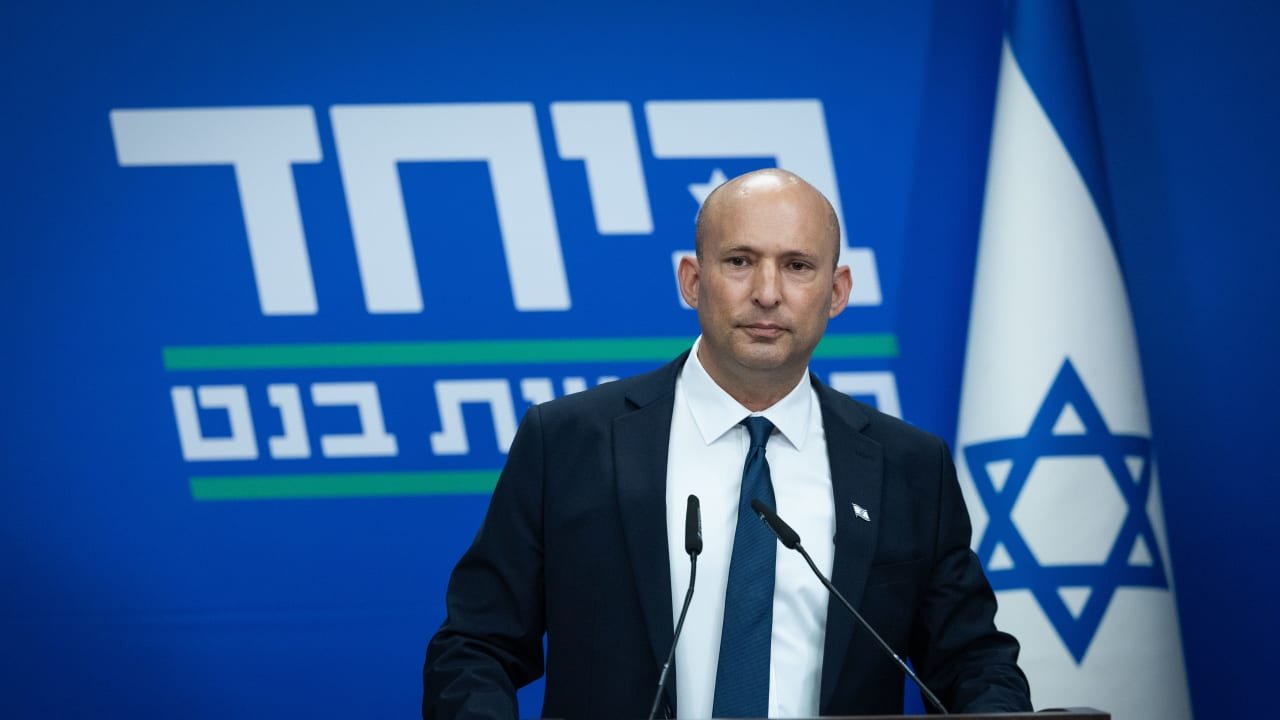

Bennett Calls for Leadership Change While Opposition Criticises Deal
JERUSALEM: Former Israeli prime minister Naftali Bennett sharply criticised the current government on Monday, arguing that political change in Israel is necessary to confront regional challenges more effectively, including those involving Iran.
Bennett said the current leadership had failed to achieve its strategic objectives and linked future efforts against Tehran to a change in government. He also called for mandatory military service for all eligible citizens, arguing that increased recruitment would strengthen the Israel Defense Forces (IDF) and improve national security.
Furthermore, Bennett advocated reviving what he described as the “Octopus Doctrine,” a strategy combining political, economic, technological and military measures aimed at countering Iran’s regional influence while preventing its nuclear development.
His remarks came as Israeli political leaders continued to debate the recently announced US-Iran agreement and its potential impact on regional security.
Officials Divided Over Implications of Emerging Framework
Meanwhile, National Security Minister Itamar Ben-Gvir declared that Israel was not bound by the agreement reached between Washington and Tehran. He insisted that Israeli security policy would remain independent and stressed that military gains in Lebanon should not be reversed.
Similarly, Finance Minister Bezalel Smotrich criticised the framework, describing it as harmful to both Israel and the wider international community. Former military chief Gadi Eisenkot also expressed concerns, arguing that the agreement reflected broader shortcomings in government strategy and leadership.
On the other hand, Culture Minister Miki Zohar highlighted the strength of ties between Israeli Prime Minister Benjamin Netanyahu and US President Donald Trump, expressing confidence in continued cooperation between the two allies.
Security and Regional Policy Remain Central Issues
Opposition leaders Benny Gantz and Yair Golan also voiced reservations about the agreement, warning against restrictions on Israel’s military freedom of action in Lebanon and other neighbouring areas.
Additionally, Defence Minister Israel Katz reiterated that Israeli forces would continue operating in designated security zones in Lebanon, Syria and Gaza. He said Israel would maintain its focus on dismantling hostile infrastructure and protecting border communities.
The debate reflects deep divisions within Israel over the future direction of regional security policy following the announcement of the US-Iran agreement.

