
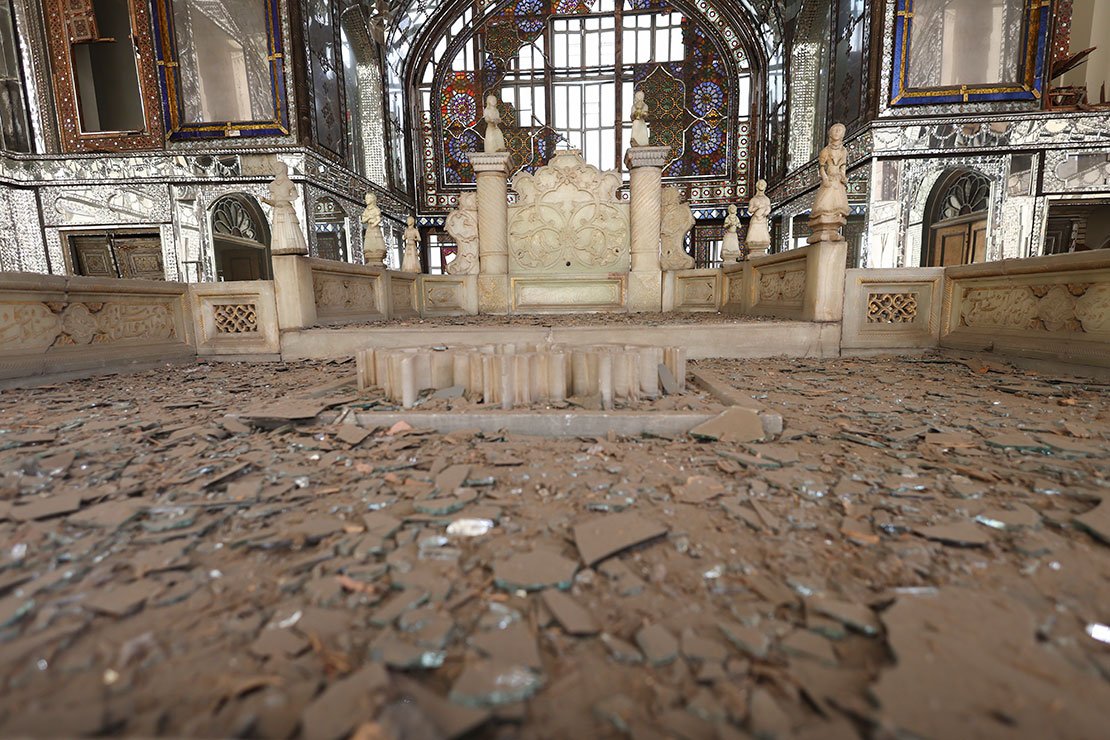

Reuters investigation documents structural damage at UNESCO-linked sites as experts warn of growing risks to centuries-old monuments
Israeli airstrikes during the recent conflict with Iran caused damage to several historic landmarks in Isfahan and Tehran, according to a Reuters visual investigation that documented structural impacts at cultural sites, including UNESCO-protected locations.
Reuters journalists, who visited the affected areas after the fighting subsided, reported damage at 11 historic buildings. Among the affected landmarks were Isfahan’s Naqsh-e Jahan Square, Chehel Sotoun Palace, Ali Qapu Palace, the Museum of Decorative Arts, Golestan Palace in Tehran and parts of the Sa’dabad Cultural and Historical Complex. The damage included shattered windows, cracked walls, broken tilework, damaged ceilings and weakened structural elements.
Experts highlight risks to centuries-old monuments
According to preservation specialists, the destruction largely resulted from powerful blast waves generated by nearby strikes rather than direct hits on the heritage sites. Experts explained that shockwaves from large aerial munitions can damage historic structures hundreds of metres away by cracking foundations, walls and decorative features.
UNESCO confirmed damage at seven cultural locations across Iran, including two World Heritage Sites, while Iranian authorities submitted a broader list of 134 damaged heritage locations for assessment. UNESCO said it had shared the coordinates of protected cultural sites with all parties during the conflict and reiterated that international law requires safeguarding cultural property during armed conflicts.
International concern grows over heritage protection
Meanwhile, the Israeli military acknowledged targeting the Isfahan governor’s office, located near the UNESCO-listed palace complex, stating that it only strikes military objectives in accordance with international law.
Archaeologists and cultural preservation experts said the reported damage represents a significant challenge to internationally recognised heritage protection standards. Several academics also expressed concern that attacks near historic monuments could threaten irreplaceable cultural treasures despite their protected status.
The investigation further found damage to Iran’s historic railway network, Jameh Mosque in Isfahan and the ancient Falak-ol-Aflak fortress, while experts continue evaluating the full extent of losses across the country’s cultural landscape.

