
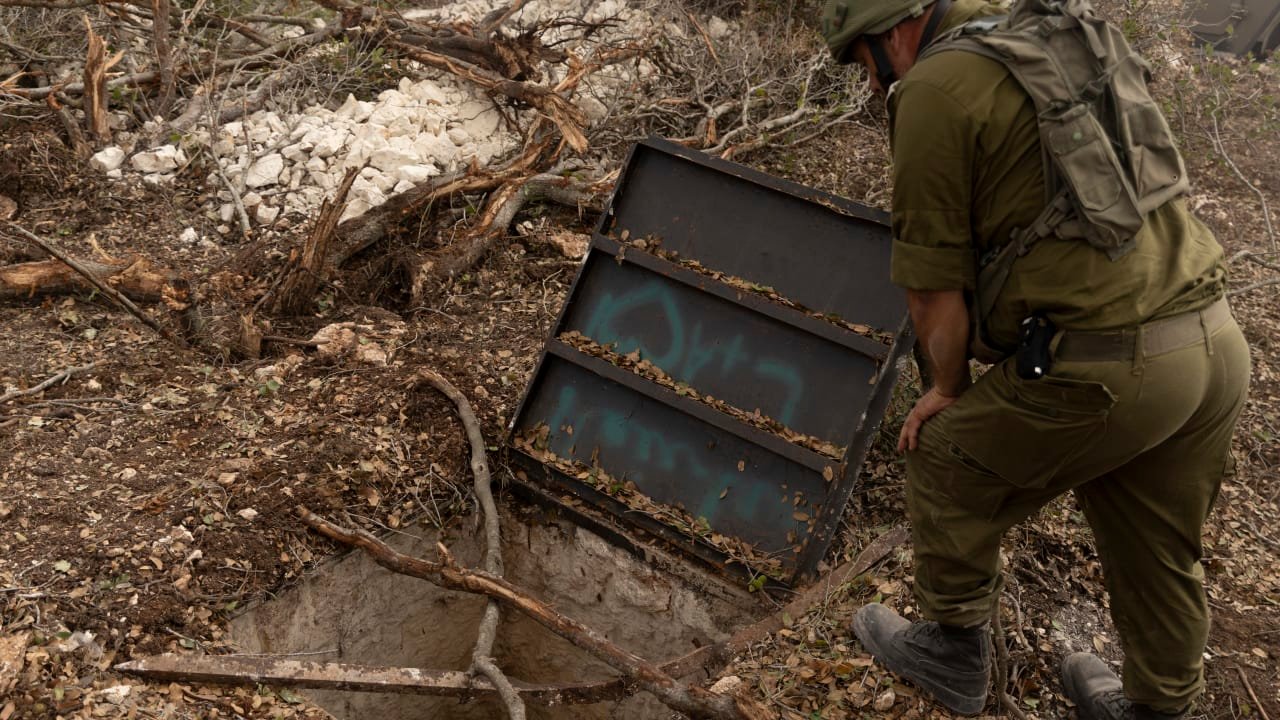

Security officials discuss possible transfer of responsibility amid ongoing military pressure and ceasefire constraints in southern Lebanon
JERUSALEM: Israeli security officials are considering allowing the Lebanese army to assume control of a Hezbollah tunnel compound in the southern Lebanese village of Tebnit, in what could become a key test of Beirut’s willingness and ability to confront the Iran-backed group, according to a report by N12 on Sunday.
The proposal was reportedly raised in recent political and military discussions and may remain on the agenda during upcoming talks scheduled for Tuesday. Israeli officials believe that transferring responsibility for the site to the Lebanese army could help assess whether Lebanon’s state institutions are prepared to act publicly and directly against Hezbollah in a way not previously seen.
An Israeli source quoted in the report said the move could serve as a test of the Lebanese army’s motivation and capacity to deal with Hezbollah in an open and unprecedented manner. At the same time, security officials acknowledged that the Lebanese army has historically struggled to take meaningful action against the group.
Tebnit emerges as focal point of Israeli military activity
Tebnit has become a major centre of Israeli military operations in southern Lebanon over the past week. According to Israeli intelligence cited by N12, between 30 and 40 Hezbollah fighters are believed to be operating inside a large underground compound beneath the village.
Although Israeli forces are reportedly active above the site, the report said ongoing ceasefire efforts between the United States and Iran have prevented them from entering the tunnel complex directly.
IDF says tunnel network is central military target
According to the report, the compound contains an extensive tunnel network and has become a central military objective for Israeli forces operating in the area. The Israeli military also revealed another underground Hezbollah compound in Majdal Zoun on Sunday.
That site, located about 10 kilometres from the Israeli border, is said to be 29 metres deep, more than 200 metres long, and equipped with 12 rooms, blast doors, four missile launch sites and hundreds of weapons.

