
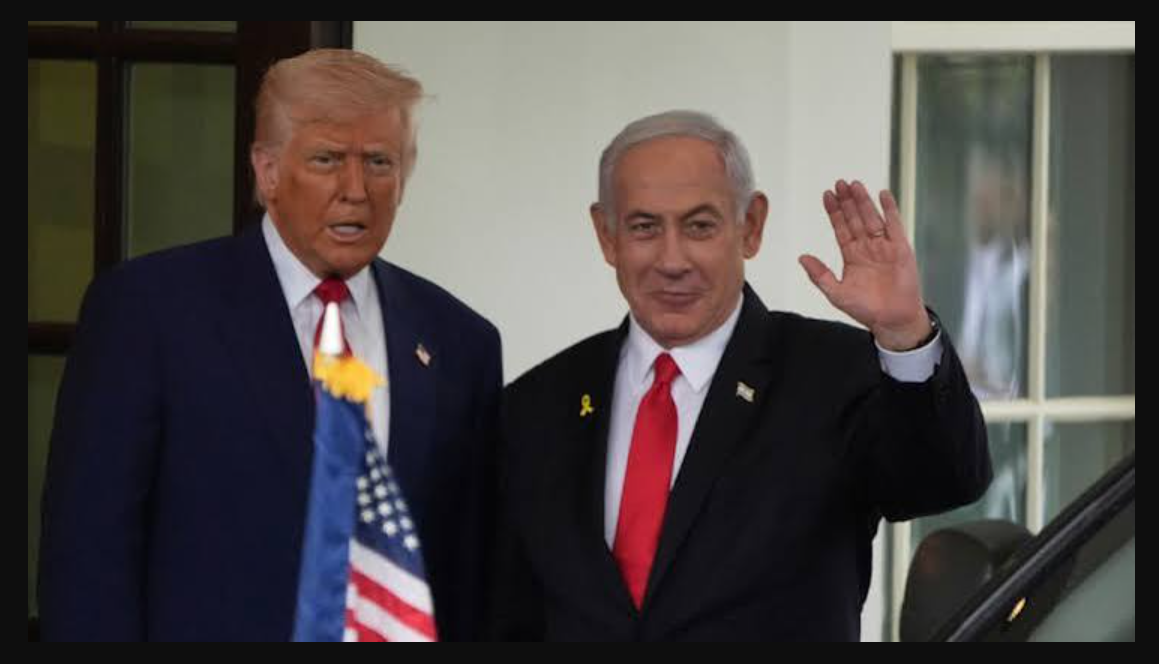

Trump Rejects Israeli Pressure Over Fighter Jet Deal
United States President Donald Trump has dismissed Israeli objections to the possible sale of F-35 stealth fighter jets to Turkiye.
Speaking to reporters aboard Air Force One on July 27, Trump said no foreign leader would determine which countries could purchase American military equipment.
His remarks followed Israeli Prime Minister Benjamin Netanyahu’s public opposition to any F-35 agreement with Ankara.
“Nobody tells me what we should be selling,” Trump said while defending Turkiye’s position as a NATO partner.
Trump described Turkiye as a strong ally and praised President Recep Tayyip Erdogan’s leadership.
He also recognised the deep political differences between Ankara and Israel.
Trump said Turkiye was not supportive of Israel or Netanyahu. However, he maintained that Ankara remained an important American partner.
Netanyahu has argued that transferring advanced fighter aircraft to Turkiye could change the regional military balance.
Israel is currently the only country in the Middle East operating the F-35.
The aircraft’s advanced surveillance, targeting and stealth capabilities are central to Israel’s military advantage in the region.
Netanyahu has also criticised Erdogan’s regional policies and Turkiye’s hostility towards Israeli military operations.
Despite those warnings, Trump has indicated that his administration is prepared to examine whether Ankara can rejoin the F-35 programme.
S-400 Dispute Still Blocks Final F-35 Agreement
Turkiye was removed from the American-led F-35 programme after purchasing Russia’s S-400 air defence system in 2019.
Washington argued that operating the Russian system near F-35 aircraft could expose sensitive information about the jet’s technology.
The United States later imposed sanctions on Turkiye over the purchase.
American law and existing security requirements continue to create obstacles to any new fighter jet agreement.
Vice President JD Vance previously said the administration was reviewing how a sale could proceed while complying with US law.
He said officials would need to certify that specific conditions had been met before Turkiye could receive the aircraft.
Trump raised the issue during the NATO summit in Ankara earlier in July.
He praised Erdogan and said Washington would consider allowing Turkiye to purchase F-35 jets.
The president also announced plans to remove sanctions imposed over the S-400 acquisition.
However, no final sales agreement has been approved.
The State Department reportedly informed Congress that Turkiye still did not meet the requirements needed to purchase the aircraft.
Any agreement could also face opposition from lawmakers concerned about Russian defence technology, Israeli security and Turkiye’s regional policies.
Netanyahu’s opposition may therefore increase political pressure in Washington, but it is not the only obstacle.
The proposed sale would require the administration to address legal, technical and congressional concerns before aircraft could be delivered.
Trump Says Israel Depends on American Support
Trump also made unusually direct remarks about Israel’s dependence on the United States.
He said Israel would not survive without American military and political assistance.
The president argued that Washington had supported several countries whose security depended heavily on the United States.
He specifically identified Israel as one of those countries.
His remarks came before another meeting with Netanyahu in Washington.
The leaders were expected to discuss Iran, regional security, Gaza and the proposed F-35 sale to Turkiye.
Their relationship remains strategically important but has faced visible disagreements.
Netanyahu has urged the United States to maintain pressure on Iran and prevent Tehran from rebuilding its nuclear and military capabilities.
Trump, meanwhile, has temporarily paused further American strikes while supporting renewed diplomatic efforts.
Trump credited American intervention with protecting Israel during the conflict with Iran.
He argued that Iran could have posed an existential danger to Israel without US involvement.
The president also praised Netanyahu for cooperating with Washington during the military campaign.
However, his comments about Israel’s dependence on the United States highlighted the unequal balance within the alliance.
The F-35 dispute could become another test of Netanyahu’s influence over American Middle East policy.
Trump has made clear that Israeli objections will not automatically determine Washington’s decisions.
For now, the fighter jet deal remains under consideration.
No final approval, delivery schedule or contract has been announced.

