
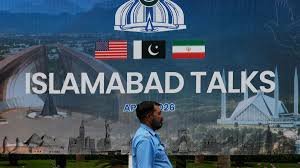

A second round of high-level talks between the United States and Iran is expected to take place in Islamabad on Monday. The development signals renewed diplomatic momentum. Both sides are aiming to reduce tensions and move closer to a possible agreement.
According to reports citing Iranian sources, delegations from both countries are likely to arrive in Islamabad on Sunday. The meetings will focus on resolving key issues. These include Iran’s nuclear programme and broader regional security concerns.
Pakistan is once again playing a central role as a mediator. The country hosted the first round of talks last week. However, that meeting ended without any major breakthrough.
Focus on Nuclear Programme and Sanctions Relief
The upcoming talks are expected to address critical points of disagreement. The United States wants strict limits on Iran’s uranium enrichment. It is also seeking tighter controls on nuclear facilities.
On the other hand, Iran maintains that its nuclear programme is its sovereign right. Iranian officials have shown some flexibility. However, they have indicated that only temporary restrictions may be acceptable under a deal.
Sanctions relief is also a major issue. Tehran is pushing for easing economic restrictions. These sanctions have impacted its economy for years. Washington, however, wants strong guarantees before offering any relief.
Experts say this round of talks could be more decisive. Both sides appear to be under pressure to reach a compromise. Regional stability depends heavily on the outcome of these discussions.
Pakistan’s Mediation and Regional Diplomacy
Pakistan has taken an active diplomatic role in facilitating dialogue. Prime Minister Shehbaz Sharif and Chief of Army Staff Asim Munir have been engaging with multiple stakeholders.
They have held talks with Iranian officials and key regional partners. These include Qatar and Turkey. The goal is to create a framework for peace and cooperation.
Pakistan’s efforts are being seen as crucial. The country aims to prevent further escalation in the Middle East. Diplomatic sources say backchannel communication is also ongoing.
The talks come at a sensitive time. A ceasefire arrangement linked to earlier negotiations is set to expire soon. This adds urgency to the upcoming meeting in Islamabad.
Uncertainty Remains Despite Optimism
Despite growing optimism, uncertainty still surrounds the talks. Neither Washington nor Tehran has officially confirmed the meeting. However, signals from leadership suggest that discussions are likely.
Donald Trump has hinted at progress in recent statements. He suggested that negotiations could take place over the weekend. However, he did not share detailed information.
A White House official also indicated that Trump may address the issue soon. The US president is expected to speak from the Oval Office. His remarks could provide more clarity on the situation.
Observers believe this round of talks could shape future relations between the two countries. A successful agreement may ease regional tensions. It could also stabilize global energy markets.
However, failure to reach a deal may lead to renewed conflict. The stakes remain high for all parties involved.
For now, all eyes are on Islamabad. The city is once again at the center of global diplomacy. The outcome of these talks could have far-reaching consequences.

