
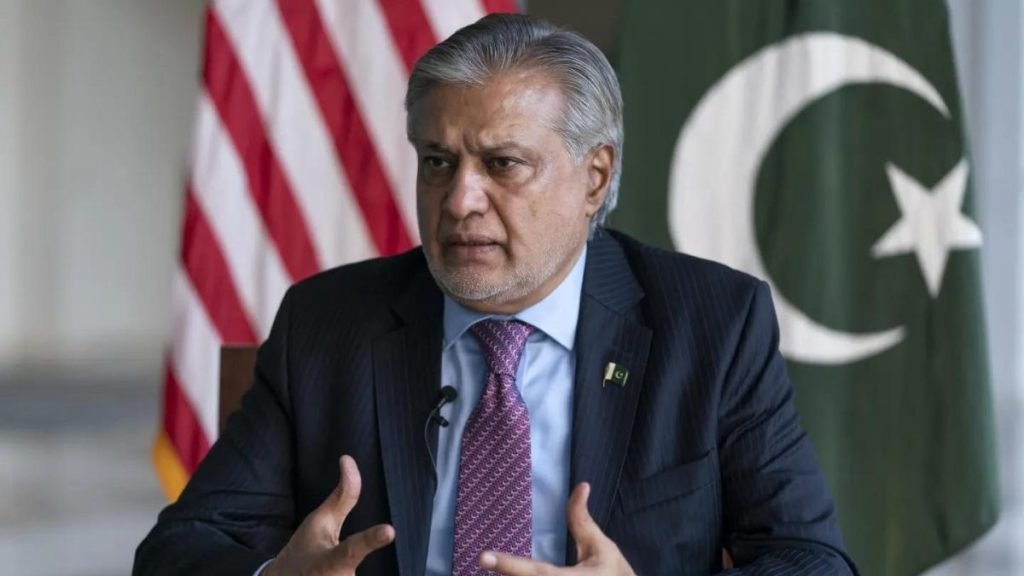

Foreign Minister Places Deal on Parliamentary Record
Foreign Minister Ishaq Dar has tabled the three-page US-Iran agreement in the National Assembly, saying the document had been misunderstood and misquoted.
Addressing lawmakers, Dar said it was important to place the agreement on record so members of parliament could review, quote and understand it correctly.
He also presented the June 22 joint communiqué issued by the United States, Iran, Qatar and Pakistan.
Dar said every page of the agreement carried initials, while the final page contained full signatures.
He added that the Foreign Office had uploaded the communiqué to its website for public and parliamentary access.
Agreement Structured in Two Phases
The foreign minister said the agreement was built around two phases.
According to Dar, the first phase focused on immediate resolution and had already produced visible results.
He said the US naval blockade had ended, while Iran had removed additional fees, charges, permits and restrictions.
Dar also said global fuel pressures had started easing after progress in the peace process.
The second phase will focus on technical discussions.
These talks will cover nuclear matters, sanctions, frozen Iranian assets and the Lebanon issue.
Dar said these matters had been the real source of complications in the conflict.
Pakistan Defends Neutral Mediation Role
Dar said Pakistan acted as a trusted and neutral mediator throughout the process.
He said Pakistan did not side with either party and kept the negotiations confidential until both sides allowed information to be shared.
He credited Prime Minister Shehbaz Sharif, Field Marshal Asim Munir and the Foreign Ministry for continuing diplomatic efforts despite major challenges.
Dar said the breakthrough came after a long negotiating session involving senior delegations from the United States, Iran and Pakistan.
He added that regional partners, including Saudi Arabia, Egypt and Turkiye, were also engaged through diplomatic forums.
The foreign minister said Pakistan’s role had improved its diplomatic standing and helped position the country as a regional peacemaker.
He also acknowledged China’s support and its peace initiative on keeping the Strait of Hormuz open.
Dar concluded that the agreement marked a major diplomatic success for Pakistan and a step toward wider regional stability.

