

Historic Export Clears Customs at Tianjin Port
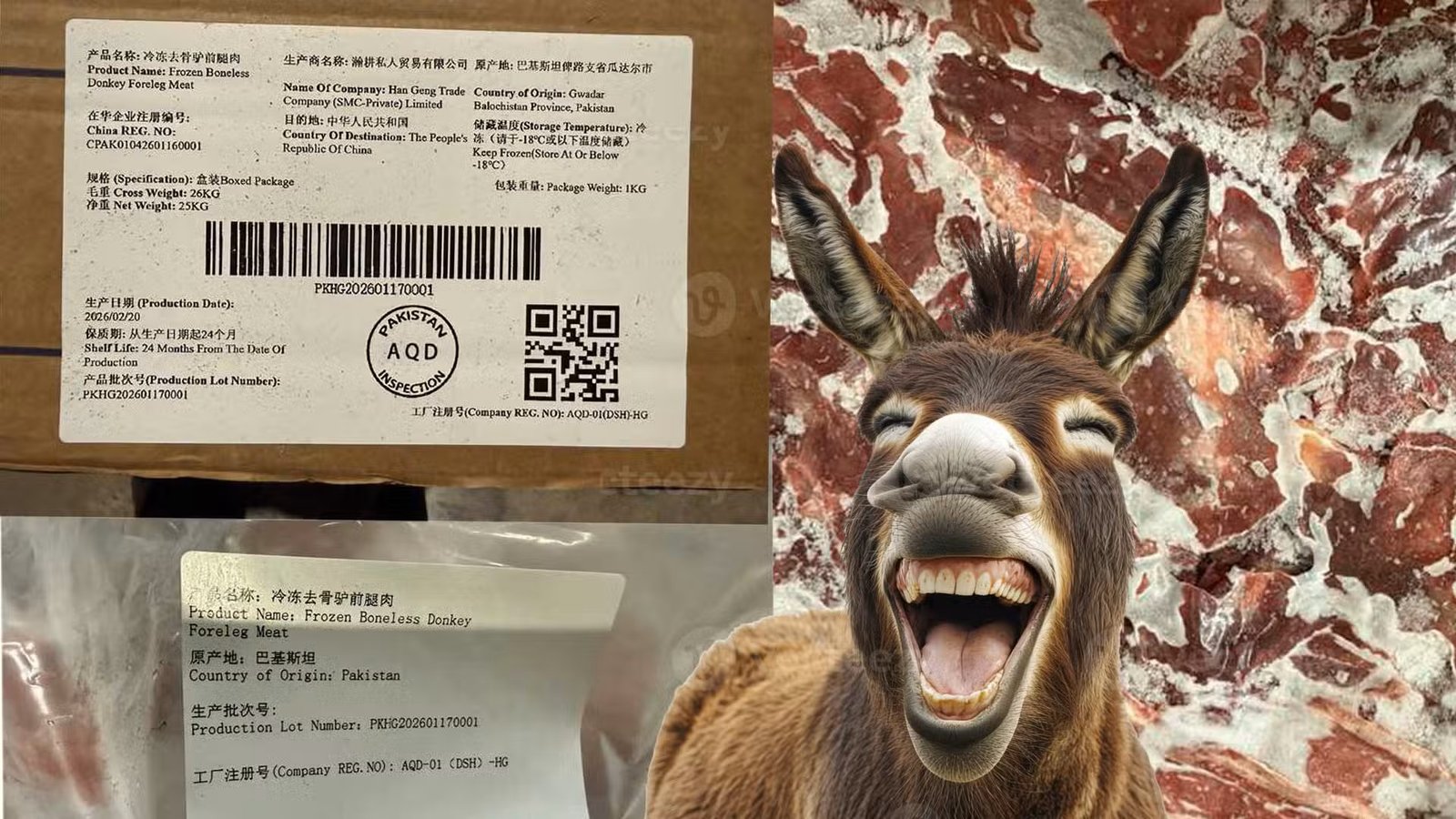
Pakistan has exported donkey meat to China for the first time, marking a new development in livestock trade between the two countries.
The inaugural shipment was processed at a facility in the Gwadar Free Zone before being transported to China. It successfully cleared customs at Tianjin Port and formally entered the Chinese market.
A representative of Hengeng Trading Enterprise described the shipment as the first food product manufactured in the Gwadar Free Zone to reach China.
The company thanked the Ministry of National Food Security and Research, the China-Pakistan Economic Corridor Authority, Prime Minister Shehbaz Sharif and Planning Minister Ahsan Iqbal for supporting the project.
The official said the export reflected growing progress under the second phase of the China-Pakistan Economic Corridor. This stage of CPEC focuses on industrial development, agriculture, trade and private-sector investment.
The shipment also represents an effort to move beyond exports of raw livestock by processing meat and hides inside Pakistan before sending them to international markets.
Export Deal Followed Years of Regulatory Work
Pakistan and China completed the required export protocols for donkey meat and hides in 2024.
The agreements established rules covering animal health, disease control, slaughtering standards, quarantine procedures, packaging and inspection.
Pakistan later amended its export policy to permit donkey meat and hide shipments from approved slaughterhouses operating inside the Gwadar Free Zone.
Hengeng then secured the necessary approvals from Pakistani quarantine and customs authorities.
The company also obtained clearance from China’s General Administration of Customs before beginning commercial exports.
These approvals were required to ensure that the products met Chinese food safety, veterinary and import standards.
The shipment could open the way for further exports if Pakistani facilities continue meeting the required health and processing conditions.
Authorities are expected to monitor animal sourcing, transportation, slaughtering and product traceability as the trade expands.
Chinese Company Establishes $50 Million Gwadar Facility
Hengeng Trading Enterprise has established a slaughterhouse in the Gwadar North Free Zone with a reported investment of $50 million.
The facility is designed specifically to process donkey meat and hides for export to China.
The project is part of wider efforts to attract Chinese investment into Pakistan’s livestock and agricultural industries.
The company is expected to purchase animals through approved supply chains and process them under regulated conditions.
Supporters of the project say it could create employment in Gwadar and nearby areas. It may also generate opportunities in animal farming, transportation, cold storage, packaging and export logistics.
The slaughterhouse could help Pakistan earn more foreign exchange by exporting processed products instead of only supplying live animals or untreated hides.
However, sustainable livestock management will remain important if the industry expands. Authorities will need to ensure that rising export demand does not reduce domestic donkey populations or encourage illegal animal sourcing.
China’s Demand Driven by Meat and Ejiao Industry
China is a major market for donkey meat and donkey hides.
Donkey hide is widely used in the production of Ejiao, a traditional Chinese medicinal product. The hide is processed to produce gelatin used in medicines, health products and traditional remedies.
Strong demand for Ejiao has increased the international trade in donkey hides. Several countries now export hides and related products to Chinese buyers.
Pakistan has one of the world’s largest donkey populations, making it a potential supplier for the Chinese market.
The Gwadar project aims to convert this livestock base into a regulated export industry with approved processing and quarantine systems.
Pakistani officials have said the trade could strengthen agricultural cooperation with China and expand the country’s livestock export sector.
It could also attract further foreign investment into animal breeding, veterinary services, meat processing and cold-chain infrastructure.
Export Marks Progress Under CPEC’s Second Phase
The first shipment is being presented as a milestone for the Gwadar Free Zone and the next phase of CPEC cooperation.
Earlier CPEC projects focused heavily on roads, energy and infrastructure. The second phase places greater emphasis on industrial zones, agriculture, exports and business partnerships.
The successful entry of the shipment into China shows that products processed in Gwadar can meet international customs and regulatory requirements.
Officials hope the development will encourage more companies to establish processing units inside the free zone.
Future exports may include additional livestock products, seafood, agricultural goods and other value-added food items.
The long-term success of the donkey meat trade will depend on consistent quality controls, transparent supply chains and continued access to the Chinese market.
For Pakistan, the first shipment represents a small but notable step towards diversifying exports and increasing trade through Gwadar.

