
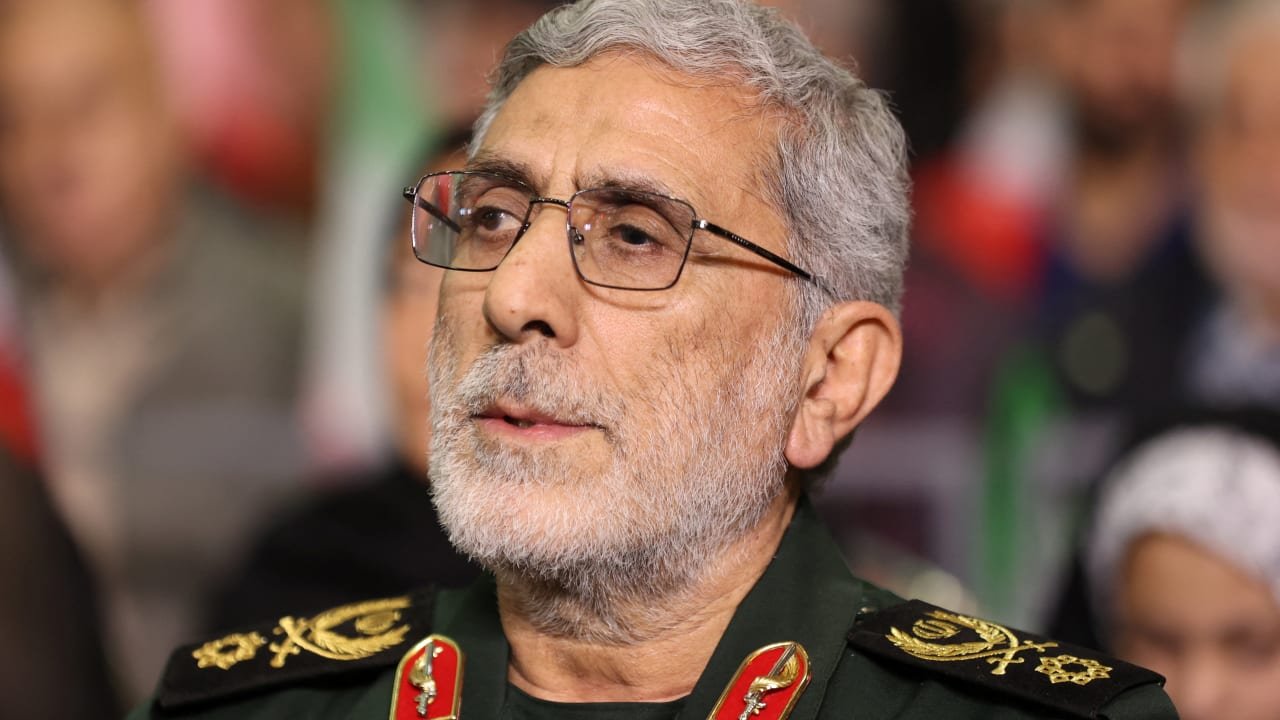

Qaani Signals Potential Expansion of Conflict Beyond Current Fronts
Iran’s Quds Force commander, Brigadier-General Esmaeil Qaani, has issued a fresh warning to the United States and Israel, cautioning that continued military operations in Gaza and Lebanon could trigger broader regional consequences.
According to statements carried by Iranian state media, Qaani said further escalation could lead to the activation of additional fronts across the region. He also suggested that maritime traffic through the Bab el-Mandeb Strait could face challenges similar to those currently affecting navigation in the Strait of Hormuz.
The remarks come amid heightened tensions across the Middle East and ongoing concerns over regional security. Qaani argued that military pressure on groups aligned with Iran would strengthen what Tehran describes as the “Axis of Resistance” and encourage greater coordination among allied movements.
Furthermore, he warned that military actions in Lebanon and Gaza could provoke responses from regional groups operating in multiple theaters.
Strategic Waterways and Regional Alliances Remain in Focus
Qaani remains one of Iran’s most influential yet low-profile military figures. He assumed leadership of the Quds Force in 2020 following the death of his predecessor, Qasem Soleimani, in a US drone strike.
Unlike Soleimani, who maintained a highly visible role in shaping Iran’s regional alliances, Qaani has largely operated away from public attention. Nevertheless, he continues to oversee Iran’s external military and strategic relationships across the Middle East.
A central focus of his latest remarks involved the Bab el-Mandeb Strait, a critical maritime route connecting the Red Sea to the Indian Ocean. The waterway serves as a major corridor for international trade and energy shipments.
Analysts note that any disruption in the area could have significant implications for regional security and global shipping. The comments also renewed attention on Iran’s relationships with allied groups across Lebanon, Iraq, Syria and Yemen.
Meanwhile, both the United States and Israel have previously conducted military operations against Iran-backed groups in the region, including strikes targeting Houthi positions in Yemen.
As tensions persist, regional observers continue to monitor developments closely, particularly regarding strategic waterways and the possibility of broader military escalation involving multiple actors across the Middle East. Qaani’s latest statement underscores the fragile security environment and the continued risk of confrontation extending beyond existing conflict zones.

