
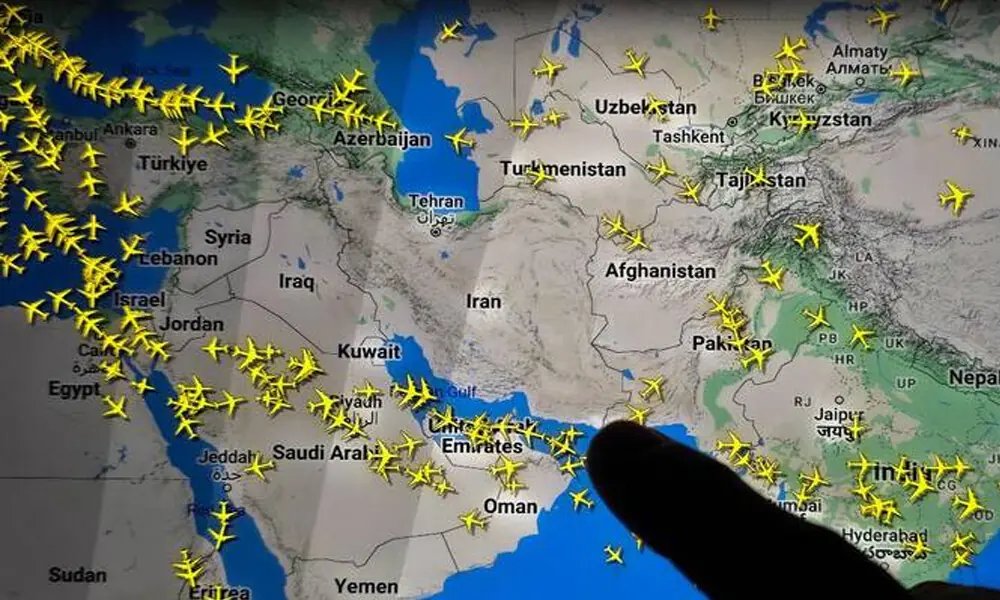

Authorities Take Precautionary Measures Amid Escalating Tensions
Iraq and Syria temporarily closed portions of their airspace on Sunday after Iran launched missiles toward Israel, prompting regional authorities to implement precautionary aviation measures.
The decision came shortly after Iranian missiles crossed the region en route to targets in Israel, marking the first such attack since a fragile ceasefire had taken effect earlier this year. As a result, neighboring countries moved quickly to safeguard civilian air traffic and reduce potential risks to aviation operations.
In a brief statement, Iraq’s Civil Aviation Authority announced the closure of the country’s airspace for 72 hours. Officials said the measure was taken to ensure the safety of commercial and civilian flights during a period of heightened military activity.
Meanwhile, Syrian authorities ordered the closure of the country’s southern air corridors for 12 hours. The move affected routes commonly used by aircraft operating through the region and was intended to prevent any disruption or danger caused by ongoing military developments.
Regional Aviation Sector Faces New Challenges
The closures highlighted growing concerns over regional air safety as tensions between Iran and Israel continue to influence neighboring countries. Aviation officials across the Middle East have increasingly monitored flight operations whenever military activity intensifies near major air routes.
Consequently, airlines operating through Iraqi and Syrian airspace began reviewing flight schedules and alternative routes to minimize disruptions. Several carriers were expected to adjust flight paths while authorities assessed the evolving security situation.
Furthermore, regional governments have remained on alert as military exchanges between Iran and Israel threaten to complicate efforts aimed at maintaining stability. The latest missile launches raised concerns about broader consequences for transportation, trade and civilian travel across the region.
Although officials did not immediately report any incidents involving civilian aircraft, authorities emphasized that precautionary measures were necessary given the circumstances. Security agencies and aviation regulators continue to monitor developments closely and are expected to review restrictions based on the evolving situation.
For now, Iraq’s 72-hour closure and Syria’s temporary restrictions remain in effect as officials prioritize public safety and air navigation security. Additional announcements regarding the reopening of affected airspace are expected once authorities determine that flight operations can resume safely.
The latest developments underscore the continuing impact of regional conflicts on aviation networks and cross-border travel throughout the Middle East.

