
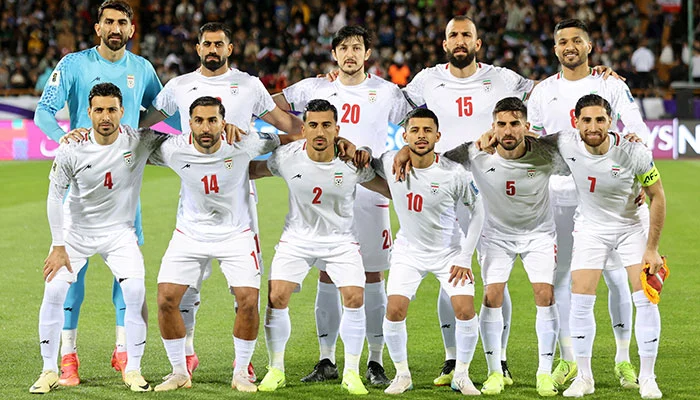

Iran Confirms Travel Plan for Group Stage
Iran’s football federation has announced the national team’s travel schedule for the FIFA World Cup group stage, confirming that the squad will enter the United States just one day before its opening match.
The announcement comes as Iran prepares for the tournament under difficult political and diplomatic circumstances. The 2026 FIFA World Cup is being jointly hosted by the United States, Mexico and Canada.
Iran will begin its campaign against New Zealand in Los Angeles on June 15. The team will then face Belgium in Los Angeles on June 21 before travelling to Seattle to play Egypt on June 26.
According to federation spokesperson Amir Mehdi Alavi, the team delegation will travel to the United States on a charter flight in line with FIFA’s programme.
He said the squad would reach the host city one day before the New Zealand match. For the next two group matches, the team plans to arrive at the host venue two days before kickoff.
Visa Dispute Adds Pressure Before Tournament
Iran’s World Cup preparations have been affected by visa issues involving members of its delegation.
While the players have received visas needed to enter the United States, not all administrative and management officials were granted entry permission.
Iranian officials say around 15 members of the delegation have been unable to obtain US visas. The dispute emerged only days before the tournament’s opening.
The situation has added another layer of tension to Iran’s participation, especially as the United States and Iran remain locked in serious political and military confrontation.
Despite playing all three group matches in the United States, the Iranian team will be based in Tijuana, Mexico, throughout the tournament.
The arrangement means the squad will travel across the border for matches rather than remain inside the United States for the full group stage.
Sports Minister Issues Warning Over Symbols
Iran’s Sports Minister Ahmad Donyamali has also warned against the display of certain symbols during Iran’s matches.
He said if any flag or symbol other than Iran’s official flag appears in stadiums, or if provocative slogans are chanted, team officials would have a duty to stop the match.
He added that tournament organisers would be responsible for correcting the situation.
The comments suggest that Iran is approaching the tournament with political sensitivity as well as sporting pressure.
The World Cup is usually focused on football, but Iran’s participation has already become linked with visa restrictions, diplomatic tension and concerns over stadium messaging.
On the field, Iran will aim to compete strongly in a challenging group. Off the field, however, the team’s journey is expected to remain under close global attention.
With late travel, limited delegation access and political warnings, Iran’s World Cup campaign is beginning with uncertainty before the first whistle.

