
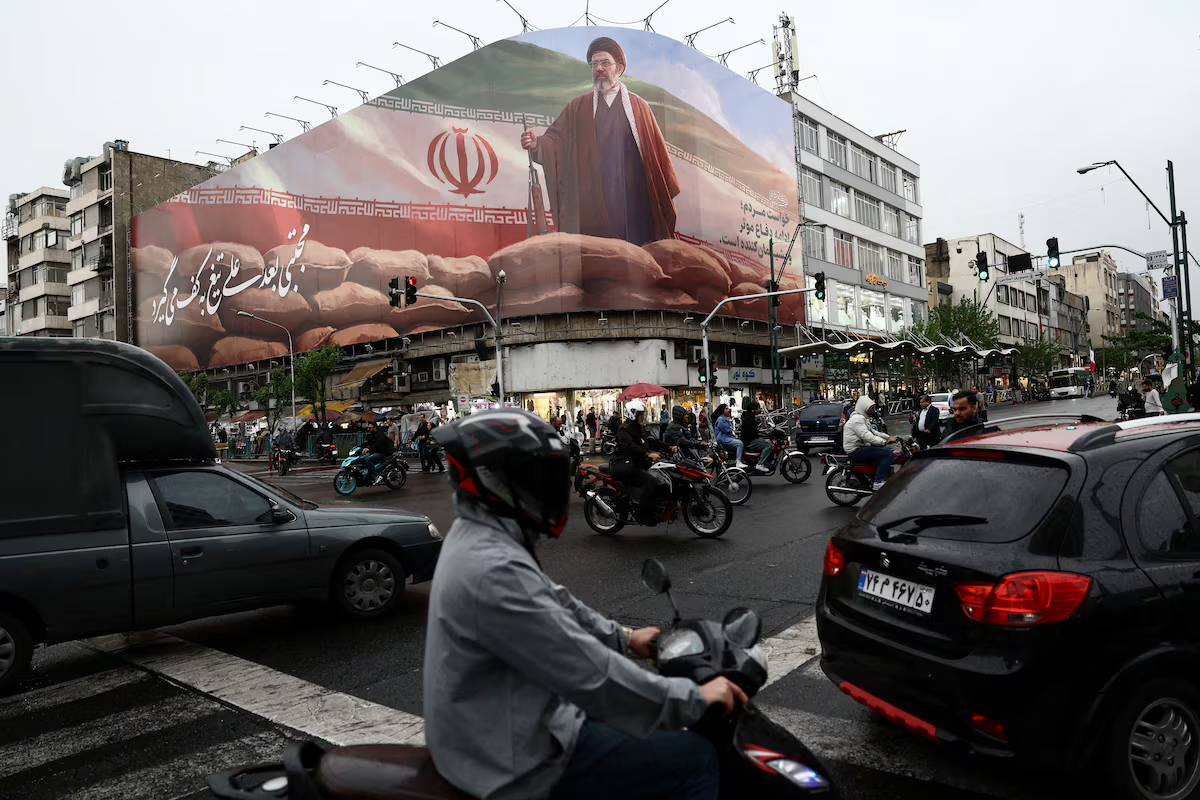

Dubai: Iran has entered its war with the United States and Israel without a single, undisputed clerical authority at the top, marking a significant shift in its power structure, according to sources cited in a Reuters report.
Since 1979, Iran has operated under a supreme leader with final authority over state decisions. However, the killing of Ayatollah Ali Khamenei at the start of the conflict and the rise of his injured son Mojtaba have altered that system. As a result, decision-making has increasingly moved toward the Islamic Revolutionary Guard Corps and the Supreme National Security Council.
Moreover, insiders say Mojtaba Khamenei now plays a largely symbolic role, endorsing decisions shaped by military and security leaders rather than directing policy himself. Consequently, real authority has consolidated within a narrower wartime leadership structure.
At the same time, Foreign Minister Abbas Araghchi continues to represent Iran in talks with Washington, while figures such as parliamentary speaker Mohammad Baqer Qalibaf act as intermediaries between political and military institutions. Meanwhile, IRGC commanders, including senior figures cited by sources, reportedly influence both battlefield and diplomatic calculations.
In addition, analysts note that negotiations remain stalled as Washington demands nuclear discussions from the outset, while Iran prioritises ending hostilities first. Therefore, both sides continue to hold firm positions amid ongoing mediation efforts.
Furthermore, experts say the IRGC now shapes both domestic security and foreign policy, reflecting a broader shift from clerical authority to military dominance.

