
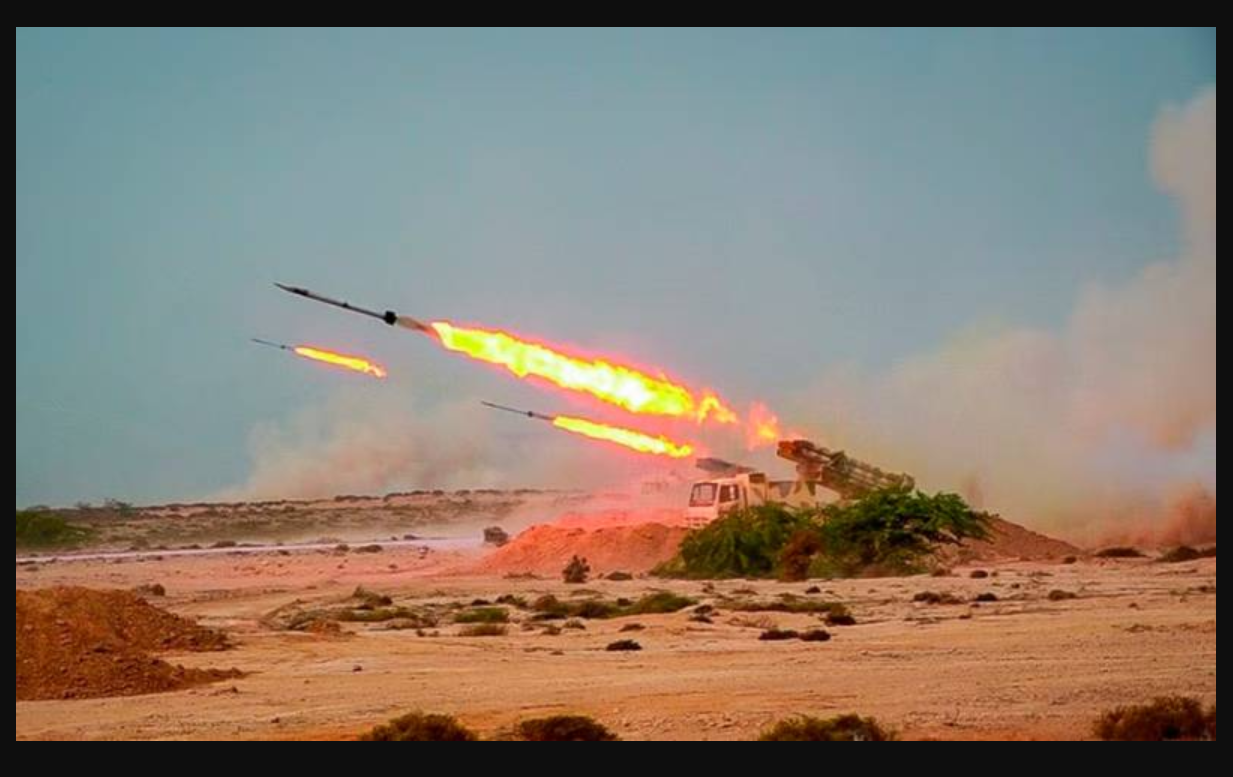

Iran’s Revolutionary Guards have claimed responsibility for missile strikes targeting what they described as enemy bases in the Gulf region. The escalation follows recent US military strikes on Iranian radar installations.
The situation has intensified concerns over regional stability. It also comes amid ongoing exchanges between Iran and US-led forces in the area.
Iran Claims Missile Strikes on Regional Bases
Iran’s Revolutionary Guards stated that they launched a volley of ballistic missiles toward enemy positions in the Gulf. The announcement was made through state media channels.
The statement said, “Following the invasion of the child-killing and terrorist US army into Sirik and Qeshm Island, enemy bases in the region were hit by aerial missiles.”
Iran did not provide detailed confirmation of specific targets. However, the statement suggested coordinated missile activity across the region.
US Reports Interception of Iranian Missiles
The United States military reported that Iran launched seven ballistic missiles toward Gulf countries, including Kuwait and Bahrain. US forces said they intercepted most of the incoming missiles.
Officials stated that six missiles were successfully intercepted. The seventh missile, according to their statement, “did not reach its intended target.”
They further confirmed that there were no reports of injuries among US personnel. Additionally, they rejected claims that the US Fifth Fleet headquarters in Bahrain was damaged.
US officials described those claims as false and misleading.
Explosions Reported in Kuwait and Bahrain
Despite interception claims, multiple explosions were reported in parts of Kuwait and Bahrain. Local military forces activated defensive systems in response.
In Kuwait, explosions were heard near the international airport. Military authorities stated they were responding to hostile missile and drone activity.
In Bahrain’s capital, air raid sirens were triggered. Residents reported hearing interception sounds in multiple areas.
Authorities urged civilians to remain calm. They also advised people to move to safe locations during the alerts.
US Approves Major Anti-Drone Weapons Sale to Kuwait
In response to rising security concerns, the United States approved a major defense agreement with Kuwait. The deal is valued at approximately $1.98 billion.
The package includes advanced counter-drone systems designed to enhance air defense capabilities. The sale involves defense company Anduril.
The US government stated that the deal supports regional stability. It also said, “This proposed sale will support the foreign policy and national security objectives of the United States by improving the security of a major non-NATO ally that has been an important force for political stability and economic progress in the Middle East.”
Kuwait has recently faced increased security incidents. Authorities had earlier condemned what they described as Iranian aggression following a deadly airport attack.
Strikes on Iranian Radar Sites Escalate Tensions
The United States military confirmed strikes on Iranian coastal radar installations. The targeted locations included areas in southern Iran such as Goruk and Qeshm Island.
US forces also intercepted multiple Iranian drones heading toward the Strait of Hormuz. Officials said the drones posed a direct threat to maritime traffic.
The military stated that the radar strikes were defensive in nature. They said the action was taken “defend against further attacks.”
Iranian media reported explosions in southern coastal regions. However, officials did not immediately confirm the origin of the blasts.
Ceasefire Remains Under Pressure
A ceasefire agreement between the United States and Iran has been in place since April 8. Despite this, sporadic military exchanges continue.
Attempts to establish a long-term peace framework have not succeeded so far. Both sides continue to accuse each other of violating regional stability.
Tensions remain especially high around strategic maritime zones. The Strait of Hormuz continues to be a major security concern.
Trump Comments on Iran’s Missile Capability and Talks
Donald Trump commented on Iran’s military capacity during recent remarks. He said Iran still retains a portion of its missile and drone arsenal.
“They have some missiles, they have some drones. I would say, percentage wise, maybe 21, 22 percent of their missiles,” Trump said.
He also expressed cautious optimism about diplomatic efforts with Iran. He stated that negotiations appear to be progressing in a positive direction.
Speaking further, he said, “The situation with Iran seems to be going quite well.”
Trump added that the primary objective remains preventing nuclear weapon development. He suggested that this goal has largely been achieved.
He also indicated that diplomacy remains possible, although military options are not ruled out. He said, “One way or the other, it’s finished.”
Conclusion
The exchange of missile strikes and counterstrikes has heightened tensions across the Gulf region. Iran’s missile activity and US defensive operations continue to escalate uncertainty.
At the same time, diplomatic discussions remain fragile and unresolved. Trump’s remarks reflect cautious optimism, but the situation remains unpredictable.
Overall, the region continues to face a complex mix of military pressure, strategic rivalry, and ongoing diplomatic challenges.

