
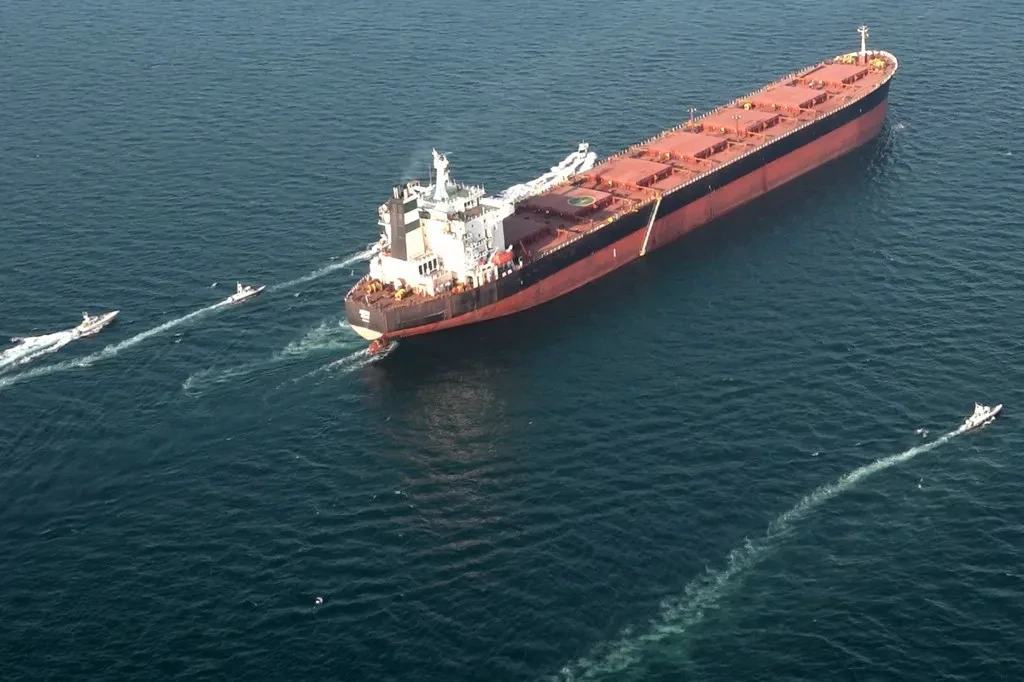

Iran has issued a fresh warning regarding maritime movement in the Strait of Hormuz, signaling possible restrictions for vessels linked to countries that comply with United States sanctions.
The statement has raised concerns over global shipping routes, as the Strait of Hormuz remains one of the world’s most critical energy corridors.
Iran Signals Restrictions on Maritime Transit
Iranian Army spokesperson Mohammad Akraminia stated that vessels from countries complying with US sanctions against Iran may face difficulties when passing through the Strait of Hormuz.
He said,
“States complying with U.S. sanctions will face Gulf transit difficulties.”
The statement was reported through semi-official channels and reflects Iran’s hardened position on maritime control in the region.
Moreover, the warning comes at a time when tensions between Iran and Western powers remain elevated.
Strategic Importance of the Strait of Hormuz
The Strait of Hormuz is one of the most significant oil transit routes globally. A large portion of the world’s energy supplies passes through this narrow waterway.
Any disruption in this route can have immediate effects on global oil prices and shipping stability.
Therefore, statements related to restrictions in the area are closely monitored by international markets and maritime operators.
Iran’s Legislative Moves on Maritime Control
Iranian lawmakers are reportedly working on draft legislation aimed at formalizing greater control over the Strait of Hormuz.
The proposed framework includes provisions that could restrict passage for vessels considered linked to “hostile states.”
This legislative direction signals a potential tightening of maritime policy in the region.
In addition, it reflects Iran’s intention to assert stronger regulatory authority over strategic waterways.
Rising Concerns Over Regional Shipping Security
Recent developments have increased concerns among shipping companies operating in the Gulf region.
Reports have also highlighted incidents involving vessels in nearby waters, further raising security risks for maritime traffic.
As a result, international stakeholders are closely observing the situation for any escalation.
Meanwhile, diplomatic discussions among regional powers continue in an effort to reduce tensions.
Broader Context of Gulf Maritime Tensions
The latest warning comes amid ongoing geopolitical friction involving sanctions, energy routes, and naval security.
The Strait of Hormuz has frequently been a focal point during periods of heightened Iran-West tensions.
Consequently, shipping operators often adjust routes and risk assessments based on developments in the region.
Additionally, governments and maritime agencies remain alert to any policy changes that could impact freedom of navigation.
Potential Impact on Global Trade
Any restriction or uncertainty in the Strait of Hormuz can affect global supply chains.
Energy markets are especially sensitive to disruptions in this corridor.
Furthermore, shipping insurance costs and freight rates may rise if tensions persist.
Therefore, industry stakeholders continue to monitor statements and legislative developments closely.
Conclusion
Iran’s warning regarding transit difficulties for vessels linked to US sanctions has added fresh uncertainty to an already sensitive maritime region.
The Strait of Hormuz remains a critical global shipping route, and any policy shift carries significant international implications.
As legislative proposals develop and tensions persist, global attention remains focused on the stability of maritime movement in the Gulf region.

