

Iran launched fresh attacks on US-allied Gulf states on Saturday after the United States carried out a seventh consecutive night of strikes on Iranian military targets. The latest escalation comes just one week after a fragile ceasefire agreement collapsed, raising fears of a broader regional conflict.
At the same time, both sides intensified pressure around the Strait of Hormuz, one of the world’s most important energy corridors. The United States said it continued enforcing a naval blockade, while Iran claimed it had acted against vessels that violated its navigation rules in the strategic waterway.
The renewed hostilities have increased concerns about regional security and the stability of global energy supplies.
Strait of Hormuz Remains at the Center of the Crisis
The Strait of Hormuz remains a critical shipping route because nearly one-fifth of the world’s oil passes through it. Therefore, any disruption in the area has immediate consequences for international energy markets.
Oil prices rose by more than four percent on Friday, reaching their highest level in over a month. The increase has also added political pressure on US President Donald Trump as congressional elections approach.
Meanwhile, Washington and Tehran continue testing each other’s limits following the breakdown of the ceasefire, increasing the possibility of a return to full-scale conflict.
US Continues Military Operations
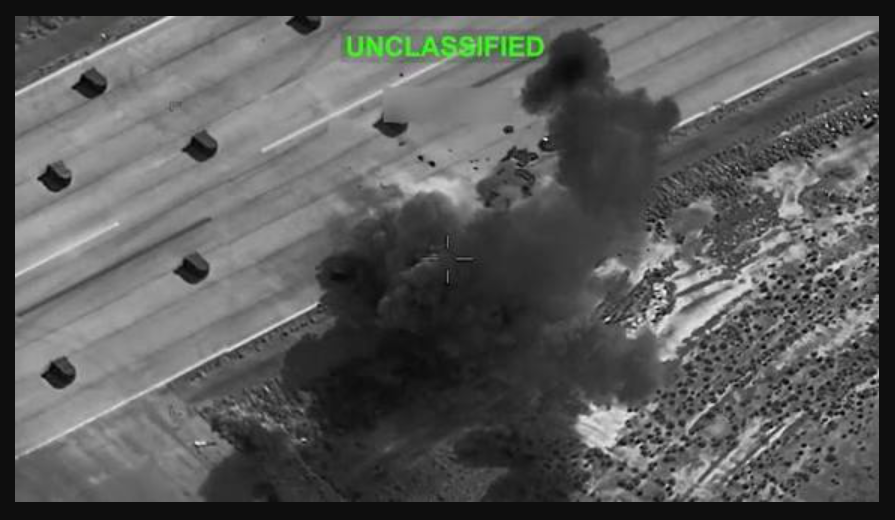
The US Central Command said its latest operation targeted surveillance facilities, military logistics infrastructure, underground weapons storage sites, and maritime capabilities across Iran.
According to the military, “US forces employed fighter aircraft, aerial drones, and warships in addition to other assets.”
It also stated, “More than 50,000 American service members are operating across the Middle East and remain vigilant, lethal, and ready.”
Meanwhile, Iranian media reported that missiles struck power facilities and desalination pumps in the southern city of Jask. Local officials said the attack disrupted drinking water supplies in several nearby villages.
Maritime Tensions Continue to Grow
The United States said its forces redirected four commercial vessels, disabled one ship, and boarded another while enforcing its naval blockade.
On the other hand, Iran’s Revolutionary Guards claimed they stopped four vessels attempting to pass through the Strait of Hormuz through a combined missile and drone operation.
Iranian media also reported that two oil tankers exploded after entering what it described as a mined route south of the strait. However, the US military rejected the report and described the claim as false.
Elsewhere, armed men reportedly seized another vessel off Yemen, adding fresh concerns about security near the Red Sea, another major international shipping route.
Iran’s state television quoted the Revolutionary Guards as saying that until US “aggression” ends, exporting chemical fertilizers or even a “single drop of oil and gas” from the region would not be possible.
Senior Iranian military adviser Mohsen Rezaei also warned against further American escalation or attempts to seize Iranian territory.
Iran Reports Strikes on US Military Facilities
Iran’s military stated that it targeted US military installations in Kuwait and Jordan in response to continued American attacks.
According to Iranian state media, the operation targeted an ammunition depot, headquarters buildings, communication bridges, and military facilities at Al-Adiri Camp and Ali Al-Salem Air Base in Kuwait.
In Jordan, Iranian media claimed fuel tanks at Al-Azraq Air Base were among the targets.
Growing Concerns Over Civilian Infrastructure
The United Nations expressed concern over the expanding conflict. A spokesperson for Secretary-General Antonio Guterres said the UN was particularly worried about attacks affecting civilian infrastructure across Iran and the wider region.
For the first time in more than a week, the US military specifically confirmed that “military logistics infrastructure” formed part of its latest targets.
Iranian media reported fresh strikes in Hormozgan Province, including Sirik, Jask, Ahvaz, Yazd, and Khorramabad. Officials said three people were killed and eight others were injured after attacks damaged two bridges and a road tunnel.
Reports also stated that earlier strikes hit several bridges in southern Iran. A train station in Bandar Khamir was also damaged, while an airport in Iranshahr reportedly came under attack.
US President Donald Trump has previously threatened broader strikes against Iranian infrastructure and has not ruled out military operations targeting Iran’s coastline or nearby islands.
US officials said operations in southern Iran are intended to expand military options. However, analysts warn that continued escalation could trigger further attacks on Gulf infrastructure and increase risks to global energy shipments through both the Strait of Hormuz and the Red Sea.

