

Luxury Sector Faces Sudden Slowdown in Gulf’s Key Market
Europe’s leading luxury brands are facing a sharp decline in sales across the UAE as the Iran conflict disrupts consumer activity in one of the industry’s fastest-growing regions. Dubai and Abu Dhabi, long seen as stable hubs for high-end shopping, have reported significant drops in both footfall and spending.
The luxury market, valued at around $400 billion globally, has already been under pressure in recent years. Now, fresh geopolitical tensions have added further strain. As a result, brands are witnessing a sudden slowdown in a region that once delivered strong double-digit growth.
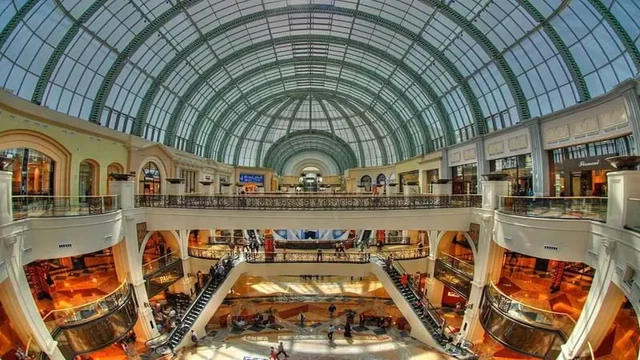
According to sources familiar with retail performance data, luxury sales in March fell by 30 to 50 percent at the Mall of the Emirates in Dubai compared to the same month last year. This mall hosts flagship stores of global names such as Louis Vuitton, Dior, Gucci, Cartier, Chanel, and Rolex.
In addition, overall visitor traffic at the Mall of the Emirates dropped by around 15 percent. Meanwhile, Dubai Mall, which attracts a higher number of tourists, saw an even sharper decline of nearly 50 percent in footfall. This signals a broader weakness in consumer demand.
Dubai and Abu Dhabi Show Uneven but Clear Decline
The impact of the conflict is not limited to Dubai. In Abu Dhabi, the Galleria mall also recorded weaker performance in March. Sales there fell by approximately 10 percent across major luxury retailers.
Although Abu Dhabi proved more resilient due to its lower reliance on tourism, the decline still reflects weakening consumer confidence. Industry sources note that both local shoppers and international visitors have reduced discretionary spending amid regional uncertainty.
Furthermore, none of the mall operators in Dubai or Abu Dhabi responded to requests for comment. Major luxury groups, including LVMH, Kering, and Hermès, also remained silent on the reported figures.
Geopolitical Tension Threatens Luxury Growth Outlook
The downturn comes at a critical moment for the global luxury industry. After a post-pandemic boom faded in 2022, the sector has struggled to regain momentum. Combined market value losses for major players such as LVMH and Kering have already exceeded €100 billion in recent years.
Analysts warn that the Middle East, once a strong growth driver, is now facing uncertainty. The region accounts for roughly 5 percent of global luxury consumption and had previously delivered consistent double-digit expansion.
However, the Iran conflict has disrupted this stability. Since late February, rising tensions and reported security incidents have weakened Dubai’s image as a safe luxury destination. This has also affected tourism-driven spending.
Industry experts suggest recovery may take several months, even if diplomatic progress continues. Higher oil prices, inflation risks, and travel disruptions could further weigh on consumer demand across global markets.
Meanwhile, luxury giants are preparing to release quarterly results. LVMH will report first-quarter sales soon, followed by Kering and Hermès. Although the Middle East contributes a smaller share of global revenue, analysts warn that profit margins could still feel pressure due to reduced high-value retail sales per square meter in Dubai.

