
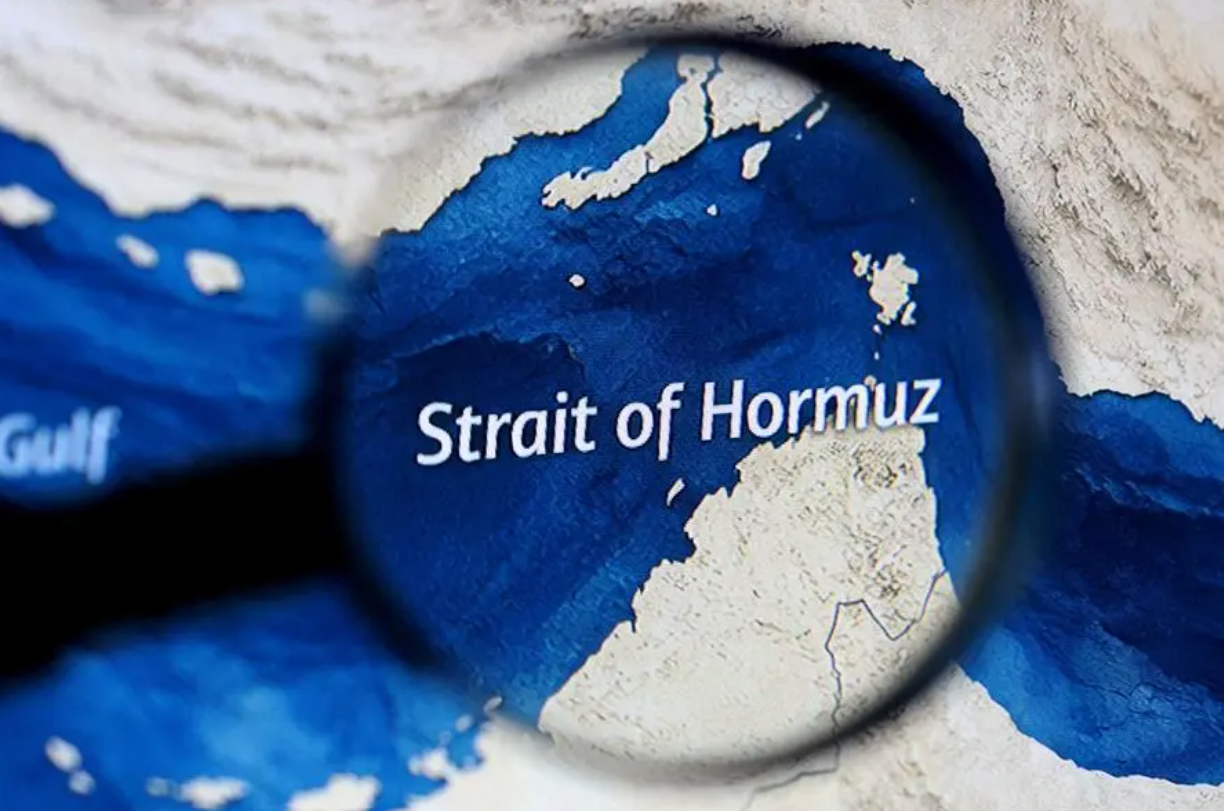

Iranian authorities have released a map showing an expanded maritime zone. The area reportedly extends beyond the Strait of Hormuz.
The claimed zone reaches toward parts of the United Arab Emirates coastline. It includes key maritime areas used for international shipping.
Officials marked the boundaries in red lines on the map. The announcement has raised fresh regional maritime concerns.
UAE Ports Included in Claimed Area
The new maritime claim reportedly includes two major UAE ports. These are Fujairah and Khorfakkan, both located on the Gulf of Oman.
Fujairah Port holds strategic importance for regional oil exports. It serves as a bypass route for the Strait of Hormuz.
Khorfakkan Port is also included in the claimed zone. It is a key commercial hub on the eastern coastline.
These ports have become increasingly important during regional tensions. They allow shipping to continue even when strait access is restricted.
Strategic Importance of UAE Oil Routes
Fujairah plays a critical role in global energy logistics. It connects directly to inland oil fields through pipeline infrastructure.
The Abu Dhabi Crude Oil Pipeline ends at this port. It allows oil exports to continue even during maritime disruptions.
As a result, the UAE has maintained stable exports throughout regional instability. This has strengthened its position in global energy markets.
Iran Issues Strong Maritime Warning
Iranian officials have also issued warnings regarding navigation in the region. They stated that commercial ships must coordinate movements.
A military spokesperson said that vessels should not move freely without contact. This applies particularly to the Strait of Hormuz.
The statement included a strong assertion of control. Officials said, “Iran has complete control over the Strait of Hormuz, and the US Navy should not even come close to it.”
Another official, Ebrahim Azizi, warned of consequences for external interference. He said any intervention would be seen as a violation of the ceasefire.
Iran also signaled a firm response to any perceived threat to sovereignty. These remarks increased regional concern over maritime stability.
Global Importance of Strait of Hormuz
The Strait of Hormuz is one of the world’s most important shipping routes. It connects the Persian Gulf to the Gulf of Oman.
Strait of Hormuz handles a significant share of global oil shipments. Any disruption could affect international energy supply.
The Gulf of Oman also plays a key role in global trade routes. It links major shipping lanes across Asia, Europe, and the Middle East.
Because of this, even minor tensions in the region attract global attention. Energy markets closely monitor developments.
Rising Concerns Over Regional Stability
Experts warn that control disputes over maritime routes could escalate risks. These routes are vital for global oil transportation.
Recent tensions have already impacted shipping confidence. Any escalation could disrupt supply chains and increase global energy prices.
Furthermore, continued uncertainty adds pressure on regional security frameworks. Countries dependent on these routes remain highly cautious.
Outlook for Maritime Security
The situation remains sensitive as claims and counterclaims continue. Maritime activity in the region is under close observation.
While shipping continues, uncertainty persists over future developments. Stability in the Strait of Hormuz remains critical for global markets.

