

PPP, PML-N and IPP Move Toward Coalition Setup
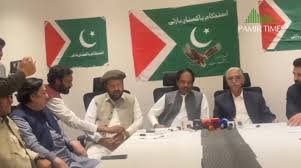
The Istehkam-e-Pakistan Party has announced support for the Pakistan Peoples Party in the formation of a coalition government in Gilgit-Baltistan.
The announcement was made during a joint press conference in Gilgit on Sunday.
The development came a day after the PPP reached a power-sharing agreement with the Pakistan Muslim League-Nawaz.
IPP Gilgit-Baltistan President Haji Gul Bar Khan said his party would join the PPP-led alliance.
He said other details of the alliance would be finalised by the central leaderships of the parties.
The move has strengthened the PPP’s position as it prepares to lead the next government in the region.
PPP Calls Alliance a Positive Step
PPP Gilgit-Baltistan President Amjad Hussain welcomed the IPP’s support.
He described the alliance between the PPP, PML-N and IPP as a positive development.
He said the coalition would help place Gilgit-Baltistan on the path of development, stability and prosperity.
The PPP leader also announced that the formal process of government formation would begin on Monday.
According to the power-sharing arrangement, the chief minister’s office will go to the PPP.
The governor’s post will be held by the PML-N.
The PML-N will also get the positions of opposition leader and deputy speaker in the Gilgit-Baltistan Assembly.
Election Results Shape New Political Formula
General elections for 24 seats of the Gilgit-Baltistan Assembly were held on June 7.
The PPP emerged as the single largest party by securing nine seats.
According to the Gilgit-Baltistan Election Commission, the PML-N won six seats in 21 notified constituencies.
The IPP did not win any seat in the election.
However, four independent candidates later joined the party during a meeting with IPP President Abdul Aleem Khan on June 16.
Majlis Wahdat-e-Muslimeen won one seat, while another independent candidate also secured one seat.
Results for GBA-9 Skardu-3, GBA-15 Diamer-1 and GBA-17 Diamer-3 will be announced later.
The latest alliance is expected to play a key role in finalising the next political setup in Gilgit-Baltistan.

