

Patients struggle to find medicine, testing supplies and proper nutrition as war and blockade deepen Gaza’s health crisis
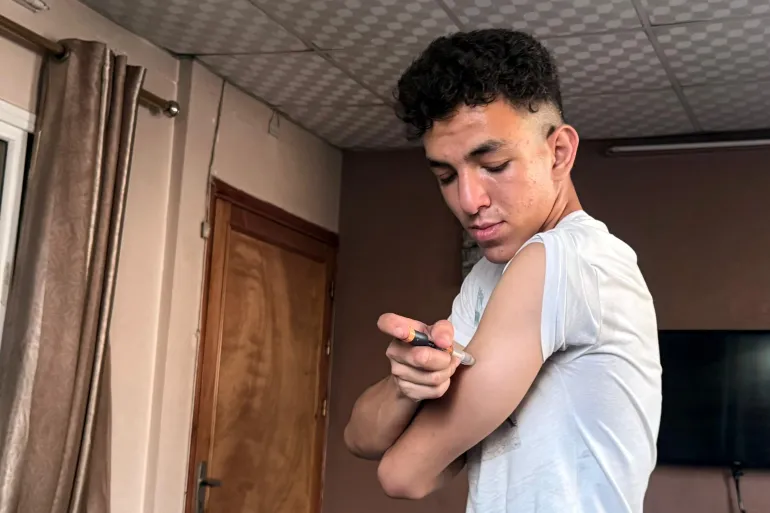
GAZA CITY: For 20-year-old Hamza al-Ghazali, every day in Gaza begins with the same urgent mission: finding insulin before his body begins to fail him. Living in Gaza City’s Zeitoun neighbourhood, Hamza has spent months moving between pharmacies and medical centres in search of insulin pens, a struggle that has intensified under Israel’s war on Gaza and restrictions on the entry of medicines and medical supplies.
Hamza, who lives with Type 1 diabetes, says managing the disease has become a dangerous balancing act between hunger, fear and the uncertainty of finding treatment. Before the war, he could buy insulin pens for 25 to 35 shekels. Now, prices have soared to between 75 and 100 shekels per pen, forcing him to stretch every dose for as long as possible.
Shortages of insulin and test strips leave patients at constant risk
The crisis goes far beyond price hikes. Diabetes patients across Gaza face severe shortages of insulin, glucose metres and test strips, making it difficult to monitor blood sugar levels and maintain treatment safely. Hamza says the shortage of test strips often leaves patients guessing their sugar levels based only on physical symptoms.
According to Gaza’s Health Ministry, between 70,000 and 80,000 diabetes patients are now at risk because of medicine shortages, collapsing healthcare services and worsening nutrition. Hamza says many patients can no longer test their blood sugar regularly, turning treatment into what he described as “daily guesswork”.
Doctors warn children with Type 1 diabetes face critical conditions
Endocrinology specialist Dr Adli al-Ghouti says around 2,500 children in Gaza are living with Type 1 diabetes under highly critical conditions. He warned that insulin shortages, poor storage caused by power outages and the use of expired supplies could lead to life-threatening complications, including diabetic ketoacidosis.
For Hamza, the fear extends beyond the shelling itself. He says that during evacuations, the first thing he grabs is his “diabetes bag” containing insulin and testing tools. “I was living between two fears all the time,” he said, describing the risk of both starvation and dangerously high blood sugar.
As war, displacement and shortages continue, diabetes in Gaza is no longer just a chronic illness. For thousands of patients, it has become a daily fight to stay alive.

