
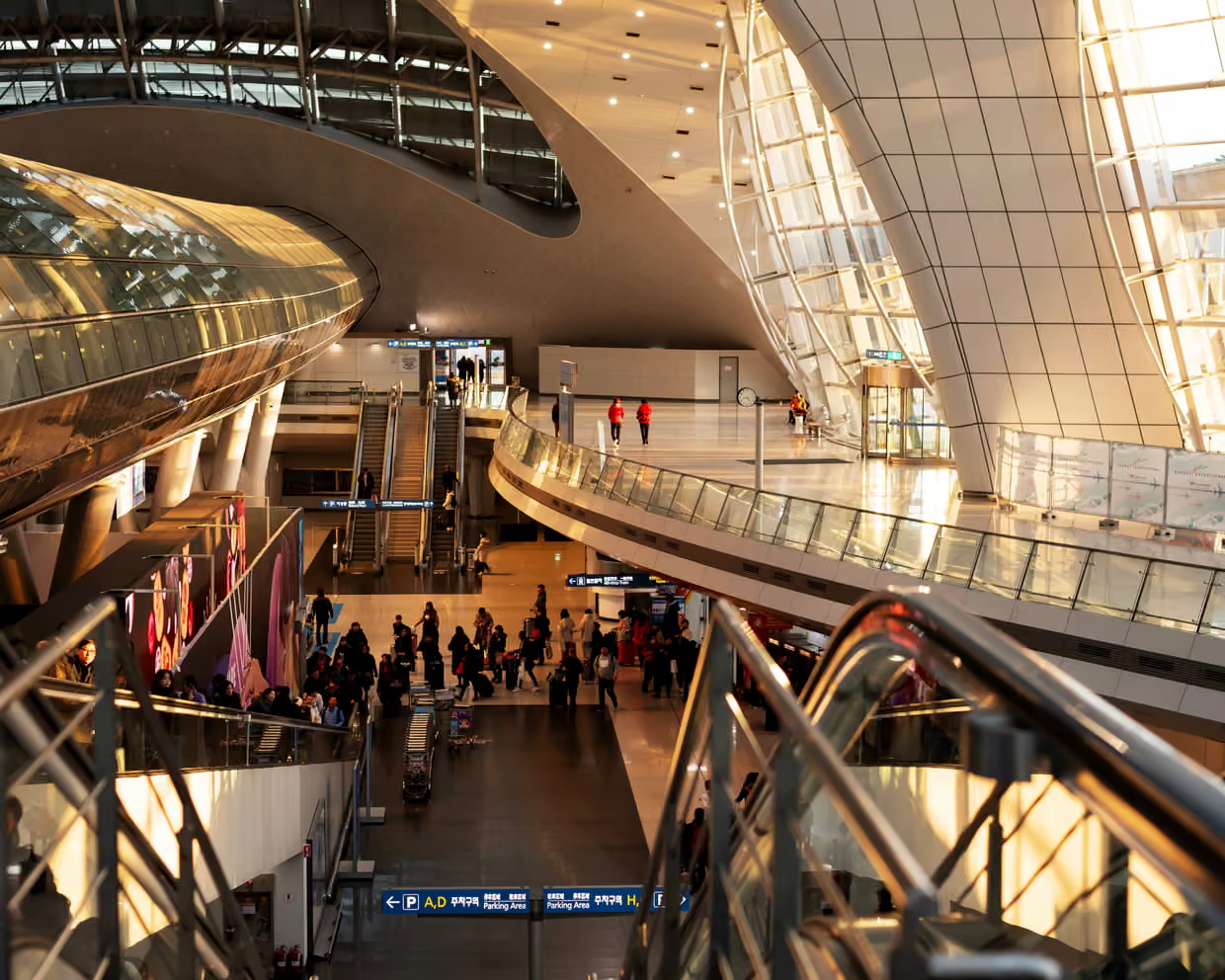

South Korean hub overtakes Heathrow after handling 38.39 million international passengers during first half of 2026
SEOUL: South Korea’s Incheon International Airport has become the world’s busiest airport for international passengers, helped partly by Middle East travel disruptions caused by the Iran war and growing visitor numbers from across Asia.
Preliminary Airports Council International figures showed Incheon handled 38.39 million international passengers during the first half of 2026. London Heathrow ranked second with 37.79 million passengers, while Singapore’s Changi Airport followed with 34.53 million.
The achievement marks the first time Incheon has topped the international passenger rankings since opening in 2001. The airport ranked 10th globally in 2002 before climbing to fifth in 2018 and third in both 2024 and 2025.
Middle East Disruption Redirects Passenger Traffic
Incheon International Airport Corporation attributed part of the growth to disruption from the US-Iran conflict, which weakened Middle Eastern aviation hubs and redirected some transfer passengers through East Asia.
Meanwhile, Incheon recorded a 6.3% year-on-year increase in international passenger traffic.
Foreign travellers also drove growth, accounting for 39.3% of passengers during the first half, compared with 35.2% throughout 2025. Their share reached a record 44.4% during the second quarter, largely because of increased arrivals from China and Japan.
Heathrow, meanwhile, handled 40 million domestic and international passengers combined during its busiest-ever first half. However, its Middle East capacity reportedly declined 16.5% amid regional conflict.
Expansion Strengthens Incheon’s Global Hub Status
Incheon has steadily expanded its international network and currently serves 101 airlines connecting passengers with 183 cities, including 158 international passenger destinations.
Furthermore, a four-phase expansion completed in late 2024 increased its annual passenger capacity to 106 million.
Acting airport corporation president Kim Beom-ho credited government support, public encouragement and airport employees for the achievement.
South Korea also hosts the world’s busiest air route, with 14.4 million seats scheduled between Seoul’s Gimpo Airport and Jeju Island during 2025.

