
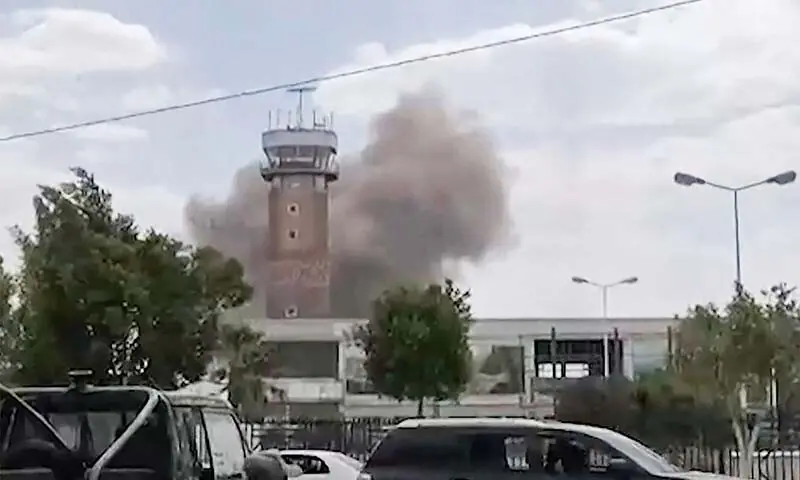

Yemen’s Houthi movement launched a missile toward Saudi Arabia on Monday, marking the most serious escalation between the two sides in years. The attack came just hours after the Houthis accused Saudi Arabia of targeting Sanaa International Airport, raising concerns that the fragile truce in Yemen could collapse.
According to Saudi coalition spokesman Turki al-Maliki, air defence systems intercepted a ballistic missile launched by the Houthis toward the kingdom’s southern region. The coalition said it successfully neutralized the threat before it reached its target.
Airport Strike Sparks Fresh Tensions
Earlier, Houthi military spokesman Yahya Saree accused Saudi Arabia of ending the de-escalation period and warned that the attack on Sanaa airport would not remain unanswered.
However, the Saudi-backed Yemeni government claimed responsibility for striking the airport, saying the operation aimed to prevent an Iranian aircraft from landing. Officials said they acted after a Houthi delegation returning from Tehran, where they attended the funeral of Iran’s late Supreme Leader Ali Khamenei, refused to travel on Yemenia, the country’s national airline.
Yemen’s Defence Ministry alleged that the Houthis had allowed an Iranian aircraft to enter Yemeni airspace without authorization. Consequently, government forces targeted the airport runway to stop the landing.
Despite the escalation, Presidential Leadership Council Chairman Rashad al-Alimi said he had instructed authorities to prevent the conflict from expanding further.
Ceasefire Faces Growing Pressure
Iran strongly condemned the airport strike, calling it a clear violation of international law. Foreign Ministry spokesperson Esmaeil Baghaei urged restraint as regional tensions continue to rise.
Security analysts warned that continued exchanges between the Houthis and the Saudi-backed government could effectively end the April 2022 ceasefire, despite its role in reducing violence over recent years.
For more than a decade, aircraft entering Yemeni airspace have required approval from the Saudi-led coalition. However, recent direct flights between Iran and Houthi-controlled Sanaa have challenged that arrangement and increased tensions.
Earlier this month, the Houthis also accused Saudi Arabia of targeting an Iranian aircraft after it departed Sanaa. The group warned it would attack Saudi airports and strategic facilities if similar incidents occurred again.
The latest developments come amid wider instability in the Middle East as military exchanges between the United States and Iran continue to affect regional security and maritime traffic through the Strait of Hormuz.
Residents in Houthi-controlled areas expressed concern that renewed hostilities could trigger another prolonged phase of conflict, worsening Yemen’s already severe humanitarian and economic crisis.

