
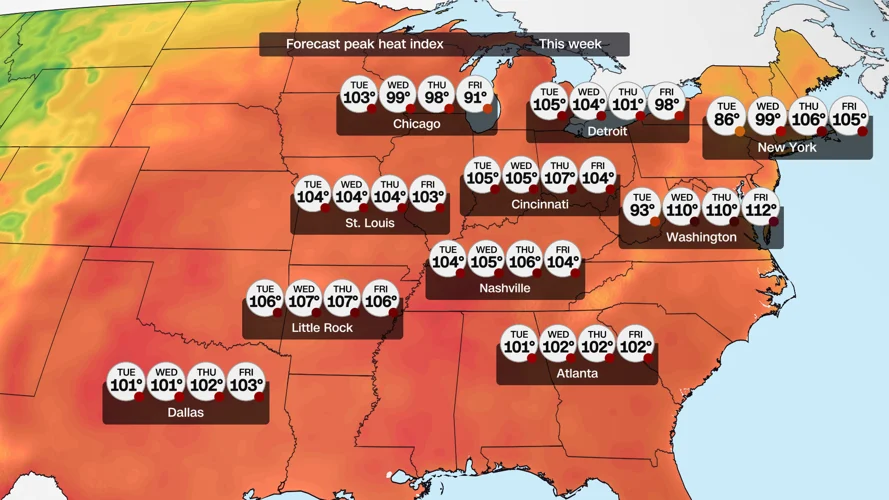

A historic heatwave spread across the eastern United States on Wednesday after sweeping through the Midwest. Millions of Americans remain under heat warnings ahead of the July Fourth holiday weekend. Meanwhile, dangerous temperatures are increasing health risks and placing added pressure on electricity grids.
Dangerous Heat Grips Cities Across The United States
Forecasters expect real-feel temperatures to reach between 37.8 and 46.1 degrees Celsius across many regions. Consequently, officials warned that vulnerable groups face a higher risk of heat-related illnesses.
In Hill City, Kansas, mail carrier Sabrina Hooper described the heat as exhausting during her daily deliveries. She said lawn sprinklers offered brief relief while walking long distances in extreme temperatures.
Residents in Brownsville, Texas, also voiced concerns about rising electricity costs and possible power outages. One resident said summer electricity bills can exceed 300 dollars during periods of intense heat.
In Chicago, residents prepared by buying supplies, stocking cold drinks, and watering plants before temperatures peaked. Additionally, property owners reported that some air conditioning systems struggled to keep homes cool despite operating normally.
Authorities Expand Cooling Measures Ahead Of Holiday
Chicago officials urged residents to check regularly on elderly neighbours and vulnerable family members. They also encouraged people to request welfare checks through city services when necessary.
New York City opened hundreds of cooling centres as temperatures climbed across the region. Furthermore, officials deployed mobile cooling vans carrying water, sunscreen, meals, and electrolytes for residents needing relief.
Authorities also extended public pool hours and opened additional cooling centres in libraries and public buildings. Meanwhile, energy provider Con Edison urged customers to reduce electricity use during peak afternoon and evening hours.
The heatwave follows similar record-breaking temperatures across western Europe. Scientists say human-driven climate change has increased both the frequency and intensity of extreme heat events worldwide.

