


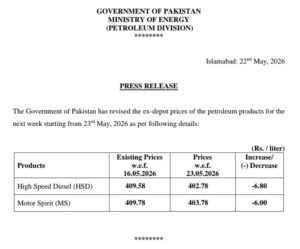
The federal government has announced another major reduction in petroleum prices, offering relief to consumers struggling with rising transportation and household expenses. Petrol prices have been reduced by Rs6 per litre, while high-speed diesel prices have been cut by Rs6.80 per litre for the upcoming week.
The new fuel rates were officially announced through a notification issued by the Petroleum Division on Friday. According to the updated rates, petrol will now be available at Rs403.78 per litre, while high-speed diesel will cost Rs402.78 per litre. The revised prices came into effect from May 23.
This marks the second consecutive weekly decrease in fuel prices. During the previous review, the government had already reduced both petrol and diesel prices by Rs5 per litre. The continued cuts reflect changing global oil market conditions and efforts to manage domestic inflation.
Weekly Fuel Price Reviews Continue After Middle East Crisis
The government has been reviewing petroleum prices every week since the outbreak of the US-Israel conflict involving Iran on February 28. The conflict created uncertainty in global energy markets and disrupted oil supply chains across several regions.
One of the biggest concerns during the crisis was the temporary closure of the Strait of Hormuz. This route is considered one of the world’s most critical oil shipping lanes. Nearly one-fifth of global oil and gas supplies move through the strait during normal conditions.
The disruption caused fears of a global fuel shortage. International crude oil prices surged sharply during the early stages of the conflict. Several countries faced pressure on fuel imports, transportation costs, and energy supplies.
Pakistan also experienced rising fuel costs due to international market instability. Weekly petroleum price reviews were introduced to quickly respond to changing oil prices and protect consumers from sudden economic shocks.
Analysts believe the recent decline in fuel prices may help stabilize transportation costs and reduce pressure on inflation in the coming weeks. However, they also warn that global energy markets remain unpredictable because of ongoing geopolitical tensions.
Petrol Price Reduction Brings Relief for Daily Commuters
Petrol is widely used by private vehicle owners, motorcycle riders, rickshaw drivers, and daily commuters. Any increase in petrol prices directly impacts millions of middle-class and lower-income households across the country.
Higher fuel prices increase travel expenses, school transport costs, and delivery charges. Small business owners and ride-hailing drivers are also heavily affected by petroleum price fluctuations.
The latest reduction is expected to provide temporary financial relief to consumers already dealing with rising electricity bills, food prices, and inflation.
Economic experts say lower petrol prices can improve consumer confidence and reduce pressure on household budgets. However, they also stress that long-term economic stability depends on global oil trends and currency strength.
Diesel Prices May Impact Inflation and Food Costs
High-speed diesel plays a critical role in the country’s transport and agricultural sectors. Trucks, buses, trains, tractors, tube wells, and farming machinery all depend heavily on diesel fuel.
When diesel prices rise, transportation costs for goods also increase. This directly affects food prices, especially vegetables, fruits, and other essential items transported across cities and provinces.
Farmers also face higher operational expenses when diesel becomes expensive. Increased farming costs eventually impact market prices for consumers.
The latest diesel price cut is expected to support the transport industry and agricultural sector. Experts believe lower diesel rates could help slow inflation and reduce supply chain costs in the short term.

