
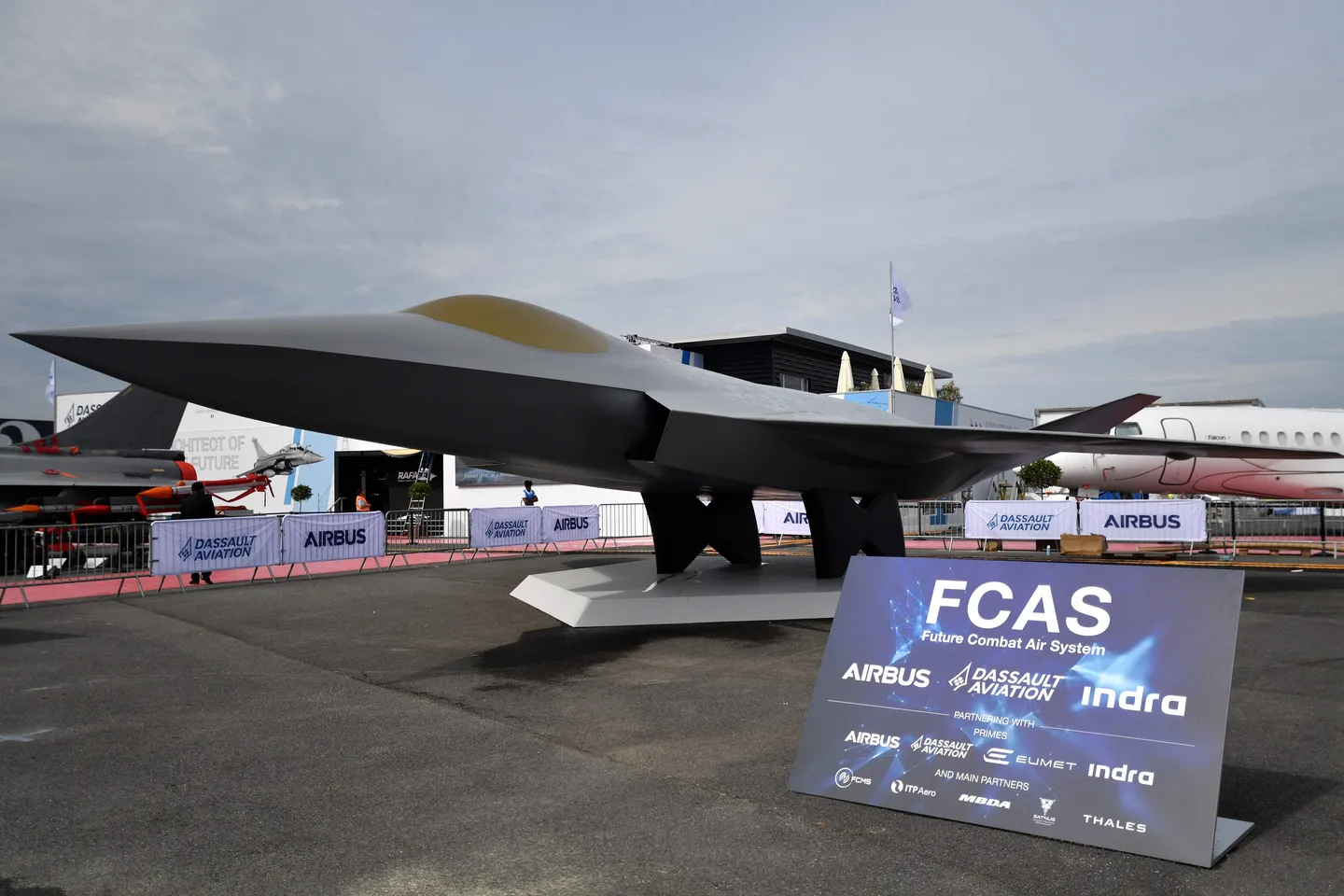

Leaders Conclude Aircraft Partnership Cannot Move Forward
German Chancellor Friedrich Merz and French President Emmanuel Macron have agreed to abandon plans for a jointly developed next-generation fighter jet after years of disagreements between the companies leading the programme.
According to a German government official, both leaders concluded that the industrial partners involved in the Future Combat Air System (FCAS) programme would not be able to overcome longstanding differences regarding the development of a common combat aircraft.
The FCAS initiative was launched in 2017 as a flagship European defence project intended to replace France’s Rafale fighter jets and the Eurofighter aircraft operated by Germany and Spain. However, disputes between France’s Dassault Aviation and Airbus, which represents German and Spanish interests in the programme, repeatedly delayed progress.
Consequently, Berlin and Paris determined that the joint fighter aircraft component of the project could no longer proceed as originally envisioned.
The decision marks a significant setback for one of Europe’s most ambitious defence-industrial collaborations.
Broader Defence Cooperation Expected to Continue
Despite ending the joint warplane development effort, officials stressed that important elements of the wider FCAS programme will remain in place.
According to the German government, European partners intend to continue developing interconnected defence technologies designed to link aircraft, drones, sensors, and other military assets into a unified operational network. Officials described this capability as the central component of the broader FCAS vision.
Furthermore, the continuation of these systems reflects the growing emphasis on integrated warfare technologies and advanced battlefield connectivity across Europe.
The collapse of the fighter jet portion of the programme is likely to raise questions about the future of multinational defence projects on the continent. European governments have increasingly sought closer military cooperation in response to evolving security challenges, including tensions with Russia and uncertainty surrounding transatlantic defence relations.
Meanwhile, defence analysts say the decision highlights the difficulties of balancing national industrial interests within large-scale international programmes involving multiple governments and manufacturers.
Although the aircraft project has now been shelved, European leaders appear determined to preserve other strategic aspects of FCAS. As a result, cooperation on advanced defence networking technologies is expected to continue despite the end of the flagship fighter jet initiative.
The decision closes a chapter on a project once viewed as a cornerstone of Europe’s future air combat ambitions.

