
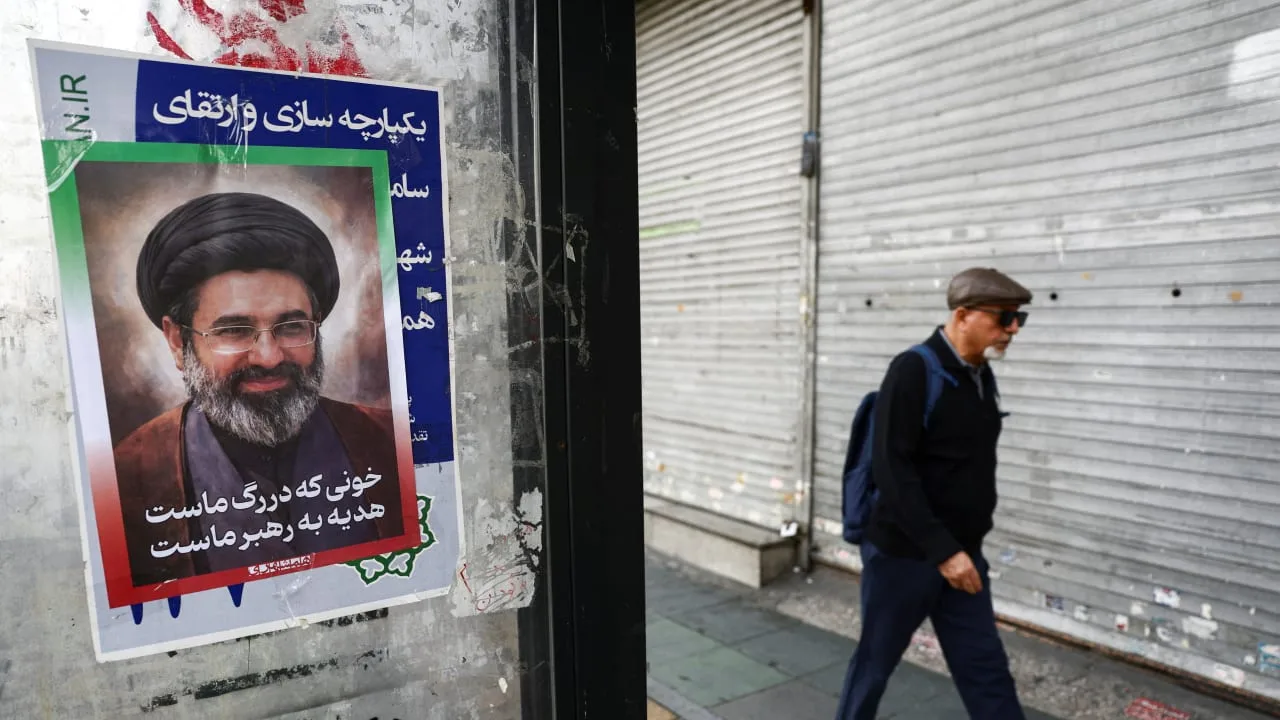

Naqi Akbar
The Monday night announcement by the Foreign office of Islamic Republic of Iran suspending for the time being exchange of diplomatic cables aimed at the nuclear agreement between the United States; precisely the same time when the monarchist news blog Iran International also flashed the news of the reformist President Phezishkian might look like separate incidents; a trajectory of events points out at the a very well thought out change of strategy by the person none other than Mujtaba Khamenei.
A probe into the evolved power mechanics of the Islamic Republic over the decades and especially after the JCPOA in 2015 explains a tug of war between the IRGC military strategy and the foreign office manned by the reform camp. The 2015 JCPOA coincided with the intensity in the civil war in Syria, where Iran was predictably on sides of the defunct Baathist set up in that country.
That simultaneous military and diplomatic initiatives caused frictions between what was called the diplomatic camp led by Jawad Zarif and the military camp charismatically led by Qassem Soleimani. The things came to head when the Syrian dictator Bashaar Al Assad visited the supreme leader Ali Khamenei in 2017 with the foreign office read Zarif not in picture. The Iranian foreign minister almost resigned and was just pleaded back into the fold by the supreme leader himself.
That friction simmered through the last passed decade, only to come out in open more blandly in the 2023 Gaza conflict. The May 2024 assassination of the hardline president Ibrahim Raeesi and its follow up in the form of ascension of the Reformist bloc in Iranian politics brought back those unfinished contradictions. The inauguration of the president was followed by assassination of Hamas Haniya the very next day. The Iranians embarrassed over the incident vowed to retaliate. Inside sources cite that the reformist camp led by the former FM Zarif opposed that and the new president practically over ruled the supreme leader.
The same tug of war continued till the June 13, 2025 IDF strikes and again before the February 28, 2026 strikes. Each time the IRGC was called through the leadership ‘not to spoil the diplomatic maneuvers’; until the IDF and CENTCOM created such a situation that the IRGC found the opportunity to have the free hand; in striking and resisting the US and IDF combined onslaught. That reality does not need another mention that the IRGC response, the destruction of key US installations in Gulf, the downing of three dozen jets of multiple configurations by the Iranian armed forces precipitated what can be called the endless round of US Iran talks.
Given the fact that the reformist or the conservative reformist camp; the later led by the Iranian parliament Speaker did not handle the negotiations well and created an impression in the street that they were less interested in securing the Iranian interests and more on negotiating whatever deal was available, it was natural that there would be a balancing act.
The simmering Lebanese was theatre gave the radicals as well as the recovering supreme leader the space to change the track again. The impression that the reform group was not bothered by IDF action in Lebanon, forced Mujtaba, as it seems to take the charge. The Iranian statement over tit for tat on Lebanon; practically reset the stalemate. The resignation news flash was not wrong; but it actually signaled towards more important shift.
As things stand, the diplomatic group seems to take the back seat now. Wednesday morning devastation of the Kuwaiti airport and strikes on Bahrain, clearly communicate to the US the new on ground realities. It would not be out of context to say that the Iranian statement on Lebanon followed by tit for tat strikes in Gulf are sending different signals. In few words it means that Iranians as represented falsely by the Zarif group are not dying to have an agreement. If diplomacy is an option; so is the war!

