
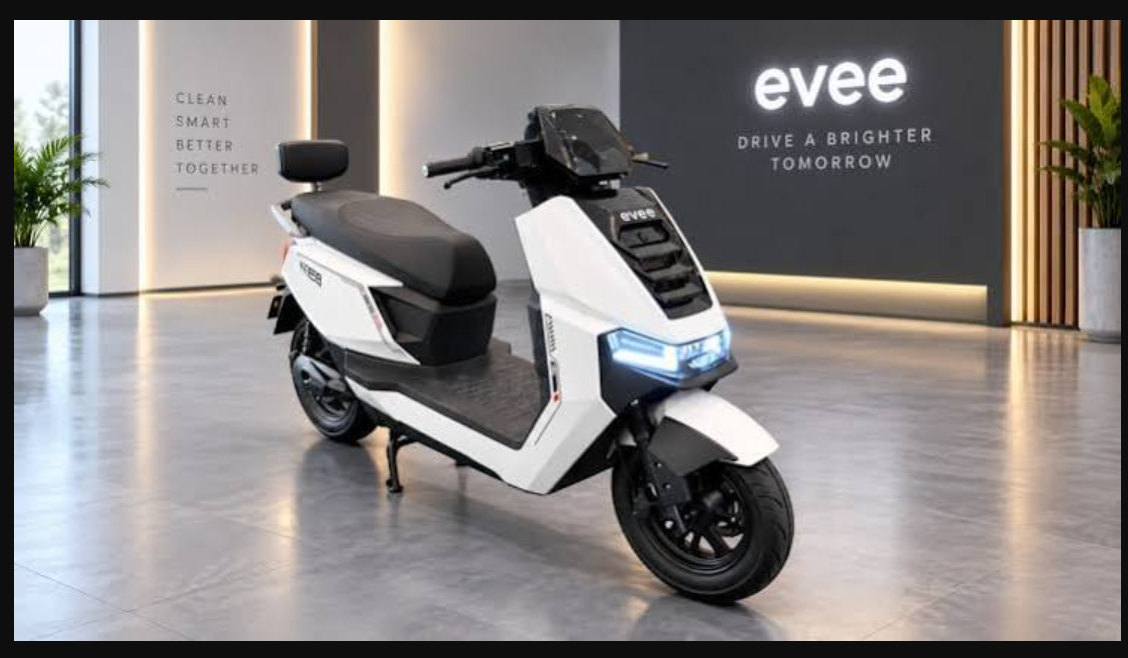

What if an electric scooter could move and stay upright without a rider controlling it? EVEE has now demonstrated that concept in Pakistan.
The company showcased its S1 Air Self Drive at PAPS 2026 as an experimental electric scooter prototype. The model can move independently while maintaining its balance without a rider during demonstrations.
However, EVEE has not presented the scooter as a production-ready vehicle. Instead, the technology remains in the research and development stage, with testing still underway.
EVEE S1 Air Self Drive Based on Existing Scooter
The S1 Air Self Drive uses the same basic platform as the regular EVEE S1 Air. However, EVEE has added dedicated motorised hardware and a control system for autonomous movement.
The additional system also supports the scooter’s self-balancing function. This allows the prototype to remain upright while moving without a rider.
EVEE has not yet revealed the complete sensor arrangement, control software or final hardware architecture. Therefore, the demonstrated scooter should currently be considered a development-stage prototype.
The company claims it could become Pakistan’s first self-driving electric scooter if it eventually enters production.
EVEE S1 Air Specifications
The underlying S1 Air platform uses a 2,200W motor and a 76.8V 32Ah Phylion lithium battery. EVEE claims the regular model can deliver a range of 90–110 kilometres.
Its claimed top speed stands at around 65–70 km/h. The standard EVEE S1 Air Lithium currently carries a price of Rs. 319,900.
The self-driving prototype, however, does not yet have a confirmed commercial price.
| Specification | EVEE S1 Air Self Drive |
|---|---|
| Base Model | EVEE S1 Air |
| Motor | 2,200W |
| Claimed Range | 90–110km |
| Top Speed | 65–70 km/h |
| Battery | 76.8V 32Ah Phylion Lithium |
| Self-Drive System | Yes |
| Development Status | Testing / R&D phase |
What Makes the Self-Driving Scooter Different?
The biggest change comes from the additional hardware supporting autonomous movement. During demonstrations, the system allowed the scooter to move independently without direct rider control.
The balancing technology also helped keep the scooter upright while operating without a rider. However, EVEE has not disclosed all the technical details behind these functions.
The company has yet to provide a complete breakdown of its sensors, software or final control architecture. As a result, there is still a significant gap between the demonstrated prototype and a commercial product.
No Launch Date or Commercial Price Yet
For now, EVEE has not confirmed when the S1 Air Self Drive could reach showrooms. The company has also not announced a commercial price for the self-driving version.
Instead, EVEE says the concept remains under testing and development. The company will evaluate the technology before deciding whether to move toward production.
Therefore, the PAPS 2026 demonstration offers a look at what EVEE is currently exploring for future electric two-wheelers.
EVEE Also Shows Gen-Z Pro With Side Seat
Alongside the self-driving prototype, EVEE displayed a Gen-Z Pro fitted with a side seat at PAPS 2026. The modified scooter does not introduce a new powertrain.
Instead, it demonstrates how EVEE’s existing electric scooter platforms can be adapted for different applications. Together, the two displays highlight the company’s ongoing experiments with electric two-wheeler designs and technologies.
For now, however, the S1 Air Self Drive remains a prototype rather than a confirmed production model.
Its eventual availability, final specifications and price will depend on the outcome of EVEE’s ongoing research and development work.
For the latest updates, visit and follow The Truth International website (www.thetruthinternational.com) and subscribe to the YouTube Channel.

