
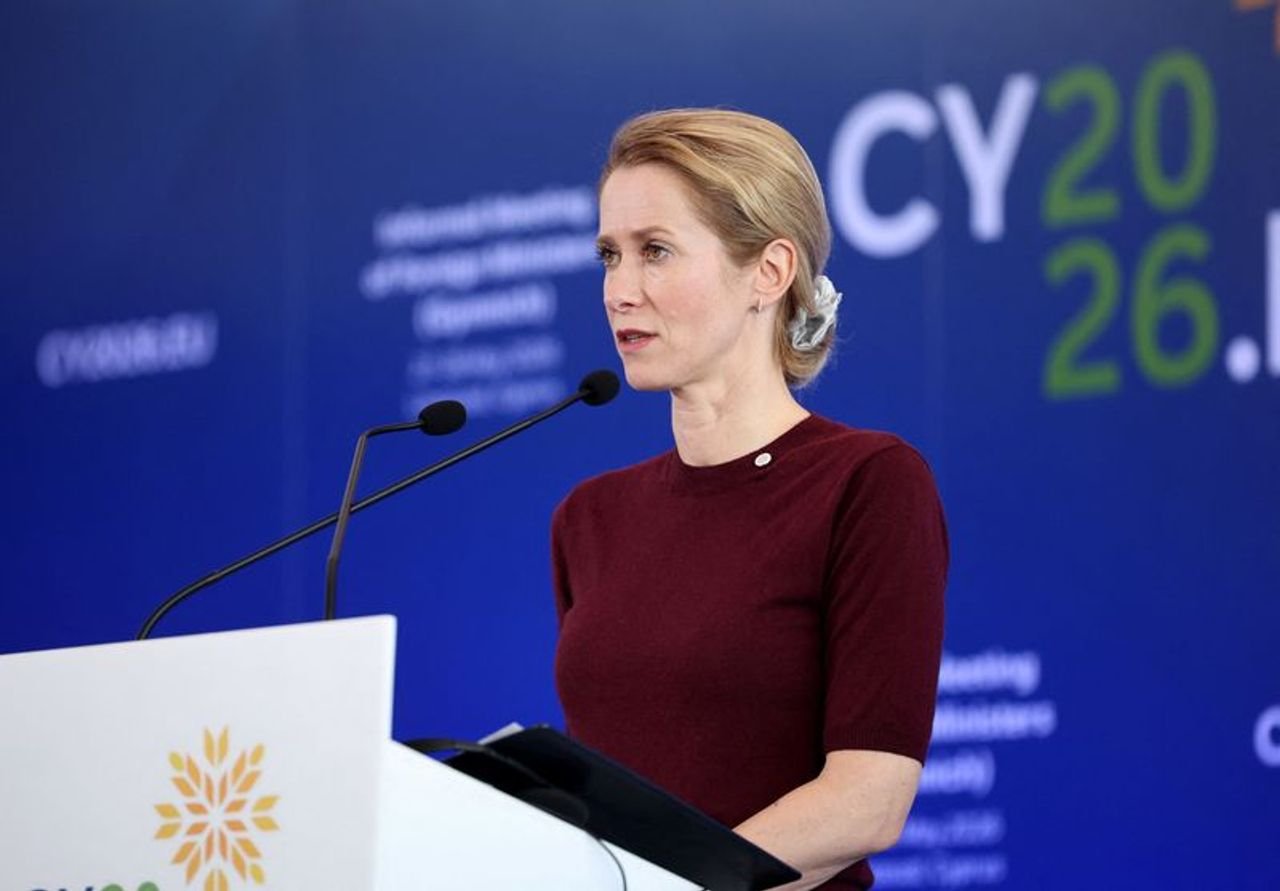

European Union High Representative for Foreign Affairs and Security Policy Kaja Kallas has acknowledged Pakistan’s diplomatic role in facilitating dialogue between the United States and Iran. She also expressed optimism that an initial phase of a Pakistan-mediated understanding could soon be formalised.
Kallas stated that the ongoing conflict in the Middle East continues to place a significant burden on global stability and the international economy. Her remarks came during an interview where she addressed regional tensions and diplomatic efforts aimed at reducing escalation.
Call for Stability and Economic Relief
The EU diplomat stressed that ending hostilities in the Middle East remains a global priority, particularly due to its economic consequences. She noted that instability is contributing to rising energy costs and disruptions in essential global supplies.
She highlighted concerns over supply shortages, including fertilisers, warning that continued conflict could even contribute to food insecurity in the future. According to her, reopening key trade routes remains essential for global stability.
Kallas stated that ensuring the free flow of energy and goods through critical waterways is vital, as many economies depend on uninterrupted maritime access.
Praise for Pakistan’s Diplomatic Engagement
Kallas acknowledged Pakistan’s efforts in facilitating communication between Washington and Tehran. She said Pakistan had played a constructive role in bringing both sides closer to dialogue and preventing further escalation.
She added that while mediation efforts are important, long-term progress depends on direct agreement between the involved parties.
She remarked, “I really commended Pakistan for being the mediator to try to bring the parties together, but eventually they have to agree, and of course everybody is hoping for the signature for the first phase talks because then it will be followed by talks regarding the more difficult topics like nuclear,”
Her comments underline cautious optimism about early-stage diplomatic progress, while also recognising that deeper negotiations remain complex.
Pakistan’s Continued Diplomatic Role
Pakistan has been actively engaged in regional diplomacy since tensions escalated in the Middle East earlier in the year. Its efforts reportedly included facilitating communication channels between key stakeholders and hosting indirect and direct engagements.
Officials in Islamabad have continued to emphasise dialogue and de-escalation as central principles of their foreign policy approach.
Concerns Over Gaza and Lebanon Conflict
During the interview, Kallas also addressed ongoing hostilities in Gaza and Lebanon, stating that such actions undermine international law and global norms.
She reiterated that all states are expected to respect sovereignty and avoid violations of territorial integrity under the United Nations Charter.
She emphasised that repeated conflicts highlight the need for stronger enforcement of international rules and accountability mechanisms.
According to her, the erosion of global norms is not due to weak principles but rather inconsistent enforcement by states.
EU–Pakistan Strategic Engagement Strengthens
Kallas’ visit to Islamabad included high-level meetings with Pakistan’s leadership as part of the EU–Pakistan Strategic Dialogue.
During discussions with Prime Minister Shehbaz Sharif, both sides reviewed cooperation in trade, investment, climate change, security, migration, sustainable development, and connectivity.
The Prime Minister reaffirmed Pakistan’s commitment to strengthening ties with the European Union and highlighted the importance of the GSP+ framework in supporting trade relations.
He also expressed appreciation for EU support regarding Pakistan’s diplomatic engagement in regional peace efforts.
Conclusion
The EU’s latest remarks reflect growing recognition of Pakistan’s role in facilitating regional diplomacy, particularly in US–Iran discussions. At the same time, concerns over Middle East conflicts continue to shape global diplomatic priorities, with renewed calls for stability, legal accountability, and sustained dialogue.

