
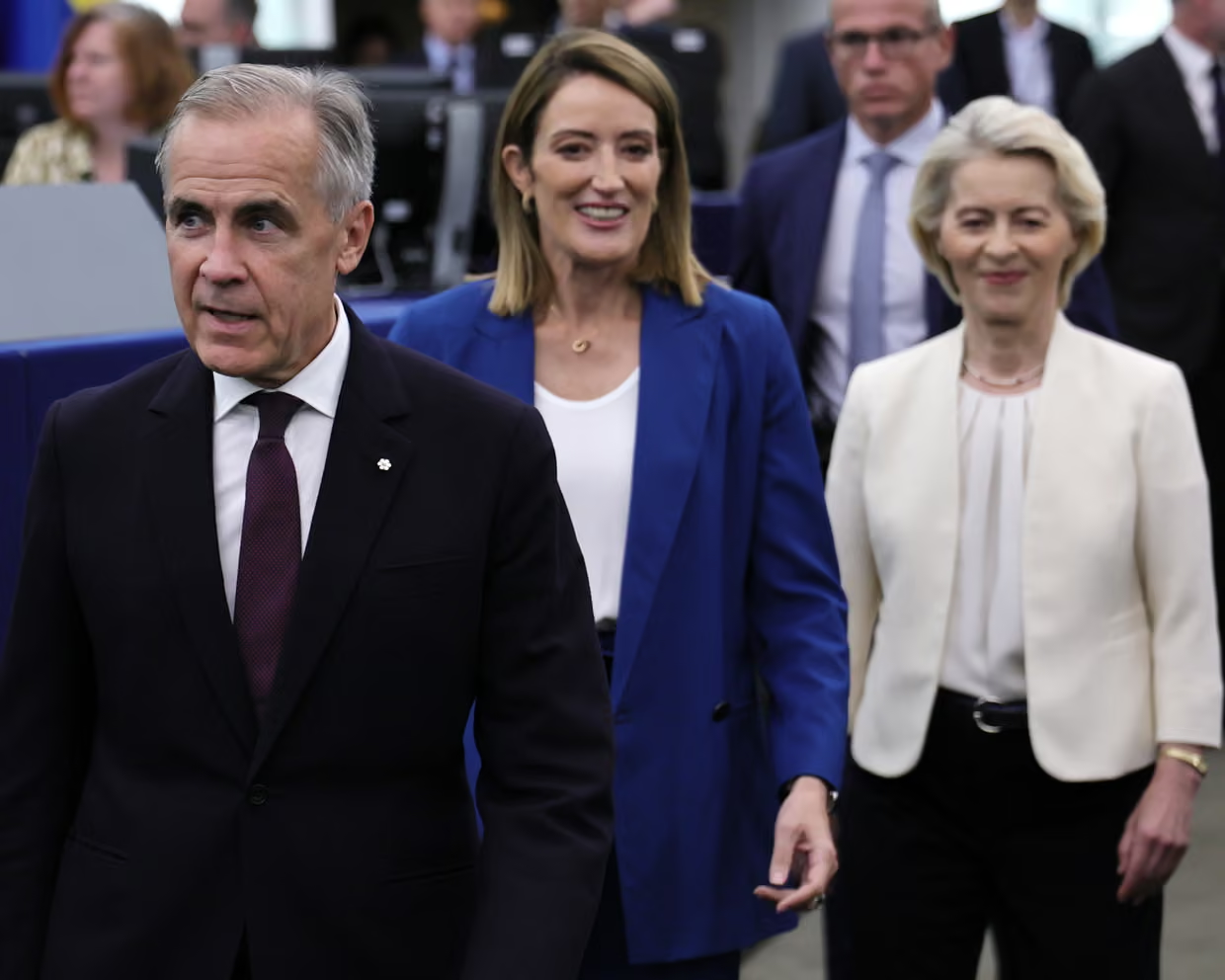

STRASBOURG: European Commission President Ursula von der Leyen has invited Canada to become the European Union’s first “associate member,” proposing an unprecedented relationship as Brussels and Ottawa seek deeper economic, technological and security cooperation.
Speaking alongside Canadian Prime Minister Mark Carney at the European Parliament on Wednesday, von der Leyen said Canada and the EU share democratic values and similar approaches to major global challenges.
“We want to bring the relationship with Canada to the highest level possible,” she said, proposing that both sides begin work on opening an associate membership route.
EU and Canada Plan Broader Economic Alliance
Canada and the EU already have a trade agreement and several bilateral arrangements. However, relations have strengthened as Ottawa seeks to reduce its dependence on US trade.
Von der Leyen said the existing relationship could develop into an “alliance for the future,” creating a common prosperity and economic security space.
Moreover, Brussels and Ottawa plan deeper cooperation on defence industries, energy, critical minerals, batteries, artificial intelligence, quantum computing and cybersecurity. They also intend to make Arctic cooperation a flagship initiative.
Associate Membership Would Create New EU Relationship
The 27-member bloc currently has no formal associate membership category, leaving important questions about what Canada’s proposed status would involve.
Consequently, officials must determine whether the arrangement would provide Canada with greater access to EU programmes or elements of the single market without traditional membership.
The two sides are expected to develop the proposal further at an EU-Canada summit in late October.
Carney, meanwhile, has called for a “unique alliance” with Europe as Canada diversifies its international economic relationships.
The initiative could establish a new model for EU partnerships with countries seeking deeper integration without becoming full members of the bloc.

