
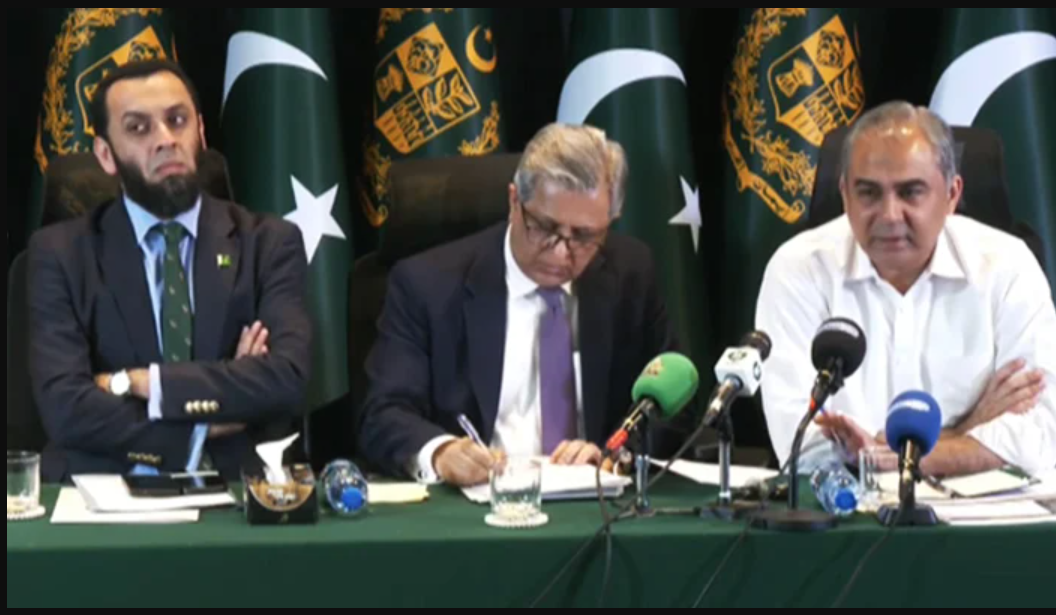

Federal ministers have defended the emergency imposed in Khyber Pakhtunkhwa, describing it as a difficult decision driven by worsening security and rising terrorism. Interior Minister Mohsin Naqvi said the government had to choose between witnessing daily martyrdoms and taking decisive action to address the crisis.
Speaking at a press conference in Islamabad on Sunday, Naqvi appeared alongside Law Minister Azam Nazeer Tarar and Information Minister Attaullah Tarar. The ministers maintained that the deteriorating security situation had compelled the federal government to act after efforts to secure cooperation from the provincial administration failed.
Naqvi said the federal government had spent more than a month trying to bring the Pakistan Tehreek-e-Insaf (PTI)-led provincial government on board. However, he claimed that repeated negotiations had failed to produce an agreement.
Mohsin Naqvi Explains Why the Government Took the Difficult Decision
Defending the emergency, Naqvi said the government had explored different options before moving forward. He emphasised that the primary concern was terrorism rather than the PTI’s political activities or protests.
“We had two options: either we witness martyrdoms on a daily basis or take a difficult decision,” Naqvi said.
He added that the government had made sustained efforts to secure the provincial administration’s cooperation in tackling terrorism. According to him, he personally maintained contact with provincial representatives behind the scenes to reach an understanding.
“Today was not an easy day for us,” the interior minister said, explaining the difficulties surrounding the decision.
Naqvi also clarified that the federal government had no objection to the PTI’s sit-in. He maintained that the administration could manage the protest, but terrorism remained its principal concern.
“Our issue is terrorism,” he said.
Naqvi Says Negotiations Continued Until Midnight
Naqvi claimed that discussions with PTI leaders continued until approximately 11:45pm as the government attempted to prevent the situation from escalating. He said he contacted the party’s representatives to obtain their response to proposed changes in a draft agreement.
“I called them at around 11:45pm and asked them to respond so that this situation could be avoided,” he said.
The interior minister also disclosed that Prime Minister Shehbaz Sharif had met Jamiat Ulema-e-Islam-Fazl chief Maulana Fazlur Rehman during the government’s efforts to resolve the matter. However, Naqvi said the government did not receive a response.
He further stated that the federal government had held two days of negotiations with the PTI. During those discussions, Asad Qaiser had reportedly assured the government that his party would cooperate in countering terrorism.
According to Naqvi, officials revised the proposed draft three times before preparing a fourth version at the PTI’s request. However, he alleged that the provincial side withdrew after the fourth draft was finalised.
“When the fourth draft was finalised, they backed out,” he claimed.
Police Capacity and Security in Affected Districts
Naqvi said he had held several meetings with KP Chief Minister Sohail Afridi, during which they discussed terrorism rather than political matters.
He added that the federal and provincial governments had agreed four months earlier to strengthen police capacity in five districts. The federal government had also offered to address the funding shortage raised by Afridi.
Furthermore, Naqvi claimed that the provincial side had agreed during the first round of negotiations to impose an emergency in 12 districts.
He described the security situation in those areas as “very bad” and questioned why the PTI had organised its long march through the affected districts despite those conditions.
The interior minister reiterated that the government considered counterterrorism a security priority rather than a political issue.
Terrorism Incidents in KP Increased by 196%, Says Law Minister
Law Minister Azam Nazeer Tarar highlighted the reported increase in terrorism across Khyber Pakhtunkhwa, saying incidents had risen by 196%.
He described the increase as the “most alarming” aspect of the province’s security situation. According to Tarar, terrorism had become a recurring problem, while the provincial government continued pursuing its political agenda.
The law minister accused the provincial administration of neglecting public protection despite the growing security challenges. He said the federal cabinet had considered the circumstances before deciding to impose the emergency.
Tarar also revealed that the KP governor had communicated developments to the federal government, describing the information as “very concerning”.
“Such steps are not taken happily,” the law minister said, stressing that emergency powers should serve national security and the country’s interests.
Government Cites Constitutional Powers for Emergency
Tarar maintained that the president had exercised constitutional powers under Articles 232 and 234 when taking action concerning the province.
He said the emergency had changed the provincial administration’s functioning, with the governor empowered
For the latest updates, visit and follow The Truth International website (www.thetruthinternational.com) and subscribe to the YouTube Channel.

