
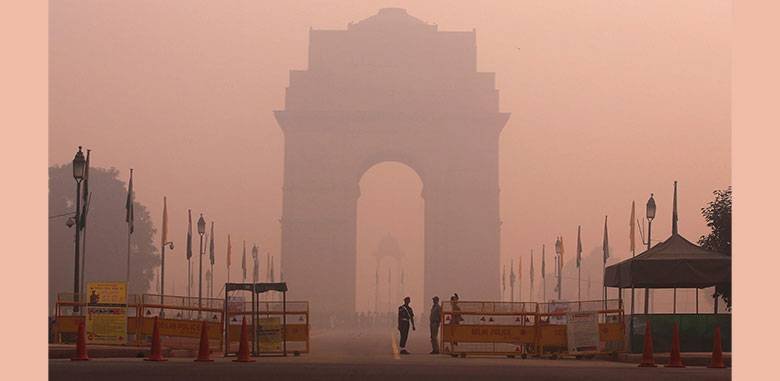

Air pollution originating in India is contributing to worsening smog across Lahore, upper Punjab and Pakistan’s border districts. A recent report highlights how smoke from agricultural fires in India’s Punjab and Haryana travels across the border.
The report identifies crop residue burning as a major contributor to seasonal air pollution. During winter, smoke from agricultural fires combines with industrial emissions and other pollutants, creating hazardous conditions across the region.
Satellite observations from NASA and the European Space Agency have also highlighted widespread pollution over the region. These findings have renewed concerns about the environmental impact of cross-border pollution.
Crop Burning Adds to Cross-Border Pollution
According to the report, Indian agricultural fires release large amounts of smoke during the harvesting season. Prevailing wind patterns can then carry these pollutants towards Pakistani border areas.
Data from the Indian Council of Agricultural Research recorded 3,316 crop residue burning incidents across seven Indian states. These incidents occurred between September 15 and November 1, 2026.
However, satellite observations also show significant agricultural fire activity inside Pakistan. Recent NASA data recorded thousands of hotspots across Pakistani and Indian Punjab, highlighting the regional nature of the problem.
India Today+2
The report further identifies industrial emissions as another major contributor to India’s pollution levels. Factories, power plants and other industrial activities release pollutants that can worsen regional air quality.
Experts Call for Regional Cooperation
Environmental experts have raised concerns about the limited cooperation between Pakistan and India. They believe both countries need coordinated measures to address cross-border pollution.
Moreover, experts stress that agricultural burning requires stronger regulations and sustainable alternatives. Governments must also improve industrial monitoring and enforce environmental protection standards.
Pakistan continues facing serious smog conditions, particularly across Lahore and surrounding districts. Therefore, authorities need effective measures to reduce local emissions and protect public health.
The growing pollution crisis highlights the importance of regional environmental cooperation. Both countries must address agricultural fires, industrial emissions and other pollution sources to improve air quality.
For the latest updates, visit and follow The Truth International website (www.thetruthinternational.com) and subscribe to the YouTube Channel.

