
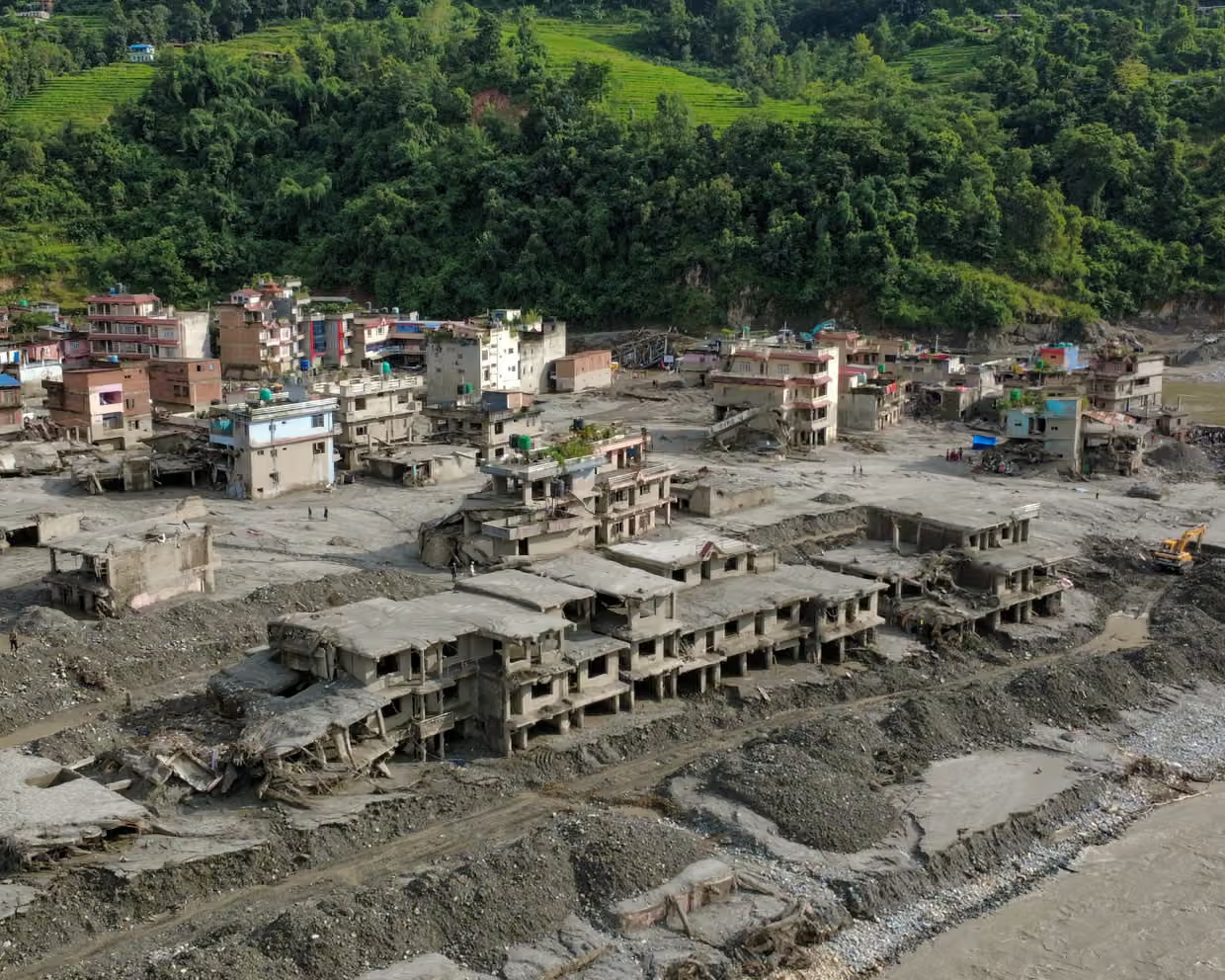

Khatmandu: Climate change probably contributed to destabilising the glacier whose collapse triggered catastrophic flooding across Nepal and Tibet last month, according to the first scientific study examining the disaster.
Researchers from World Weather Attribution identified unusually warm conditions before the August 26 collapse on Langtang Lirung mountain. An estimated 110 million cubic metres of snow and ice plunged about 1,400 metres into the valley, generating devastating flash floods downstream.
More than 1,300 people were killed and over 5,000 remain missing after the avalanche swept away homes, settlements, roads, bridges and other infrastructure.
Record Heat Weakened High-Mountain Environment
Researchers found that climate change has warmed the region by about 2C since pre-industrial times. Moreover, July and August 2026 were the warmest recorded locally, with temperatures reaching 5C above the 30-year average shortly before the collapse.
The Himalayan freezing threshold has also risen about 100 metres per decade since the 1980s, increasing thawing of permafrost and weakening mountain slopes.
Furthermore, glacier recession removed stabilising ice around the collapse zone and generated additional meltwater.
However, researchers stopped short of identifying climate change as the sole cause. They described warming as a destabilising influence interacting with existing geology. The 2015 Nepal earthquake may also have weakened the slope, although scientists could not establish its precise contribution.
Nepal Seeks Climate Loss and Damage Funding
Nepal has formally requested financial assistance from the UN loss and damage fund to address the destruction.
Meanwhile, researchers warned that disasters involving rock avalanches of this magnitude are extremely rare and said the catastrophe demonstrated the limits of local adaptation.
Climate scientist Friederike Otto said rapidly cutting global fossil-fuel emissions remained essential to reducing future risks facing vulnerable mountain communities.

