
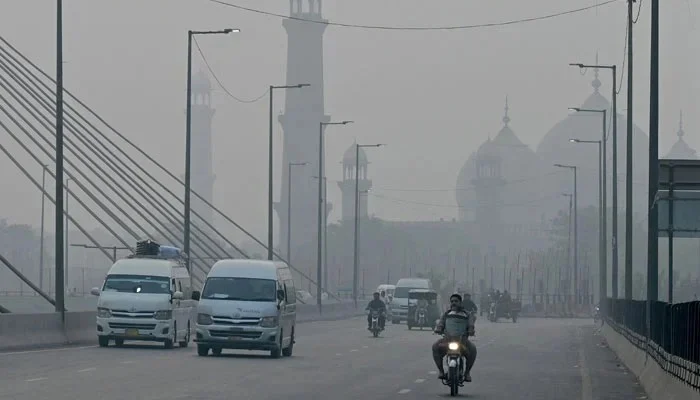

Air pollution continues to affect several cities across Punjab, with fresh readings showing elevated pollution levels. Kot Addu recorded the province’s highest Air Quality Index (AQI) at 183 on Wednesday, while Lahore registered 143, according to the Punjab Environment Protection Agency.
Vehari followed with an AQI of 171, while Jhelum recorded 169. Sahiwal stood at 162, and Multan and Pakpattan each registered 159.
The readings highlight how air pollution extends beyond Lahore, affecting cities across the province.
Kot Addu Tops Punjab’s Pollution Ranking
The latest figures placed several cities in Punjab’s moderate to unhealthy-for-sensitive-groups range. Gujranwala recorded an AQI of 157, followed by Dera Ghazi Khan at 154 and Bhakkar at 153.
Sheikhupura recorded 147, placing it above Lahore in the ranking. Faisalabad and Khushab each registered 137, while Okara recorded 133.
Bahawalpur stood at 127, and Mandi Bahauddin recorded 125. Wazirabad registered 124, while Sialkot and Sargodha recorded 118 and 115, respectively.
Meanwhile, Rawalpindi’s AQI stood at 68. Jhang recorded 52, while Nankana Sahib registered 40.
Health Advisory Urges Vulnerable People to Take Precautions
Health officials have urged residents to monitor their health during periods of elevated pollution. Children, older people and those with respiratory or cardiovascular conditions face greater risks.
Authorities advised vulnerable residents to limit outdoor activities when air quality deteriorates. People experiencing breathing difficulties should seek medical advice.
Residents should also avoid smoking and follow relevant health guidance. Those with existing respiratory conditions should keep prescribed medicines and necessary medical equipment accessible.
Rain Forecast Could Bring Temporary Relief
The Pakistan Meteorological Department forecast rain, windstorms and thunderstorms across upper and central Punjab. Some areas could also experience heavy rain and hailstorms.
The forecast included possible rainfall in Islamabad, Gilgit-Baltistan, Kashmir and Khyber-Pakhtunkhwa. However, the impact will depend on where and how much rain falls.
Rain and stronger winds can temporarily reduce airborne pollution. Still, lasting improvement requires action against emissions from vehicles, industries, brick kilns and other sources.
The forecast also warned that strong winds, lightning and hail could damage weak structures, power poles, billboards, vehicles and solar panels. Standing crops could also suffer damage.
For the latest updates, visit and follow The Truth International website (www.thetruthinternational.com) and subscribe to the YouTube Channel.

