
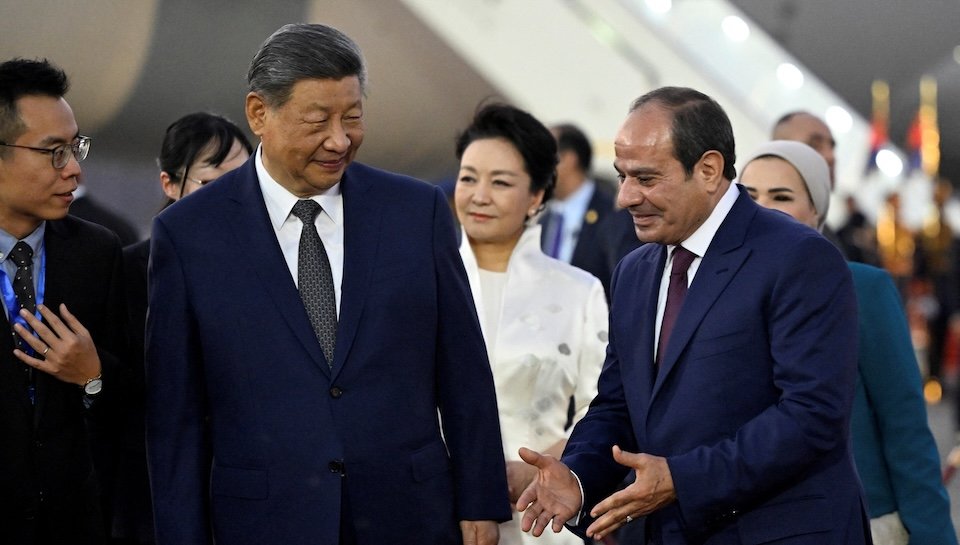

Chinese President Xi Jinping arrived in Egypt on Tuesday for his first visit to the Arab world’s most populous country in a decade, as the Iran war prompts Middle Eastern nations to reassess their security and economic partnerships.
Egyptian President Abdel Fattah Al Sisi welcomed Xi at Cairo International Airport. State television showed the leaders walking along a red carpet surrounded by uniformed soldiers, traditional dancers and young Egyptians waving Chinese flags.
Egypt And China Strengthen Strategic Ties
The conflict has disrupted global energy markets and raised concerns about the reliability of the United States as a long-term security partner. Consequently, countries across the region are examining new economic and diplomatic relationships.
Meanwhile, Egyptian state media has highlighted Cairo’s expanding economic and military cooperation with Beijing. Egypt also remains significant to China as the first Arab and African country to establish diplomatic relations with Beijing, a relationship that began 70 years ago.
Sisi described the two countries as partners working together to strengthen the Global South’s role in the international system. He made the remarks in an opinion article published by Egypt’s state-run Al-Ahram newspaper.
Xi Seeks Deeper Partnership With Cairo
Xi’s visit marks the second stop on his second overseas trip of the year. Before arriving in Egypt, he attended a Shanghai Cooperation Organisation summit in Kyrgyzstan, where he held discussions with Russian President Vladimir Putin and other leaders.
In comments published by Chinese state news agency Xinhua, Xi described Egypt and China as “close brothers” that have supported each other in confronting imperialism and colonialism. He also expressed his desire to explore a deeper partnership between the two countries.
The visit comes as Cairo and Beijing seek stronger cooperation while the wider Middle East faces major geopolitical uncertainty. Furthermore, the changing regional security environment could create new opportunities for China to expand its diplomatic and economic influence.

